Related Articles

While many Americans are paying less for certain pharmaceuticals, local pharmacies are benefiting as well.
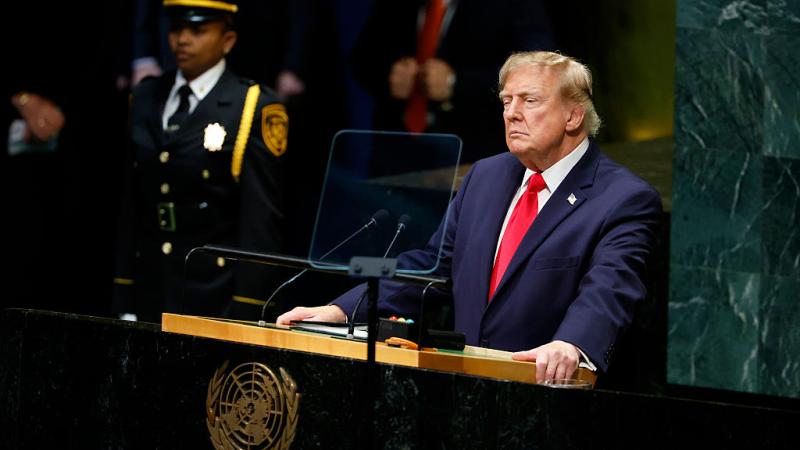
President Donald Trump recently announced a substantial deal with drug manufacturer Regeneron to lower drug prices and onshore nearly $10 billion to $27 billion in U.S. manufacturing, further expanding access to domestic medicine, the absence of which has caused headaches for America's thousands of community and rural pharmacies.
"Seventeen of the world's largest pharmaceutical companies, representing 80% of the branded drug market, have now agreed to sell their drugs to American patients at the lowest price anywhere in the world. This will result in the largest drop in prescription drug prices in the history of the United States of America," Trump told the press Thursday during the announcement in the Oval Office.
Earlier in April, the Trump administration imposed a timed 100% tariff on patented pharmaceutical ingredients and products from most countries, which has accelerated the return of drug manufacturing to the U.S., producing stability and economic wins for independent pharmacies that have long struggled with supply-chain fragility.
Key policy drivers include the April 2 Presidential Proclamation imposing 100% ad valorem tariffs on patented pharmaceuticals and ingredients (effective July 31 for major companies and September 29 for smaller companies).
Companies with secretary of Commerce-approved onshoring plans qualify for a transitional 20% rate, which escalates to 100% on April 2, 2030, while MFN pricing agreements can yield 0% tariffs (with their own sunset provisions). Complementary actions streamline FDA approvals and inspections to accelerate domestic manufacturing.
The data have shown dramatic early results. In 2025 alone, drugmakers announced more than $370 billion in new U.S. manufacturing commitments – the largest reshoring wave in industry history – creating tens of thousands of jobs and dozens of new or expanded facilities.
Major players have pledged over $480 billion total (e.g., Eli Lilly’s $27 billion for four new sites, Johnson & Johnson’s $55 billion including multiple plants, AstraZeneca’s $50 billion with a major Virginia facility, and similar multi-billion-dollar moves by Novartis, Roche, and others.)
The investments are generating roughly 44,000 direct manufacturing and support jobs while reducing reliance on overseas APIs, where 70–80% of U.S. generics and many branded drugs historically originated from China and India.
For rural and small-town pharmacies, the re-shoring translates into tangible long-term gains.
Independent operators – who often operate on razor-thin margins and serve Medicare/Medicaid-heavy populations – have faced chronic shortages, stock outs, and price volatility from global disruptions. Domestic production ramps are already easing those pressures by shortening supply chains, cutting transit risks and enabling faster replenishment.
Early signs that these policies are improving the industry, all the way down to small pharmacies, include stabilized generic supply in key categories (like antibiotics and diabetes treatments) and renewed local economic activity as new plants (many in heartland or Southern states) boost regional wages, supplier networks, and tax bases that indirectly support pharmacy viability.
The administration’s parallel Rural Health Transformation Program further amplifies this by aligning pharmacies with goals like “sustainable access” and “make rural America healthy again,” positioning independents as frontline partners in expanded care delivery.