Related Articles

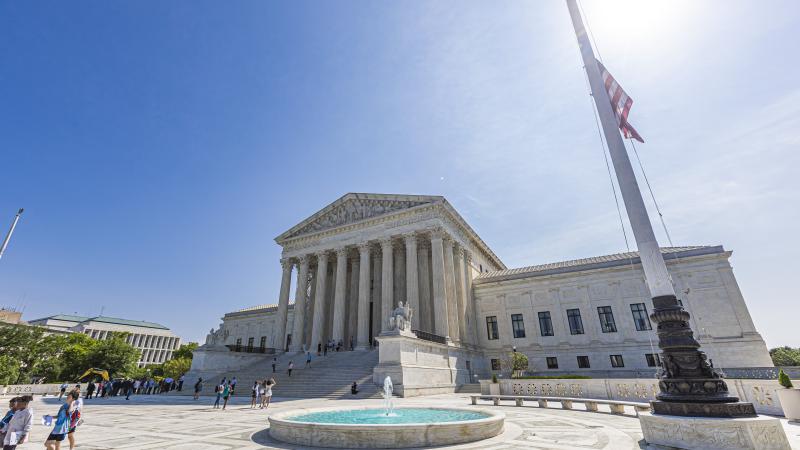

Barrett's remarks came just one day before Trump publicly criticized her and fellow Justice Neil Gorsuch over decisions that diverged from his policy positions.
Supreme Court Justice Amy Coney Barrett rejected the idea that she serves as a “swing vote” on the high court, arguing instead that her rulings reflect independence and adherence to the law rather than political calculation.
Speaking on Saturday at the Crystal Bridges Museum of American Art in Bentonville, Arkansas, Barrett said the label mischaracterizes her approach to judging.
“I don’t like that label because it makes me sound sort of flighty,” Barrett said during a Q&A with Crystal Bridges Board Chair Olivia Walton. “You could say a lot of things. I don’t think I’m flighty. I think independent, or just following the law, would be the way to describe it.”
Barrett, who was nominated to the Supreme Court by President Donald Trump in 2020, acknowledged that she has occasionally broken with the court’s conservative majority. She said those decisions stem from her interpretation of the law rather than any effort to position herself ideologically.
“I think that’s what it means to be faithful to the law and not try to align yourself with what people want you to do on the outside,” she added.
Although Barrett remains part of the court’s 6-3 conservative bloc, some recent rulings have placed her at odds with fellow conservatives in cases involving statutory interpretation and procedural questions.
Her remarks came just one day before Trump publicly criticized her and fellow Justice Neil Gorsuch over decisions that diverged from his policy positions, including a February 2026 ruling that struck down portions of his tariff plan.
“Democrat Justices always remain true to the people that honored them for that very special Nomination,” Trump wrote. “They don’t waver, no matter how good or bad a case may be, but Republican Justices often go out of their way to oppose me, because they want to show how ‘independent’ or, ‘above it all,’ they are.”
The president also warned that “a negative ruling on Birthright Citizenship, on top of the recent Supreme Court Tariff catastrophe, is not Economically sustainable for the United States of America!”
During her Arkansas appearance, Barrett also discussed the importance of collegiality among justices despite disagreements, cautioned against the use of artificial intelligence in judicial opinions, and encouraged graduates to engage respectfully with opposing viewpoints.