Related Articles
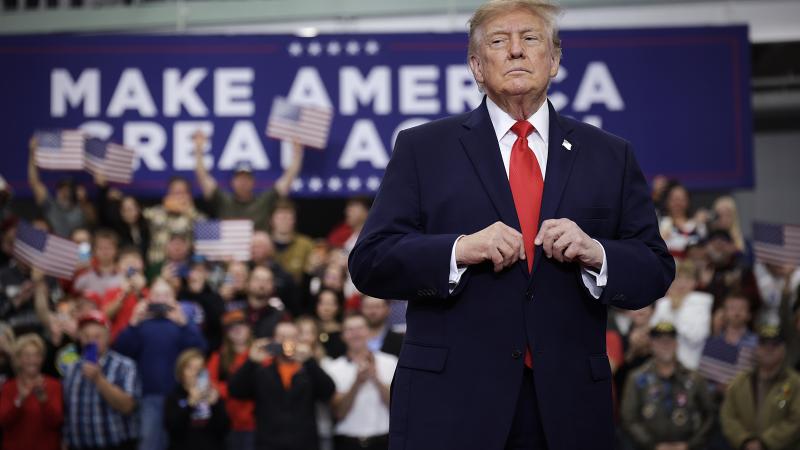
2026 marks Trump's fifth year in attendance. Each summit has come with its own unique set of challenges and this year is no exception. Aside from peace, punch and power, he is hoping prosperity can be added to the list.
After announcing a landmark deal to end the U.S.-Iran war and hosting a high-profile Ultimate Fighting Championship event on the White House lawn for his 80th birthday, President Donald Trump arrived at the G7 summit in France poised to project strength on the global stage. 2026 marks Trump's fifth year in attendance. Each summit has come with its own unique set of challenges and this year is no exception.
After a quick turnaround in the wee hours of Monday morning from the White House to Évian-les-Bains, Trump began meetings to discuss, among other things, the new U.S.-Iran peace framework and efforts to reopen the Strait of Hormuz, the ongoing situation in Ukraine, the Middle East, global trade and economic growth, critical minerals and artificial intelligence.
The first day's discussions involved other G7 member leaders, like French President Emmanuel Macron, followed by a working dinner with other leaders, including those from Canada, Germany, Italy, Japan and the United Kingdom.
On Tuesday and Wednesday, discussions are expected to focus on key priorities including global economic imbalances (such as industrial overcapacity, debt, and investment gaps), support for Ukraine amid its ongoing conflict with Russia, Middle East developments, AI governance and regulation, energy security, and fostering balanced, sustainable growth.
Bilateral meetings will continue alongside plenary sessions, with guest leaders from invited nations like India, Brazil, Kenya and others joining select parts of the program.
Trump’s first four G7 summits (2017, 2018, 2019, 2025) were marked by recurring tensions over trade protectionism, climate policy, Russia’s status, and multilateral cooperation, often highlighting clashes between his “America First” approach and the marginally anti-American group’s consensus-driven norms:
Before his departure for France, Trump announced the landmark preliminary peace agreement with Iran, capping weeks of intense negotiations mediated in part by Pakistan and building on an earlier fragile ceasefire.
Within hours of the announcement, Trump posted to his Truth Social account, "Ships are starting to move, many loaded up with oil, out of the Strait of Hormuz. They are going along the Southern "Highway," which is totally safe, secure and pristine. There are other areas of travel, also!"
The deal, described as a memorandum of understanding (MOU), came together after Trump set deadlines, launched missiles, seized regime crypto assets, and canceled planned U.S. strikes, with Vice President JD Vance reportedly involved in finalizing terms.
Key elements of the deal include an immediate 60-day ceasefire extension to halt hostilities (including in Lebanon), the reopening of the Strait of Hormuz to international shipping with the lifting of the U.S. naval blockade, potential release of frozen Iranian assets and sanctions relief tied to compliance, and a commitment to follow-on talks addressing Iran’s nuclear program, uranium enrichment limits, and inspections—while stopping short of a final resolution on the nuclear issue.