Related Articles

Trump has argued for years that the United States should have taken Iraqi oil. And on Sunday he applied the same logic to Iran, using Venezuela as the proof of concept.
President Donald Trump says the United States could remain in Iran when the fighting stops and “keep the oil,” treating the Persian nation’s petroleum as the prize of war. He pointed to a deal that, in his telling, has already let Washington take a large share of Venezuela’s crude and recoup the cost of using force, a modern version of an old idea: To the victor go the spoils. And in this case, stay, take the oil, and let the barrels pay for the war.
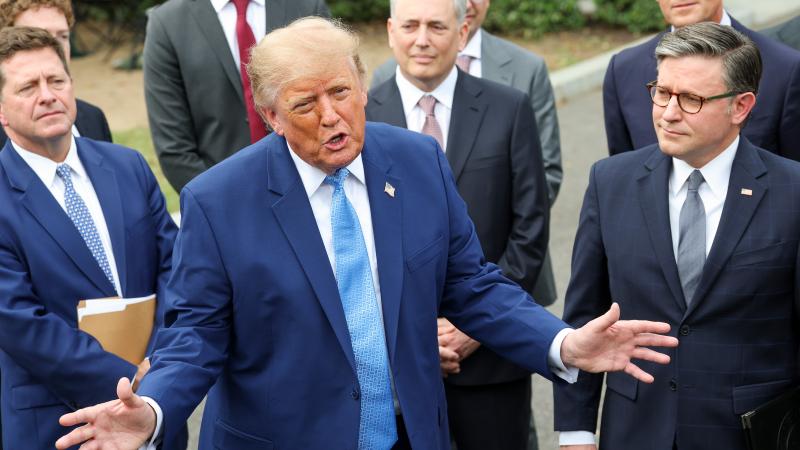
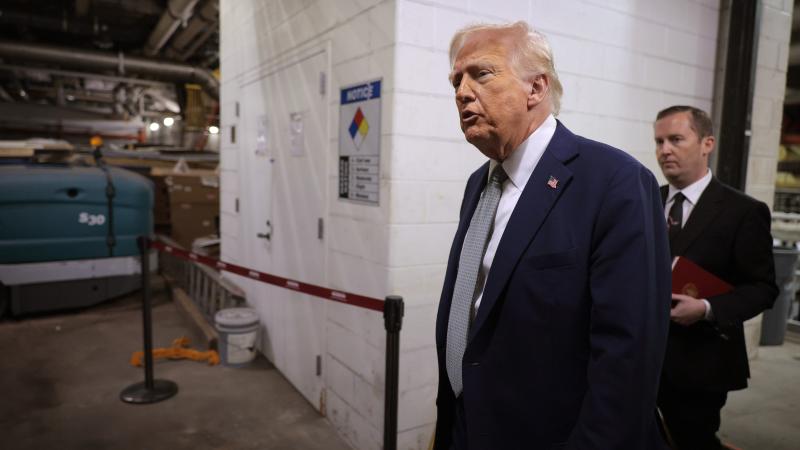
“We’ll ultimately get out (of Iran), unless we decide to stay and keep the oil like Venezuela,” Trump told reporters Sunday at his golf property in Ireland.
Revenue from Venezuela, he said, has “paid for the war many times.” He also said the Iran war would end “right after the midterms,” and that gasoline would then “drop like a rock.”
U.S. regular gasoline averaged $4.31 a gallon on Sept. 13, AAA figures showed. Crude later traded above $107 a barrel after new strikes on Saudi infrastructure and Gulf shipping.
U.S. forces captured Venezuelan President Nicolás Maduro in January. In late August, Trump announced what he called the biggest oil deal in world history. A White House fact sheet says interim Venezuelan authorities granted North American Blue Energy Partners 100-year concessions on 17 fields with about 65 billion barrels of proven reserves.
According to the fact sheet, North American Blue Energy Partners (NABEP) gave the U.S. government’s Office of Strategic Capital a 35% equity stake in its corporate parent and gave the State Department the right to buy 20% of production at cost, plus a right of first refusal on the rest. No full contract text has been released.
Interim President Delcy Rodríguez has said Venezuela keeps sovereignty over the oil, described the arrangement as lasting 25 years rather than 100, and said it could yield more than $200 billion for the state, the International Crisis Group reported.
Governments have long treated petroleum as a prize. Japan seized oil fields in the Dutch East Indies after Pearl Harbor. Iraq invaded Kuwait in 1990 in a fight that included control of Kuwaiti reserves and the shared Rumaila field. After World War I, Britain moved into Mosul to secure Mesopotamian oil. In 1953, a U.S.- and British-backed coup in Iran reversed nationalization and restored Western access to Iranian oil.
After the 2003 invasion of Iraq, U.S. and British forces secured the fields. Then-Secretary of State Colin Powell said the oil belonged to the Iraqis and would not be taken for Washington’s own use.
A 1962 U.N. resolution on permanent sovereignty over natural resources states that a country’s oil belongs to that country. Occupation law allows limited use of existing production to pay occupation costs; it does not authorize pillage.
The U.S.-Iran conflict began in full force on Feb. 28 when the U.S. and Israel struck targets across Iran, including leadership and military sites. The opening blasts killed Supreme Leader Ayatollah Ali Khamenei. Iran fired missiles and drones at Israel and at U.S. bases in the Gulf and choked traffic through the Strait of Hormuz, a waterway that usually carries about one-fifth of the world’s oil.
A June memorandum of understanding was meant to halt large-scale fighting and reopen the strait. Combat later resumed. Trump also said Sunday that Iran is “calling constantly” for a deal, but Tehran has dismissed that claim before. He gave no plan for how U.S. forces would hold Iranian fields if Washington chose to “keep the oil.”
Amanda Head is White House Correspondent for Just the News. You can follow her here.