SCOTUS flooded with briefs critical of Colorado climate suit, signaling high stakes battle ahead
Last week, 78 members of Congress, 27 state attorneys general, some Colorado counties, Native American tribes, industry groups and legal and policy organizations filed briefs in support of the oil and gas companies targeted in the Boulder, Colorado, climate lawsuit. The interest in the case illustrates that the stakes are high, as a ruling has implications economic, legal and political across the country.
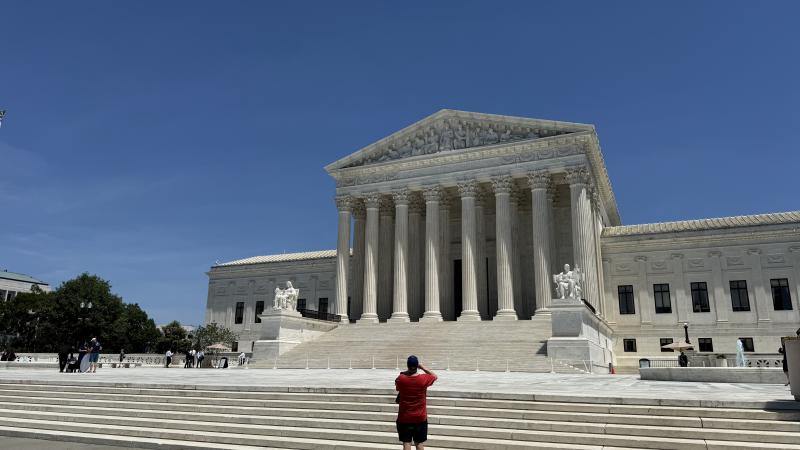
A broad coalition of groups last week filed a deluge of “friend of the court” briefs in a climate case before the Supreme Court.
The high court is focused on one lawsuit out of Boulder, Colorado, but there are dozens of similar lawsuits across the states that seek to extract billions of dollars from oil and gas companies. If these settlements come down against the companies, those billions of dollars will be passed onto consumers.
Last week, 78 members of Congress, 27 state attorneys general, some Colorado counties, Native American tribes, industry groups and legal and policy organizations filed briefs in support of the oil and gas companies targeted in Boulder’s lawsuit.
The interest in the case illustrates that the stakes are high, as a ruling has economic, legal and political implications across the country.
Two questions before the court
In 2018, San Miguel County, Colorado, and the city and county of Boulder, filed a lawsuit seeking damages from weather events, which they allege are caused by burning fossil fuels. They also accuse the oil companies of deceiving the public about the dangers of climate change. The companies had sought to have the case dismissed in state court, but the Colorado Supreme Court allowed the case to proceed in Colorado courts.
Exxon and Suncor are asking the court to review the Colorado court’s ruling. The high court may consider if state law can be used to sue energy companies for the effects of international greenhouse gases that, by their nature, cross geographical demarcations.
Boulder is urging the court to answer a question about whether the Supreme Court is the proper venue to hear the case right now. The justices may rule on this narrow procedural question, which will leave the broader questions to be answered in state court.
Trump administration, Republicans weigh in
Many of the amicus briefs filed in the case argue against allowing local governments to use state law to advance their preferred policies concerning a global issue. This was the central point the Trump administration’s Department of Justice argued in its brief.
“This case presents a basic question: Can one city wield one State’s law to dictate how the rest of the world must address a global problem with global effects? The Constitution supplies the answer: Absolutely not,” the DOJ said.
If each state could tackle problems that are inherently national or global by forcing its preferred regulations on the other 49 states, the DOJ argued, the entire federal system would disintegrate.
This was the conclusion of multiple state courts who have considered state and local climate. Judges have dismissed climate lawsuits filed by Bucks County, Pennsylvania, the state of New Jersey, the state of Delaware, and in Anne Arundel County and the city of Annapolis, in Maryland. A case filed by the city of Baltimore, Maryland, was also tossed. New Jersey Superior Court Judge Douglas Hurd concurred with the oil companies’ arguments that the state’s complaint is preempted by federal law.
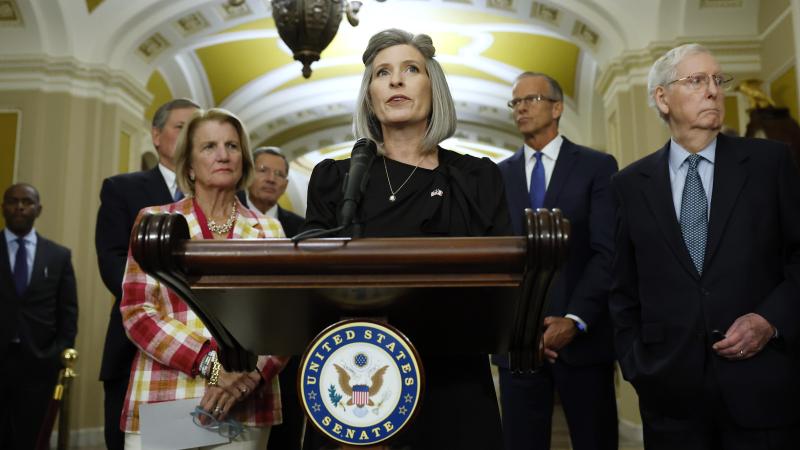
Sens. Ted Cruz, R-Texas, Chuck Grassley, R-Iowa, Mike Lee, R-Utah, and Ted Budd, R-N.C., said in their brief that the Colorado Supreme Court’s ruling allowing the Boulder case to proceed in state court is wrong. “The Colorado Supreme Court is mistaken. The Constitution—as evidenced by its structure and our Nation’s Founding-era history—prohibits the application of Colorado law to activities taken outside of Colorado and having no connection to the state,” the senators said.
The coalition of state attorneys general, led by West Virginia, also argued against the use of state torts in the way climate advocates would like.
“States, cities or municipalities cannot use local laws to impose their far-left ideology on the rest of the country. This is an attempt to fill their coffers at the expense of the rest of the nation,” West Virginia Attorney General JB McCuskey said in a statement.
Groups raise other concerns
It’s not just the Trump administration and congressional Republicans who have taken an interest in the case.
The Coalition of Large Tribes (COLT), which represents more than 50 Native American tribes in the U.S. states, said in its brief that Boulder’s lawsuit is “a dramatic example of overweening state and local attempts to regulate global greenhouse gas emissions.” The aggressive use of state tort law in this way, COLT argues, interferes with tribal sovereignty.
In its amicus brief, Government Accountability & Oversight, a government watchdog group, points to records it obtained showing that states and local governments suing over legal commerce are seeking a “sustainable funding stream.” This funding stream is effectively a tax enacted not through legislatures but through the courts.
“They seek to impose tax-equivalents and attain policy impacts of nationwide scope through litigation precisely because their desired policies have been rejected through the proper political process,” the group argues.
Possible outcomes
Should the high court rule against Boulder and conclude that state law cannot be used to address impacts from global and interstate emissions, it would impact nearly three dozen copycat cases that are winding their way through state courts. Some of those cases have been paused pending the high court’s ruling.
Should the justices rule on only the jurisdictional question, the cases will continue. It wouldn’t be the first time: In 2023, the Supreme Court of Hawaii rejected the oil companies’ request to dismiss the suit, and they petitioned the high court to review the decision.
In the summer of 2024, the Supreme Court asked the Justice Department to weigh in on the matter. Then-Solicitor General Elizabeth Prelogar submitted briefs the following December, arguing that the justices should reject the appeal from energy companies and allow the cases to play out in state courts before the high court reviews them. In January, the court declined to hear the case.
John Shu, a legal scholar who served in both Bush administrations, told Just the News in December that the Supreme Court would likely take up the Boulder case, which it did. Shu said, unlike the Honolulu case, the change in administration, as well as the rulings from state supreme courts dismissing local and state climate suites, have changed the situation.
In March, the Maryland Supreme Court affirmed the decision to strike down the three cases in the state, which creates a direct split from the Colorado and Hawaii high courts’ rulings. Many say the time is ripe for the U.S. Supreme Court to rule in the matter.
Arguments are expected during the October 2026 term, and a decision would likely come in before spring 2027.
The Facts Inside Our Reporter's Notebook
Links
- filed a lawsuit
- DOJ said
- Bucks County, Pennsylvania
- state of New Jersey
- state of Delaware
- Anne Arundel County and the city of Annapolis
- Baltimore, Maryland, was also tossed
- concurred with the oil companiesâ arguments
- senators said
- also argued
- brief
- records it obtained
- Supreme Court asked the Justice Department
- submitted briefs
- declined to hear the case
- John Shu
- told Just the News in December
- affirmed the decision
Top Stories


Trending
Just the News Spotlight
Just News, No Noise