Judge declines to block Trump executive order on voter eligibility lists, mail-in voting limits
The May 28 ruling gives the administration a temporary legal victory in its effort to strengthen election security while leaving the door open for future challenges as the policy moves closer to implementation.
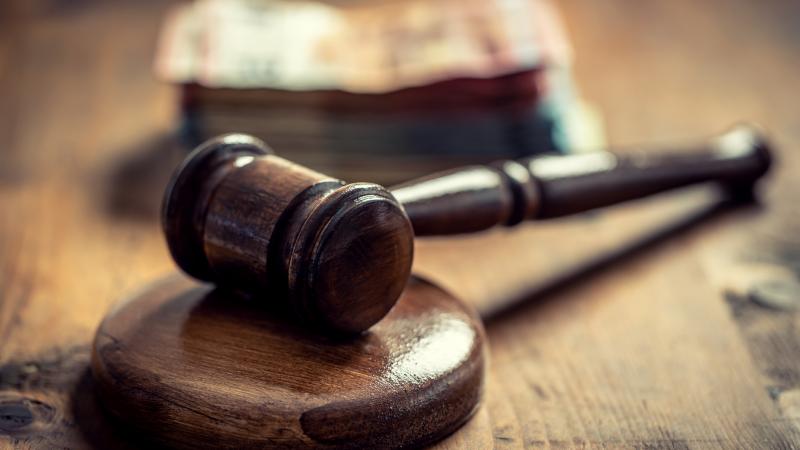
In a significant legal development just months before the 2026 midterm elections, U.S. District Judge Carl Nichols has declined to halt President Donald Trump’s executive order establishing a nationwide framework for voter eligibility verification and new restrictions on the distribution of mail-in ballots.
The May 28 ruling gives the administration a temporary legal victory in its effort to strengthen election security while leaving the door open for future challenges as the policy moves closer to implementation.
Executive Order 14399
Signed on March 31, 2026, President Donald Trump’s executive order 14399 directs the Department of Homeland Security, in coordination with the Social Security Administration, to develop “State Citizenship Lists” identifying verified U.S. citizens of voting age in each state.
According to the order, the lists would be compiled using federal records, including citizenship and naturalization databases, SSA information, and data from the Systematic Alien Verification for Entitlements (SAVE) program, before being shared with state election officials.
The order also instructs the U.S. Postal Service to draft regulations that would restrict the delivery of absentee and mail-in ballots to individuals appearing on approved voter eligibility lists. Administration officials say the measure is intended to strengthen election security by providing an additional federal safeguard against vulnerabilities in the voting system.
The White House argues that the order relies on existing federal authorities, including provisions of the Help America Vote Act (commonly called “HAVA) and is designed to enhance enforcement of election laws.
Trump has long advocated for stricter voter identification and citizenship verification requirements, particularly for mail-in voting. Ahead of signing the order in March, the president said, “I think this will help a lot with elections.”
Legal Challenge and the Court’s Reasoning
The executive order immediately prompted lawsuits from Democratic organizations and civil rights groups, including the Democratic Senatorial Campaign Committee, the NAACP and the League of United Latin American Citizens. The cases were consolidated before Judge Nichols, a Trump appointee serving on the U.S. District Court for the District of Columbia.
The plaintiffs argued that the order exceeds presidential authority, intrudes on states’ constitutional role in administering elections, and could violate federal privacy protections by consolidating sensitive personal information. They also contended that the policy could disenfranchise eligible voters, particularly in states that expanded mail voting during and after the COVID-19 pandemic.
In his opinion, Nichols concluded that the challenges were not yet ripe for judicial intervention.
“The Court recognizes that the Postal Service may ultimately issue a final rule that directly affects Plaintiffs or their members, or that the Government may develop State Citizenship Lists that omit specific individuals due to particularized flaws,” he wrote. “Plaintiffs may, of course, renew their motions if and when those future actions occur. Until then, however, Plaintiffs cannot show that preliminary injunctive relief is warranted.”
Nichols also acknowledged broader concerns about the balance of power among Congress, the states, and the executive branch. However, he emphasized that no concrete injury has yet occurred because the order’s most consequential provisions remain unimplemented.
The ruling does not determine whether the executive order is ultimately lawful. Instead, it allows federal agencies to continue planning and rulemaking while litigation proceeds.
Legal observers noted that the opinion methodically addressed each of the plaintiffs’ arguments, a level of detail that could help support the ruling if it is challenged on appeal.
Meanwhile, a proposed USPS regulation tied to the order is expected to appear in the Federal Register as early as June 2, a development that could prompt a new round of legal challenges.
Reactions to the Decision
Civil rights organizations pledged to closely monitor implementation of the order and document any evidence of voter disenfranchisement for future litigation.
Danielle Lang, an attorney with the Campaign Legal Center who represents some of the challengers, said her clients “look forward to the next stage of this litigation.”
“Across the country, the administration is attempting to unlawfully shape the electorate to the will of the president and sow doubt in how our elections are run – but we will continue working to stop them at every turn,” Lang also.
Broader Context
The order represents the latest effort by the Trump administration to reshape election administration through executive action. A similar initiative launched in 2025 encountered legal setbacks, highlighting the ongoing controversy surrounding federal involvement in election procedures.
The 2026 directive followed the collapse of broader voting reform efforts in Congress, prompting the White House to pursue executive action instead.
Supporters, including many Republican advocates of election integrity measures, describe the policy as a long-overdue safeguard. They point to documented cases of election fraud and argue that a centralized citizenship verification system could bolster public confidence in elections without significantly affecting voter participation. Under the order, states would continue to control voter registration and ballot acceptance, while the federal lists would serve as a supplemental resource.
Critics view the measure differently. Voting rights groups and Democratic leaders argue that it could create new barriers for demographic groups that tend to vote Democratic, including younger voters, racial minorities, and residents of large urban areas who are more likely to rely on mail voting.
Organizations such as the Brennan Center for Justice have questioned the accuracy of federal databases, warning that outdated or incomplete records could incorrectly exclude eligible citizens. Opponents have also raised concerns about privacy, administrative burdens, and the role of USPS, which already faces operational and financial pressures.
Potential Impact on the 2026 Midterms
Several states have filed parallel challenges in other courts, raising the possibility of conflicting rulings and a fast track to the Supreme Court. With midterms approaching, the order’s implementation could affect voter participation, though its full effects remain uncertain.
For now, the executive order remains in effect and unblocked by the courts. Its long-term legality – and its potential impact on voter participation – remain unresolved.
Top Stories

Trending
Just the News Spotlight
Just News, No Noise