Pope Leo urges world to rein in AI’s power to eliminate jobs, automate warfare in first encyclical
Roman Catholic Church leader also asks for forgiveness for church’s slowness in condemning slavery centuries ago.
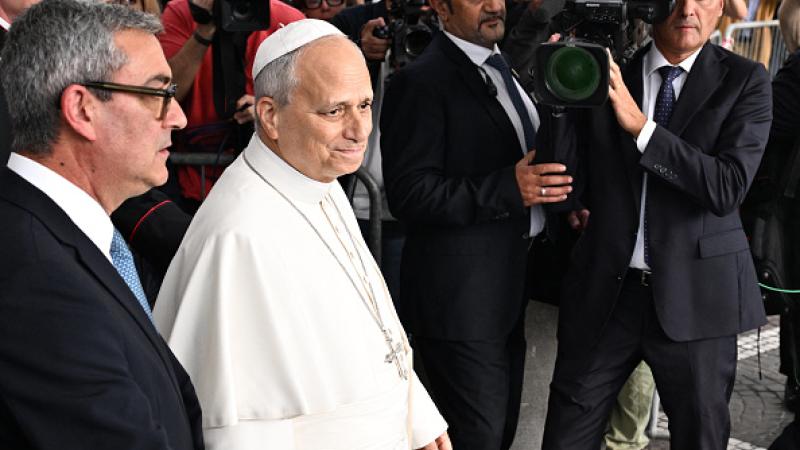
Pope Leo XIV on Monday unleashed his first and long-awaited papal encyclical, pleading with political and corporate leaders to create robust regulations that keep artificial intelligence from eradicating jobs or developing autonomous warfare that could end humanity.
“It is not enough to invoke ethics in the abstract; robust legal frameworks, independent oversight, informed users and a political system that does not abdicate its responsibility are required,” Leo wrote. “A more moral AI is not enough if that morality is determined by a few.”
In the 42,000-plus word document entitled “Magnifica Humanitas” — Magnificent Humanity — the U.S born pope urged labor unions to build larger political coalitions with government and corporate leaders to protect employment from the powerful automation of jobs that AI could achieve.
“A society that guarantees employment to only a small fraction of the population, despite having a high level of technical development, risks exposing many to forced inactivity, a lack of responsibility and the absence of daily tasks and stimuli, resulting in human and cultural impoverishment,” Leo warned.
The pope also sounded alarm on the rising use of AI in warfare, saying “the growing ease with which autonomous weapons systems can be deployed makes war more ‘feasible’ and less subject to human control.”
In a separate communication, Leo also asked for forgiveness for the Roman Catholic Church’s centuries-long failure to condemn slavery.
“It is impossible not to feel deep sorrow when contemplating the immense suffering and humiliation endured by so many in stark contrast to their immeasurable dignity as persons infinitely loved by the Lord,” he wrote. “For this, in the name of the Church, I sincerely ask for pardon.”
He specifically repudiated the church’s complicit sanctioning of slavery, especially in the 14th through 16th centuries.
“Already in the early modern period, the Apostolic See of Rome, responding to the requests of sovereigns, intervened several times in order to regulate and legitimize forms of subjugation, and, in certain cases, including the enslavement of ‘infidels,’” he noted.
He said while the leaders of that time can’t be judged by 21st century moral sensibilities, “neither can we deny nor diminish the delay with which both society and the church came to denounce the scourge of slavery.”

Top Stories



Trending
Just the News Spotlight
Just News, No Noise