Related Articles


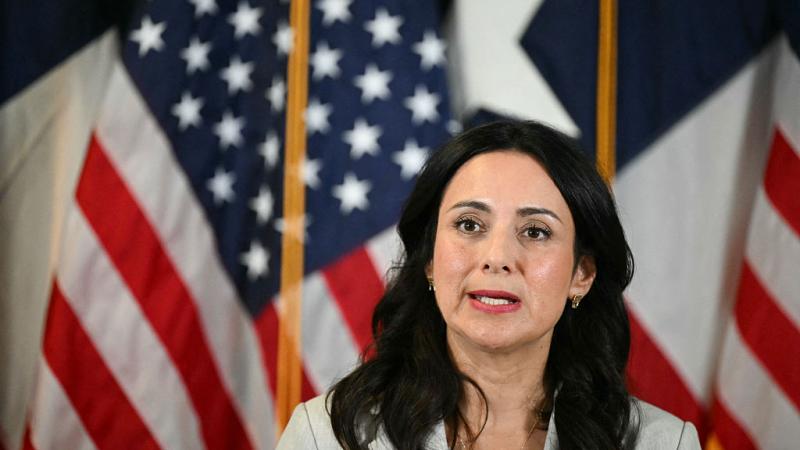
Interest in Georgia as a home to data centers, evident by 25 new filings this year, shall be tested by the plan for a pause on new developments by Democratic Gov.-elect Keisha Lance Bottoms.
Interest in Georgia as a home to data centers, evident by 25 new filings this year, shall be tested by the plan for a pause on new developments by Democratic Gov.-elect Keisha Lance Bottoms.
She takes the oath of office Jan. 11, the first day of the General Assembly session.
Bottoms says she will sign an executive order to pause new data center development but has not yet finalized the duration of the pause, spokeswoman TaNisha Cameron told The Center Square on Thursday.
Data center development has sparked debate about its costs and benefits to taxpayers.
In Effingham County, OpenAI is proposing a new data center. The Effingham County Commission on Tuesday approved a preliminary site plan for the project. Back in August, at a county commissioners' meeting, County Manager Tim Callanan said the proposal could lead to lower property taxes.
The Effingham County Industrial Development Authority and OpenAI have agreed to a payment-in-lieu-of-taxes deal, according to a presentation by Callanan in August. The agreement will generate $2.5 million to Effingham County and $3.5 million to Effingham County Schools in 2027, according to the county's website.
The payments increase each year, and by 2032, OpenAI will pay $27 million to the county and $39 million to the schools, according to Callanan.
The owner of a $350,000 house would see a $1,300 break on their yearly taxes, according to Callanan.
Effingham County commissioners, in a 4-1 decision Tuesday, tabled a possible moratorium on new data center development.
OpenAI said on its website that it is paying its way and not using taxpayer money. Data centers can apply for Georgia tax breaks.
A bill sponsored by state Sen. Chuck Hufstetler, R-Rome, would have ended the tax breaks, but it failed to pass before the General Assembly ended its 2026 session in April. Hufstetler, at a meeting in March, estimated that the tax breaks had been costing the state $2.5 billion since they began.
Good Jobs First, in a report by Anthony Elmo, estimated the state could lose nearly $3 billion in tax revenue in fiscal year 2027 from data center tax breaks.
"We truly believe that people should know what the trade-offs are because local legislators, city officials and county officials are making trade-offs, and we should know what we're trading," Elmo said in an interview with The Center Square.
Only 30% of Georgia's data center boom can be attributed to a 2018 tax break intended to support the industry, according to a December 2025 report from the Georgia Department of Audits and Accounts.
The report, conducted by the University of Georgia's Carl Vinson Institute of Government, contradicted the university's 2022 study. That analysis estimated 90% of Georgia's data center activity was attributable to the tax break.
Sheila Edwards, a Democrat elected to the Public Service Commission on Nov. 3, said she wants the regulatory board to look closely at data centers and supports Bottoms' proposal for a pause. She joins Democrats Peter Hubbard and Alicia Johnson on the commission, giving it the first Democratic majority in 30 years, according to the Democratic Party of Georgia.
"We have 159 counties in Georgia," Edwards said in an interview with The Center Square. "Everybody should have a voice in whatever the decision-making is relative to data centers."
The Department of Community Affairs has received 25 Development of Regional Impact filings in 2026. The latest is from Atlanta-based DC Blox for a new 500,000 square-foot data center to be completed in December 2029, according to the filing on Monday.
Debbie Jennings, in an interview with The Center Square, said some concerns about data centers are overblown. Data centers provide additional tax revenue to a community and sometimes sign agreements for community projects, said the senior policy manager with the nonprofit National Taxpayers Union.
"Moratoriums not only pause development but it also pauses any negotiation that you could make with individual developers," Jennings said. "You're shutting yourself out from those discussions on any specific benefits you want to get for your taxpayers such as property tax revenue and great infrastructure upgrades."