Trump’s Jones Act waiver, regarding shipping, expires Sunday unless extended
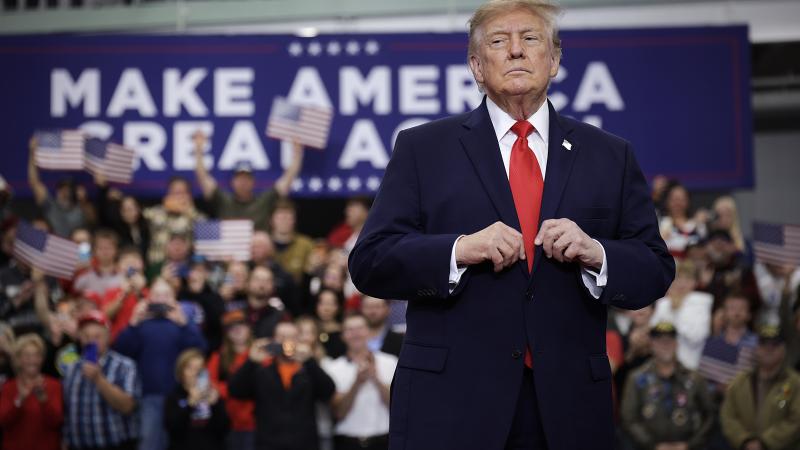
President Donald Trump will decide by Sunday whether to extend temporary Jones Act waivers that allow foreign-flagged ships to haul fuel and farm goods between U.S. ports in an effort to curb rising consumer prices.
(The Center Square) - President Donald Trump will decide by Sunday whether to extend temporary Jones Act waivers that allow foreign-flagged ships to haul fuel and farm goods between U.S. ports in an effort to curb rising consumer prices.
The Jones Act, passed by Congress in 1920, generally requires cargo shipped between U.S. ports to travel on vessels that are U.S.-built, U.S.-flagged and U.S.-crewed.
Energy industry associations and free-market advocacy groups are urging the White House to extend and loosen the exemptions ahead of winter to boost heating oil and diesel supplies, while domestic shipbuilders are demanding that the administration let the policy expire after 243 days, the longest continuous waiver period in U.S. history.
When the president announced a 60-day suspension of the Jones Act in March, the waiver covered 659 product categories, including coal, jet fuel, propane, butane, urea and anhydrous ammonia. The president extended the waiver in May and again in August.
Under the law, the U.S. Department of Homeland Security can grant a Jones Act waiver only when deemed necessary in the interest of national defense—authority the Trump administration first invoked in March amid oil market disruptions caused by the conflict with Iran. Critics of the administration’s action say it is unclear if the waiver addresses an "immediate adverse effect on military operations," as required by the statute.
In an Oct. 22 letter to the president, the National Taxpayers Union and 18 other policy and advocacy groups—including Americans for Prosperity, Americans for Tax Reform, and the American Energy Alliance—argued that stricter rules for waiver approvals have reduced fuel shipments.
"This requirement is significantly weakening your efforts to bolster domestic shipping," the groups wrote, calling an expanded extension "particularly imperative" ahead of winter heating demand.
U.S. Maritime Administration data cited by the groups shows that foreign-flagged vessels logged 311 voyages between domestic ports under the administration's first two waivers issued in March and May, but after additional rules restricting eligible shipments took effect on Aug. 17, only 19 trips were authorized.
An Oct. 5 Bloomberg Government review of 128 vessel availability requests found that major U.S. refiners—led by Valero Energy Corp. with 29 filings—submitted the bulk of waiver applications, which included short-haul fuel transfers between Gulf Coast ports.
Domestic shipbuilders and maritime operators are urging Trump to let the waiver lapse on Sunday, arguing that nearly eight months of exemptions failed to lower retail pump prices while stalling domestic investment. On Monday, AAA reported the national average for a gallon of regular gasoline stood at $4.01 down 16 cents from a week ago and 36 cents lower than a month ago, but still 94 cents higher than at the same time in 2025.
An analysis by the American Action Forum, a conservative Washington, D.C.-based think tank, estimated that moving fuel from the Gulf Coast to the West Coast on foreign-flagged vessels saved roughly 6.6 cents per gallon, while shipments to the East Coast brought consumer costs down about 1.5 to 2 cents per gallon.
In a Nov. 3 letter to the White House, American Maritime Partnership President Jennifer Carpenter said the trade association’s members have reported more than $2.6 billion in delayed investments in ship production and another $700 million in deferred orders for dredging vessels.
"Allowing the Jones Act waiver to expire as scheduled will restore certainty, protect American jobs and ensure our domestic maritime industry remains strong," Carpenter wrote. She said a prolonged extension of the waiver weakens both U.S. shipbuilders and national security.
Carpenter noted that more than 28% of the exemptions granted under the waiver involved ships or companies tied to China, which gave them access to U.S. ports and inland waterways, raising national security concerns.
The White House, Department of War and Department of Homeland Security have not stated whether the waiver will be extended before it expires Sunday night.

Top Stories



Trending
Just the News Spotlight
Just News, No Noise