Expert: Arizona aims to become leader in nuclear energy
The Arizona Energy Promise Taskforce recently released a report outlining 31 policy recommendations to modernize the state’s energy grid.
(The Center Square) -
(The Center Square) - A broad consensus exists among Arizona leaders about making the state a national leader in the nuclear industry, according to Maren Mahoney, the director of the Arizona Governor's Office of Resiliency.
The Arizona Energy Promise Taskforce recently released a report outlining 31 policy recommendations to modernize the state’s energy grid.
The task force consisted of 36 members ranging from the private, public sector and nonprofit sectors; universities; experts and the general public.
Gov. Katie Hobbs ordered the report in September via executive order to help address the state’s increasing energy demands. The March 1 report says Arizona utilities could see a peak demand increase of up to 40% over the next 15 years.
“I look forward to continued work on an energy strategy that unleashes Arizona’s energy potential, lowers energy costs for our working families, and empowers businesses to start and grow right here in Arizona," the Democratic governor said.
To help make Arizona a leader in nuclear energy, the task force recommended the state create “pathways for project finance certainty and implement financing guardrails to decrease project costs and protect affordability for Arizonans.”
In addition, it recommended the state “support project development at the state level to accelerate project timelines and decrease costs.”
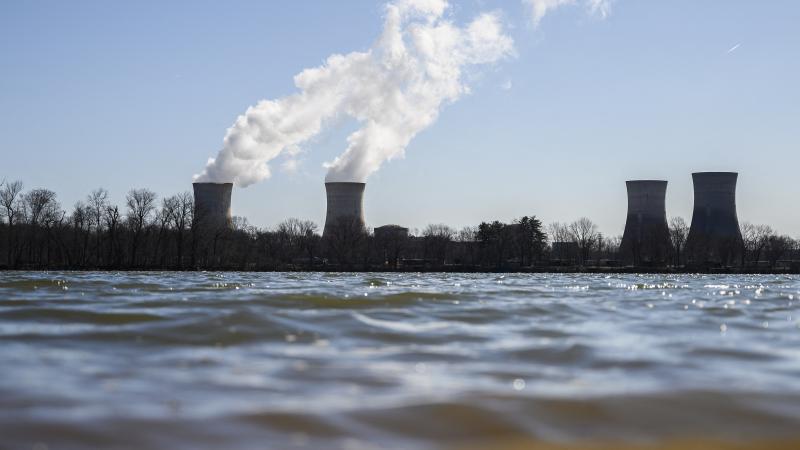
Currently, Arizona has one nuclear plant: The Palo Verde Nuclear Generating Station.
The station is America’s second biggest nuclear power plant, which the report said is qualified to support advanced nuclear technologies.
According to the report, this type of technology creates the ability to provide emissions-free electricity, support data centers and strengthen the state’s electrical “grid resilience.”
The report said Arizona gets 27% of its energy from nuclear power. However, Mahoney told The Center Square there is no goal for how much it will provide in the future.
Going forward, she said Arizona will have “a lot of collaboration” because there is “a lot of work to be done to get new nuclear power online.”
The report said new nuclear development is in the early stages with a focus on community engagement, funding sources, potential locations and technology options.
Mahoney said the federal government is a “significant actor” regarding nuclear energy, specifically in the regulatory and licensing requirements. She added that the Department of Energy plays a role in developing nuclear energy by funding projects.
National labs, in particular the Idaho National Laboratory, are helping Arizona understand the future of nuclear power as new technologies enter the industry, Mahoney said.
In April 2025, the Arizona Public Service, Salt River Project and Tucson Electric Power submitted an application for a $25 million U.S. Department of Energy grant to locate potential nuclear generation sites. The application is still ongoing.
At the state level, the report said the Arizona Corporation Commission, the state Department of Environmental Quality and the state Department of Water Resources will play key roles in “the siting and permitting of nuclear generation.”
In the Office of Resiliency, the focus is on education and community outreach regarding nuclear energy, Mahoney said.
Arizonans are excited about nuclear power, but there are uncertainties around these new technologies, she said.
Arizona will need to educate people about nuclear energy and how the state plans to approach it in the future, according to Mahoney. She noted that education includes telling people that the industry provides “good-paying, stable jobs.”
The report noted that Arizona has an “existing talent base” for workers in the nuclear sector, but said “proactive investment” across all education levels is needed.
Mahoney said the state government will continue outreach and have conversations regarding implementing the task force's recommendations because “there’s a lot of work to be done" in areas such as workforce development, site selection and funding resources for construction.
The Facts Inside Our Reporter's Notebook
Links
Top Stories




Trending
Just the News Spotlight
Just News, No Noise