Fifth Circuit squashes challenge to Texas ban on foreign land purchase
Law prohibits the purchase of certain private property in Texas by governmental entities. companies and individuals that are domiciled in a country named in three recent Annual Threat Assessment reports.
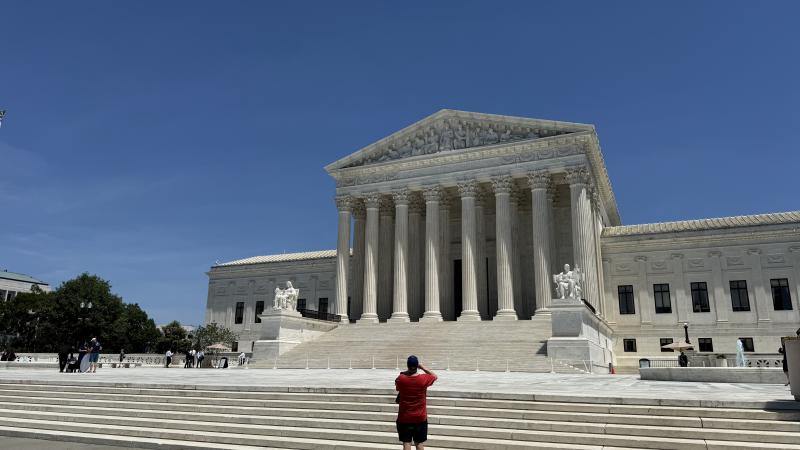
The Fifth Circuit Court of Appeals has handed Texas another win in a lawsuit brought by Chinese nationals challenging a state law banning foreign adversaries from purchasing land in Texas.
The law, which went into effect, Sept. 1, remains in effect.
Earlier this year, Gov. Greg Abbott signed SB 17, filed by state Sen. Lois Kolkhorst, R-Brenham. It prohibits the purchase of certain private property in Texas by governmental entities, companies and individuals that are domiciled in a country named in three recent Annual Threat Assessment reports published by the Director of National Security. It applies to agricultural, commercial, industrial and residential properties as well as mines, quarries, minerals and standing timber; it includes civil and criminal penalties.
The bill took several years to pass after multiple hearings and a Chinese Communist Party campaign against it, in which reporting by The Center Square was highlighted.
This year, under House Speaker Dustin Burrows, R-Lubbock, the bill not only passed but additional measures were included targeting countries of foreign concern and their operatives as well members of transnational criminal organizations like Tren de Aragua and other organizations the Trump administration designated as foreign terrorist organizations this year.
“This is very simple. Hostile foreign adversaries like China, Russia, Iran and North Korea, as well as foreign terrorist organizations like Tren de Aragua, must not be allowed to own land in Texas,” Abbott said when signing the bill, The Center Square reported.
Two Chinese nationals, Peng Wang and Quinlin Li, backed by the New Jersey-based Chinese American Legal Defense Alliance, sued in July to stop the law from going into effect. They sued in U.S. District Court for the Southern District of Texas arguing the law is unconstitutional and discriminatory.
In response, Attorney General Ken Paxton filed a motion to dismiss the lawsuit. In August, Judge Charles Eskridge agreed, dismissing their case without prejudice.
Wang and Li next appealed to the Fifth Circuit. In September, the Chinese American Legal Defense Alliance also filed a class action lawsuit in the U.S. District Court for the Western District of Texas Austin Division, also arguing the law is unconstitutional.
This month, a Fifth Circuit panel of three judges affirmed Judge Eskridge’s dismissal, arguing that Wang and Li lacked standing and “did not demonstrate a credible threat of enforcement of the law.”
In response to the ruling, state Rep. Cole Heffner, R-Mount Pleasant, who cosponsored SB 17 in the Texas House, said the Fifth Circuit judges “delivered a major win for the people of Texas.” The goal of the law is “to ensure foreign adversaries like China, Russia, Iran, and North Korea cannot buy up Texas land – and this decision keeps those protections firmly in place.”
An issue that arose in the lawsuit stemmed from the F-1 student visa program.
Wang has lived in Texas for 16 years and is pursuing a Masters of Divinity degree at a seminary in Fort Worth through an F-1 student visa. Li, who entered the U.S. on an F-1 student visa, recently graduated from Texas A&M with an engineering degree. She then applied for an H-1B visa, lives in Austin and works as a water/wastewater treatment plant design engineer for a private company, according to court records.
Wastewater plants in Texas have been the target of cyberhackers. This year, Abbott signed cybercrime and counter-espionage bills into law to address threats posed by the CCP, The Center Square reported.
Wang argued that the student visa program requires him to leave the U.S. when it expires, meaning he could return to China and be banned from buying property under the law. The Fifth Circuit judges replied that when his visa expires he could leave the U.S. and “move to Bolivia,” “Botswana,” or “Berlin” and his claim that the law discriminated against him was unsubstantiated.
Earlier this year, the Trump administration announced changes to the F-1 visa system arguing foreign nationals have taken advantage of the system becoming “forever students.” Changes include limiting the program to the duration of academic studies not to exceed four years, implementing additional vetting measures, and enforcing removal of those who overstay their visas.
So far this year, the State Department has revoked 8,000 student visas, it told The Center Square, more than twice the number revoked in 2024.
The Facts Inside Our Reporter's Notebook
Top Stories

Trending
Just the News Spotlight
Just News, No Noise