Louisiana preparing nuclear energy framework as power demand grows
Louisiana Economic Development Secretary Susan Bourgeois said the governor has made clear he sees a future for the state in the domestic resurgence of nuclear power and has directed state agencies to develop a plan for what that could look like.
(The Center Square) -
Louisiana officials are preparing to roll out a state framework aimed at positioning Louisiana for growth in nuclear energy.
Gov. Jeff Landry’s administration is looking to tie the state’s economic development ambitions more closely to rising power demand.
Louisiana Economic Development Secretary Susan Bourgeois said the governor has made clear he sees a future for the state in the domestic resurgence of nuclear power and has directed state agencies to develop a plan for what that could look like.
“In the coming weeks, that framework will be rolled out,” Bourgeois said in an interview, describing Louisiana as “all in” on the opportunity.
The push comes as Louisiana courts a wave of energy-hungry industrial projects, from Hyundai to liquified natural gas expansion and artificial intelligence data centers. Bourgeois said those announcements all point to the same reality: Louisiana’s growth strategy is increasingly tied to its ability to provide large amounts of reliable power.
“This is a power-first economy,” Bourgeois said. “To not pay attention to something as significant as a nuclear opportunity would be a miss.”
In December 2024, Landry convened a working group to examine not just advanced nuclear generation but also the broader nuclear industry and supply chain, according to Stephen Swiber with the Department of Conservation and Energy. Included were the Department of Environmental Quality, the Department of Conservation and Energy, and the Louisiana Public Service Commission.
Swiber said that work has recently wrapped up and a final product is expected soon. He added that the Trump administration is “very keen on advanced reactor deployment” and said Louisiana is determined to move in step with that push.
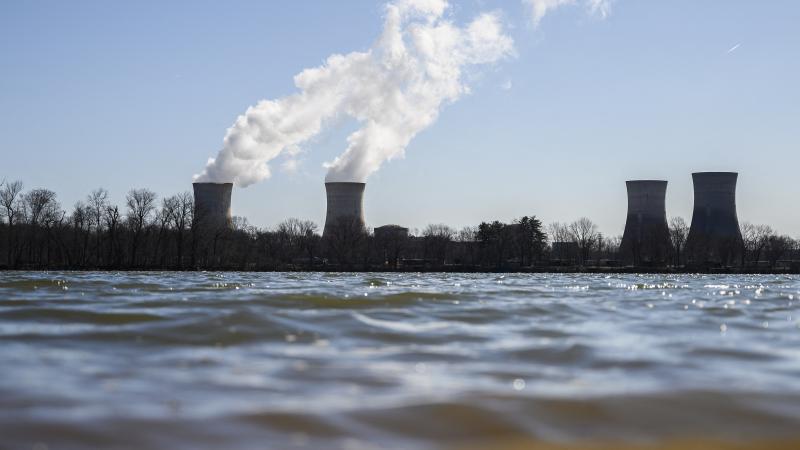
Bourgeois said part of what has held nuclear back in the United States has been public perception shaped by older accidents and longstanding safety concerns. But she said technological advances and process improvements have changed the equation, while growing demand for cleaner energy has made nuclear harder to ignore.
“Truth be told, nuclear is a very clean energy,” Bourgeois said. “It’s a great way to create a clean energy product.”
Louisiana lawmakers have already begun moving policy in that direction. During the 2025 legislative session, legislators advanced a bill by Sen. Adam Bass, R-Bossier City, aimed at speeding environmental permitting for small modular reactors and other advanced nuclear projects. Supporters said the measure would help Louisiana cut red tape and better align with federal efforts to accelerate next-generation reactor deployment.
At the higher education level, LSU appears to be one of the most active campuses in the state on nuclear-related work. Last year, LSU signed a memorandum of understanding with Idaho National Laboratory focused in part on small modular reactor technology, saying the partnership would connect students, faculty and researchers around advanced nuclear applications and cybersecurity for critical energy infrastructure.
The Facts Inside Our Reporter's Notebook
Top Stories



Trending
Just the News Spotlight
Just News, No Noise