Renewable energy program from 2022 law hasn’t launched
The law in question, Assembly Bill 2316, established a renewable energy subscription program for utility ratepayers, as well as a separate community renewable energy program.
(The Center Square) -
(The Center Square) — A renewable energy program instituted by a 2022 law has still not been launched more than three years later, California lawmakers said during a committee hearing on Wednesday.
The Assembly Energy and Utilities Committee looked at the efficacy of the legislation as part of a response to ensure previously passed laws are enforced.
The law in question, Assembly Bill 2316, established a renewable energy subscription program for utility ratepayers, as well as a separate community renewable energy program.
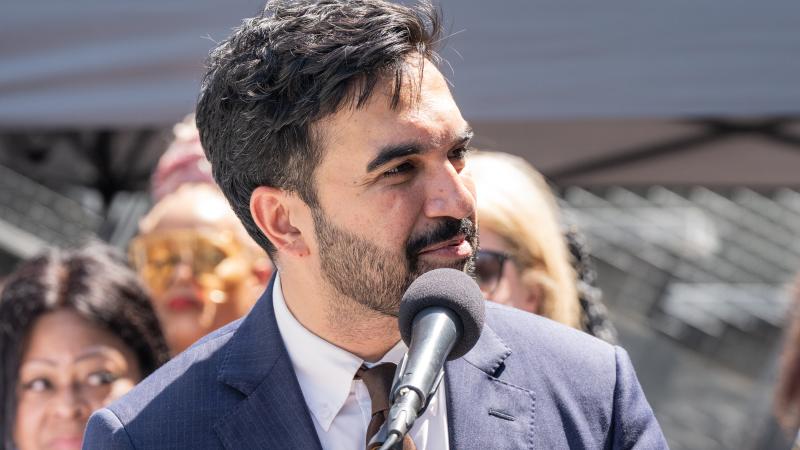
“There are a number of important policy outcomes we wanted to be able to achieve,” Assemblymember Christopher Ward, D-San Diego and author of the bill, said during Wednesday's meeting. “We wanted to make sure the California Public Utilities Commission would help us create a community renewable energy program that would prioritize access for community solar for renters and other low-income households.”
The bill was intended to create a mid-scale community solar program for all Californians, especially those who couldn’t afford their own rooftop solar system, Ward said. He added it was meant to be rolled out in a way that is cost-effective for all ratepayers.
In September 2023, Ward and 20 other California lawmakers wrote a letter to the state’s Public Utilities Commission, telling the agency that the group supported a proposal that ensured the energy program was cost-effective and expanded access to low-income residents. However, the program, as Ward and other lawmakers envisioned, was never implemented by the Public Utilities Commission.
“Unfortunately, the decision that was adopted by the commission was wholly inconsistent with AB 2316’s outcomes, and it rejected the community solar model in favor of another proposal,” Ward said during the outcome review hearing. “This decision represented a dismissal of California’s need for clean, reliable and affordable energy.”
Ward added that the proposal implemented by the commission actually created an outdated, commercially unworkable program that wouldn’t result in new renewable projects or energy storage.
“Today, that leaves us without the untapped potential of 5,000 megawatts of carbon-free energy,” Ward said. “The projects aren’t there. The bill credits aren’t there. The jobs aren’t there.”
Commission officials said during Wednesday's hearing that the renewable energy program they rolled out is meant to be economically efficient, results in low-cost power purchase agreements and makes electricity bills more affordable.
Another reason commission officials told lawmakers for why the AB 2316 renewable energy program wasn’t rolled out as lawmakers intended is because of stipulations attached to federal funding to pay for the program - even though AB 2316 didn’t stipulate that the program would rely on federal dollars.
“That external funding was part and parcel of the program design at that point,” said Kerry Fleisher, the director of distributed energy resources, natural gas and retail resources at the California Public Utilities Commission. “We had a lot of details we had to work out, and we really had to carefully design that program, because if we weren’t compliant with the entire EPA [Environmental Protection Agency] requirement, we couldn’t apply that funding.”
According to Ward's comments during the hearing, 22 other states and the District of Columbia have similar renewable energy programs. He noted those states’ programs didn’t take three years to get up and running.
No other state relied on federal funding to start a community solar program, Ward added.
“I’m looking forward to continuing to work with the PUC to get this on a better track that is ultimately going to deliver on the objectives we sought out in the first place,” he said.
Wednesday's oversight hearing was part of a response to concerns that taxpayer dollars are wasted or fraudulently spent on laws that are carried out haphazardly or not at all. Assembly Republicans highlighted the problem in recent statements after a CBS News investigation found lawmakers ignored recommendations from the nonpartisan Legislative Analyst’s Office, which recommended how the state could save billions of dollars in waste or fraud.
Some lawmakers previously told The Center Square that they are concerned that after they get a bill passed and signed into law, government workers fail to carry out the law's mandated programs.
“As legislators, it is disheartening for us to find out that these departments or regulatory agencies are sitting on these bills, waiting us out until we are termed out, or refusing to implement these bills as if they are members of the Legislature,” Assemblymember Mike Gipson, D-Gardena, told The Center Square. “When we pass a bill, the implementation starts the first of the year. That’s what our expectations are as lawmakers.”
A number of other bills passed in the last several years are also scheduled for oversight hearings in the coming weeks.
The Facts Inside Our Reporter's Notebook
Links
Top Stories



Trending
Just the News Spotlight
Just News, No Noise