Related Articles
Trump has a first-year resume that most American presidents would prize: prices for gas, prescription drugs and eggs are way down, the southern border is secure, 2.6 million illegal aliens have left the country voluntarily or via deportation, and eight peace deals were struck.
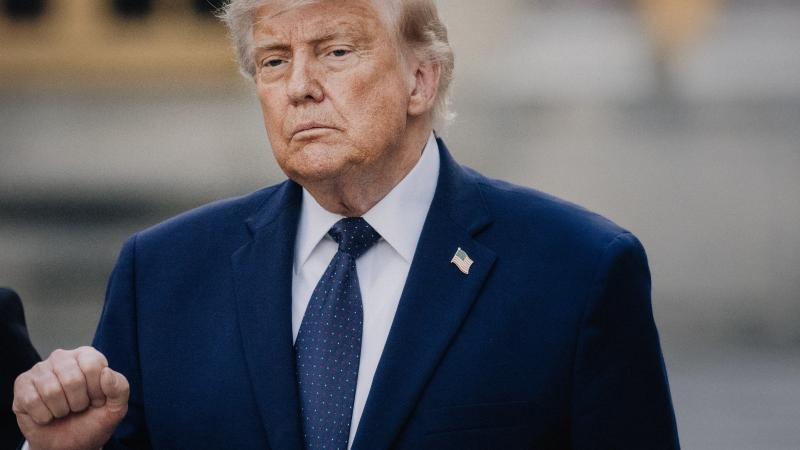
President Donald Trump's Oval Office address to the nation on Wednesday night will not only afford a chance to rattle off the successes he delivered in his first year but also to offer a platform of bold new ideas to address the anxiety afflicting Americans over affordability in an economy that still has a lingering Biden hangover.
Aides and members of Congress expect the 47th president to focus extensively on the affordability issue over the next few weeks and to lay out a 2026 agenda. The ideas could range from launching an affordable housing boom akin to the post-WWII era to reducing the size of government.
The ideas expected to be raised could be as ambitious as the ones he campaigned on in 2024 for his return to the White House. "I think it'll be a real uplifting talk, and I think he will lay out his plan," Rep. Ralph Norman, S.C., told Just the News on Tuesday night.
"And you know what he is so unbelievable at doing is bringing people together. He's actively involved. I don't know when the man sleeps," Norman said.
"The man works 24/7, and at the end of the day, he just loves America, and America is seeing what somebody that loves a country is doing, and he's making this happen as no other president that I know of can do, could have done," he added.
On paper, Trump has a first-year resumé that most American presidents would prize: prices for gas, prescription drugs and eggs are way down, the southern border is secure after four unsafe years, 2.6 million illegal immigrants have left the country voluntarily or via deportation, eight peace deals were struck around the globe, Iran's nuclear weapons program was crippled and Americans will reap big tax cuts next year that include no taxes on tips and Social Security.
But like most improvements, the successes are showing up quicker in statistics and economic indicators than at the dinner table or water cooler. That has left employers cutting payroll and Americans anxious about their bottom line.
Treasury Secretary Scott Bessent believes the impact of Trump policies will settle in by the second quarter of next year, especially if America's economy ends 2025 with a crisp 3% growth rate as Bessent predicted.
"Democrats created scarcity, whether it was in energy or over-regulation, that we are now seeing this affordability problem, and I think next year we're going to move on to prosperity," Bessent said this month.
Meanwhile, the president’s aides and his outside advisers have been crafting big ideas to unveil in the speech and in the coming weeks to create confidence that Trump has a vision to keep the affordability improvements going and to ease the anxiety.
Just the News interviewed two dozen outside and internal advisers who have the president’s ear. Here are four big ideas they've been discussing:
Trump could instruct all Cabinet departments to devise in the next 60 days a program to launch the next great and affordable housing boom in America. This generation’s parents and grandparents built their homes the old-fashioned way with brick, concrete and lumber. But the next generation of affordable homes may also roll off assembly lines from innovative new companies like BOXABL. Advocates say they will be just as durable and luxurious as the homes of the past, but quicker to build and cheaper to buy.
In order to unleash such a boom, the Trump administration could devise a new national model home building code and seek to pressure — with federal purse strings — all communities nationwide to follow it.
Experts say the affordability crisis in America is caused in part by local zoning regulations in blue cities and states that often price homes out of the reach of everyday Americans.
California's morass of regulation has kept thousands of victims of the Palisades fires from ever building again on the property they own.
The model code could be offered to each community to use as they see fit. However, communities that stray from it to the detriment of their residents could be penalized by loss of federal funds, essentially allowing Trump a carrot-and-stick incentive.
Trump could also emphasize he will soon be picking a new Chairman of the Federal Reserve Bank who is committed to lowering interest rates. Such downward pressure on interest rates would make mortgages affordable again, and also encourage more established homeowners to move again. The latter will free up lower-priced inventory for young home buyers because established home buyers will be incentivized with mortgage rates like they had a decade or more ago, in the 2.5 percent and 4.5 percent range.
The enhanced Obamacare subsidies that propped up insurers’ profits during the COVID and post-pandemic era are certain to die in Congress, just like Democrats planned under President Joe Biden.
Trump has a once in a generation chance to reform health care to make it more affordable and competitive. His presidency got off to a good — if not well-appreciated — start when he negotiated historic deals with drugmakers that brought down costs of everything from weight-loss drugs to in vitro fertilization.
The president could move the country toward a vastly different health care system with greater options and even seed one of conservative’s favorite ideas: universal health care savings accounts by taking money from his tariff program and putting it into the HSAs of every American.
The president could then break the long cartel of state insurance pools, declaring that states that keep out competitors from other parts of the country are engaged in illegal restraint of trade and open up all states to health insurance competition where insurers compete to give the best plans at the best prices.
Trump could also declare that Americans can meet mandatory minimum insurance requirements like those in Obamacare by buying catastrophic plans where people can choose to pay basic costs out of pocket but be covered for major medical events, just like homeowner or car insurance. Such plans used to fill a gap in the market but essentially ended during Obamacare.
If Trump made such a commitment, he would fulfill one of the great promises left from the Reagan agenda while bringing down deficits and freeing money to end the shortfalls in Medicare and Social Security that hit early next decade.
Trump would not even have to touch entitlement programs, except to root out fraud. He could simply send an order to all Cabinet agencies instructing them to immediately begin using the Social Security deceased persons' database each and every month to check all welfare, entitlement and grant recipients and make sure they are alive BEFORE their next check is sent.
It’s common sense. But believe it or not, it doesn’t happen.
Similarly, he could instruct all federal agencies to ensure any recipient of grant money, contract money or welfare who lists a foreign address is a lawful recipient before such checks are cut. Not just once. But each and every month.
He could also ask all federal agencies to eliminate all duplicate and redundant programs identified each year in the annual Government Accountability Office redundancy and duplication reports and cut out all waste. And finally, he could instruct each Cabinet secretary to review the high-risk spending reports of the GAO and eliminate all unnecessary wasteful and abusive spending.
These reports have been issued for years but are almost never acted upon. David Walker, the former U.S. Comptroller General of the United States who served both Democrat and Republican presidents, has been advocating for these changes for years. He estimates they could save hundreds of billions of dollars a year.
Trump could also sign an executive order mandating that any federal employee who fails to root out waste, fraud and abuse will face penalty, up to and including termination.
Finally, Trump could rally many in his base by putting his political capital behind the movement to convene a one-time Convention of the States. This tool was envisioned by the Founding Fathers in Article V of the Constitution as a last-resort to force Congress to do its job and put guardrails on future spending. Trump excited the convention movement earlier this year by socializing a Just the News story on the topic.
From Mexico’s efforts to dry up U.S. water supplies in the Southwest to billionaires buying up land simply to own water tables beneath the ground, red lights are blinking that water is about to become the next oil or gold.
It’s a crisis likely to strike the millennial and Gen Z generations, but Trump could get ahead of it for young Americans by naming a water czar to quarterback policy changes, make international deals and ensure the United States has a water supply that is abundant for decades to come.