Related Articles


The agreement elicited rainstorm of criticism from teachers unions, others.
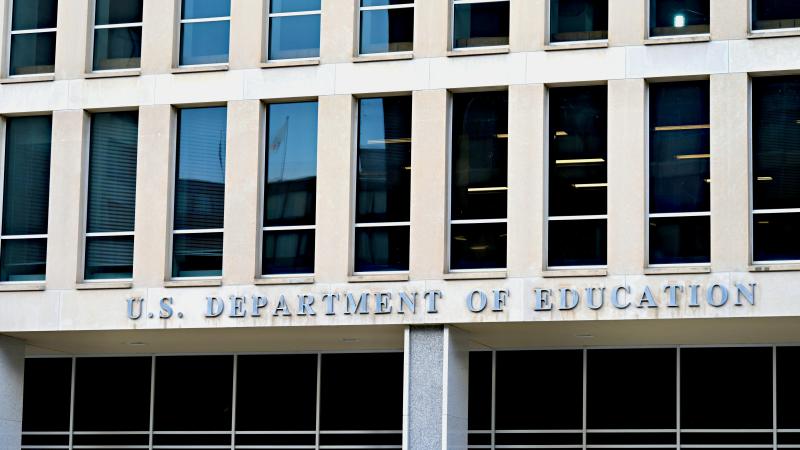
The Education Department’s recently-announced joint effort with the Department of Health and Human Services to try to better serve students with disabilities has sparked backlash from teachers unions, education advocates and others.
The partnership, according to the department, would allow it and HHS officials to work jointly on special education and rehabilitative services with the goal of “advancing opportunities for all individuals with disabilities.”
Education Secretary Linda McMahon has defended the partnership, announced last Tuesday, saying the current system is inefficient and that an HHS partnership will strengthen services by combining the expertise of the two departments.
She also says collaboration is a response to feedback from families, educators and education advocates.
Critics, however, believe the collaboration may undermine critical civil rights protections for students with disabilities, such as the Individuals with Disabilities Education Act and Free Appropriate Public Education.
“Before IDEA and the Department of Education’s work to make the promise of integrated, accessible education real children with disabilities were educated at home or within medical, institutional settings.” Maria Town, president and CEO of American Association of People with Disabilities, said in a statement.
“We cannot go back to the segregation and discrimination of pre-IDEA America."
Others question the credibility of HHS to participate in the special education decision-making process.
“Handing IDEA to HHS – an agency without deep experience in education or civil rights enforcement—puts students’ protections at serious risk and abandons families who rely on federal experts to navigate a complex system,” says Becky Pringle, president of the National Education Association (NEA), the largest teachers union in the U.S.
McMahon has assured such critics that federal laws as IDEA and FAPE will not be changed as a result of the partnerships.
And on the specific issue of IDEA protections, McMahon has argued that despite their existence, many families have nevertheless had to fight “tooth and nail for timely and appropriate services,” and face challenges that "abound in every part of their child’s life” as a result of not receiving them.
She also has attempted to make clear the partnership will not result in budget cuts and, in fact, announced last week a proposed special education budget increase of over ½ billion dollars, and $144 million for state and local IDEA programs, in the coming year.
McMahon has also attempted to make clear her department is not transferring responsibility to other departments; her staffers are moved to the relevant department to work jointly to perform special education services.
Not all responses to the agreement have been negative. For other education advocates, the HHS collaboration is a welcome step toward improvement.
Jeanne Allen, founder and CEO of the Center for Education Reform, who has previously promoted the partnership, applauded the move, citing HHS’s status as the “primary federal agency responsible for disability-related health, developmental, therapeutic, and family support services.”
“Families of children with autism, Down syndrome, and other disabilities have long been forced to navigate a fragmented maze of programs split between education and health agencies,” Allen explained, adding that combining the functions will “streamline access, reduce bureaucratic barriers, and improve outcomes for students.”