Trump administration creating ‘incubators’ to develop new tech to counter drone terror attacks
Terrorism through drone warfare is the new frontier of attack, and the U.S. is combatting the threat on multiple fronts.
Drone warfare is at the forefront of every nation's developing defense technology and the Trump administration is utilizing private sector "incubators" to bring America's best and brightest together to protect the country, including one new company's groundbreaking product to counter malign drones within seconds.
"We are acting as an incubator, as a catalyst for all of those potential solutions in the private sector...a competition for the best athlete to find out not only what drones we need, because we're not going to be buying drones from other countries, we're going to be building them here for our war fighters, the first-person view drones (FPV) that are used to attack our enemies, but also for the defensive measures," Dr. Sebastian Gorka, Senior Director for Counterterrorism at the National Security Council, told Just The News.
One such anti-drone technology that has emerged is Space Eyes' Morpheus Counter-Unmanned Aerial System (C-UAS) that combines advanced radio-frequency signal processing, artificial intelligence, and quantum-resistant security to detect, classify, and neutralize airborne threats within seconds.
"We just hosted one of the largest sporting events we've ever seen in the world with FIFA and that (drone warfare) was at the forefront," Derek Gordon, President of National Security at Space Eyes told Just The News.
"But a few years ago, the countermeasures were not what they are now. Criminals are always trying to be a step ahead of law enforcement in their techniques, and the US government as a whole spends an exorbitant amount of resources on countering something that costs the enemy a few dollars to make. So, without the partnership of private industry, this problem wouldn't be solved," Gordon said.
Funding the fight against drones
Exorbitant resources are currently hanging in the balance. On July 22, the House of Representatives narrowly passed its $1.15 trillion National Defense Authorization Act (NDAA) for fiscal 2027, authorizing Defense Department programs and related activities. The Senate version remains stalled after a failed cloture vote.
The same day, the House advanced a reconciliation budget resolution with roughly $60 billion in additional defense funding, mainly for Iran conflict costs and munitions. It falls far short of the administration’s $350 billion request and faces an uncertain Senate path. The NDAA authorizes spending but does not appropriate funds.
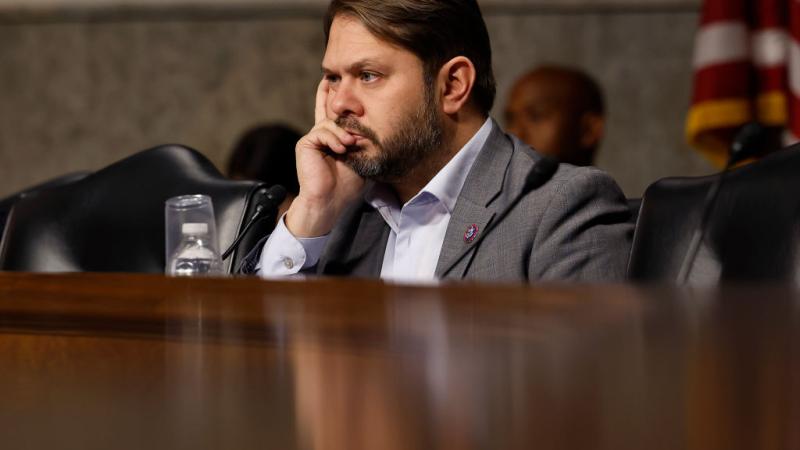
"We just have to make sure our defense department is adequately funded, and it's funded for the right things. We have to make sure we're not fighting the last war and end some of the contracts we put in place 10 or 15 years ago, and make sure we have a robust defense against drones both in the battlefield and at home," Rep. Glenn Grothman, R-Wis., told Just The News.
Grothman also made a suggestion to close the gaps between federal funding and drone attacks in towns across America. "I think this is something that would be a good thing for Mike Johnson to look at. Provide some assets or perhaps to fund some drones for local governments as well."
Drone warfare is here to stay
The soft launch of drone warfare emerged during the Russia-Ukraine war. Both sides have heavily relied on drone warfare for reconnaissance, targeting enemy positions, and conducting direct attacks.
Ukrainian forces pioneered the use of inexpensive FPV drones for precision strikes, while Russia has deployed Iranian-made Shahed drones for long-range assaults. This technology has transformed the battlefield, enabling low-cost attrition and reducing the need for manned aircraft in many scenarios. FPV drones are "first-person view" drones, remote-controlled quadcopters that stream real-time video from an onboard camera directly to pilot goggles.
Since Russia’s full-scale invasion of Ukraine in 2022, nations including Israel, Iran, Sudan, Ethiopia, Mali, Myanmar, India and Pakistan have employed drone warfare in conflicts ranging from the Gaza war and Iran-U.S. clashes to African civil wars and border skirmishes, using one-way attack drones, FPV models and other systems for surveillance, precision strikes and low-cost attrition.
Additionally, during the October 7, 2023 attack on Israel, Hamas used drones primarily for surveillance, dropping explosives and grenades on positions, and some one-way attacks, alongside paragliders, rockets, and the main ground invasion that killed at least 1,200 people and took 251 hostages.
Fury from the sky abroad...but also here at home
Drone warfare can be used not only on the battlefield, but also here on U.S. soil to carry out mass-casualty events.
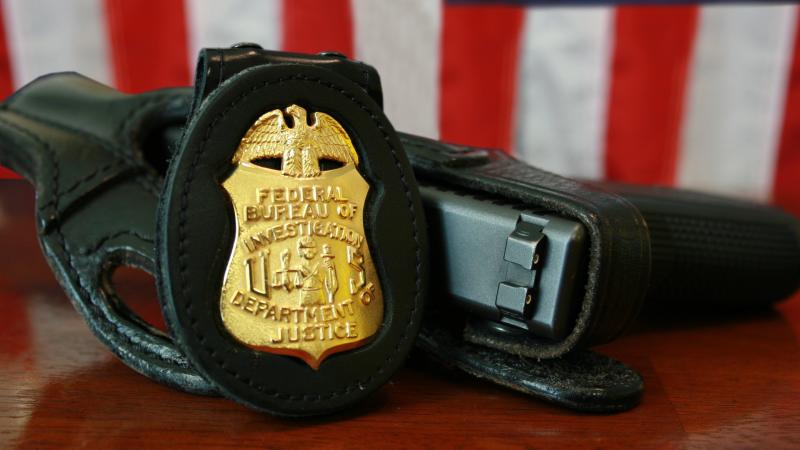
In June, the FBI thwarted an alleged plot to attack the UFC Freedom 250 event at the White House with explosive-laden drones and snipers targeting officials and attendees. Authorities learned of the scheme on June 10 and arrested multiple suspects in a multi-state operation. The event, attended by President Donald Trump and others, proceeded without incident.
That catastrophe was foiled, but as Texas State Senator Phil King told Just The News, "What stops somebody from sitting in the parking lot at the local airport and trying to fly a drone into a 747 as it takes off?" King is a former police officer and serves as Chairman of the Texas Senate's Select Committee on Homeland and Border Security, keeps a keen eye on drone warfare and technology and how it's utilized on the southern U.S. border in Texas.
He highlighted how some drones, like the Griff Aviation 300, have a maximum load capacity of nearly 500 pounds. However, to transport deadly drugs like fentanyl, that capacity is hardly needed. One pound of fentanyl is roughly 450,000 mg, which equates to 225,000 lethal doses. It's estimated to be 100 times more potent than morphine.
King warned further about the public safety aspect of drone warfare. "What stops them from flying into that football stadium?" King queried. "I am really shocked at the amount of threat risk that we have there, and I don't think there's going to be any one way to deal with it. I think you're going to see a lot of Skunk Works. There's a lot of creativity going on in law enforcement, local law enforcement agencies."
"How would America change if someone built a few drones by downloading the information off the net on their 3D printer or just going to the store and buying them, program them with some kind of explosive or chemical or something, and at the same minute just flew them into three high school football games," King continued. "America would change forever."
Prison drone drops
Authorities report a growing use of drones to smuggle contraband into prisons. Unmanned aircraft have dropped packages containing drugs, cellphones, weapons and other banned items over facility walls in multiple states and countries.
Prison officials say the deliveries undermine security and fuel violence inside. Agencies are responding with detection technology, netting and restricted airspace rules to counter the threat, but no doubt as the technology progresses, the countermeasures must also.
Amanda Head is White House Correspondent for Just The News. You can follow her here.
The Facts Inside Our Reporter's Notebook

Top Stories



Trending
Just the News Spotlight
Just News, No Noise