Related Articles
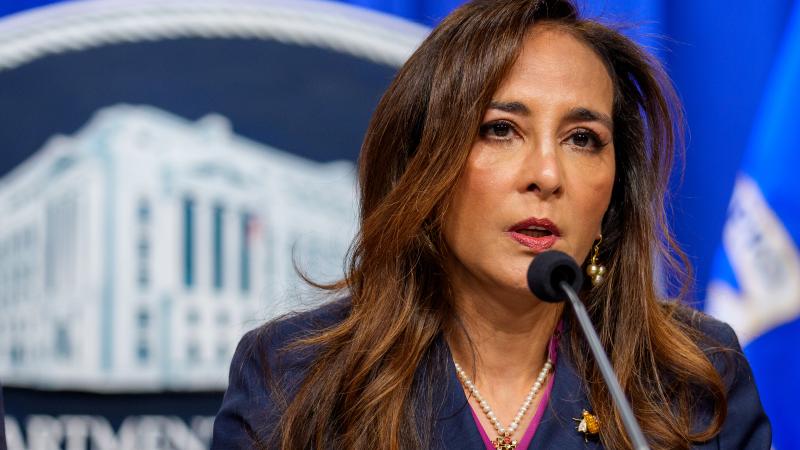


The proposed credit, created under Section 25F of the Internal Revenue Code as part of the 2025 tax law, is permanent and nonrefundable, and allows individuals to claim up to $1,700 a year and $3,400 for married couples filing jointly. Thirty states have already opted in to what is essentially a "school choice" option. Education Secretary Linda McMahon told Just the News "We're doing something wrong. We're failing our students."
The Treasury Department and IRS released proposed regulations this week for the Education Freedom Tax Credit, the first federal program allowing taxpayers a dollar-for-dollar credit of up to $1,700 for cash gifts that fund K-12 scholarships. The program, called the Federal Scholarship Tax Credit by the IRS (and also known as the Education Freedom Tax Credit), further expands on a campaign promise by President Donald Trump to expand education freedom by returning tax dollars to parents.
"We have spent $3 trillion since the Department of Education was established in 1980, and we've continually watched our NAEP scores consistently decline over these past 46 years," Education Secretary Linda McMahon told Just The News. "We're doing something wrong. We're failing our students, and when you only have 30 to 35% proficiency, that's high in some areas, we really have to do something to change this," she added.
“Education freedom is the key to unlocking opportunity and success for our next generation of students,” McMahon said, noting that this represents "the largest expansion of school choice in history, [and] will supercharge those opportunities for millions of children."
The credit, created under Section 25F of the Internal Revenue Code as part of the 2025 tax law, is permanent and nonrefundable, and allows individuals to claim up to $1,700 a year and $3,400 for married couples filing jointly. The proposal is currently in its "public comment" period, and citizens have until December 1, 2026, to file comments.
Thirty states have already opted in, according to the Treasury announcement and contemporaneous tallies, including Florida, Texas, Ohio, and Colorado. McMahon confirmed that estimate to Just The News and added, "Governors have to opt in to it into the program, and it's anathema to me that not every governor has already opted in, because I think it is such a great opportunity for states to have more money in their states for their education programs."
By 2030, Treasury and the IRS project the program could support 600 to 700 organizations, drawing nearly $26 billion a year from more than 11 million taxpayers, and funding as many as 2.2 million scholarships.
Qualified expenses cover a wide range of education options, including private-school tuition, tutoring, supplies, computers, extended-day programs, and disability services for students in public, private, or charter settings, the Education Department has noted.
The decision to opt in has been a mixed bag on both sides of the aisle.
Several Democratic governors, including those in Hawaii, Minnesota, New Mexico and Oregon, have said their states won’t participate. In other states, Republican lawmakers and Democratic governors have had some disputes over the decision to opt in.
Meanwhile, according to Stateline, Democratic governors in North Carolina and Kansas vetoed legislation requiring their states to opt in.
At the same time, GOP-controlled legislatures overrode both vetoes, and the Democratic governors of Arizona and Wisconsin successfully vetoed GOP legislation that would have opted their states into the program.
Contributions must go to Scholarship Granting Organizations, which are 501(c)(3) public charities that award the scholarships. States must opt in and list eligible organizations. Taxpayers anywhere may give to an approved organization in a participating state, but students must live in a participating state to receive aid, according to the Treasury Department announcement.
On Thursday, Treasury and the IRS issued the proposed rules and companion temporary procedures that set the operational framework ahead of the Jan. 1, 2027, start date. The guidance confirms the $1,700 and $3,400 limits and clarifies that each spouse on a joint return may qualify for the individual amount. It also states that organizations meeting the statutory tests must be included on a state’s list: states cannot add discretionary barriers that exclude qualifying groups.
Scholarship Granting Organizations must keep the contributions in separate accounts, spend at least 90 percent of the relevant income on scholarships, and serve at least 10 students who do not all attend the same school.
A safe harbor allows groups whose activities are largely scholarship-related to measure the spending test against a segregated account. Household income eligibility is capped at 300 percent of area median gross income adjusted for family size, with streamlined verification for families already in certain needs-based programs, foster children, and students receiving tutoring or special-needs services in lower-income areas.
Under those rules and safe harbors, Treasury estimates roughly 96% of children in participating states would qualify. The credit is reduced by any state credit claimed for the same gift. States face an advance-election deadline of January 1, 2027, and must submit their organization lists by February 15, as outlined in the agency guidance.
Amanda Head is White House Correspondent for Just the News. You can follow her here.