Big Tech ready for Trump’s data center pledge, but electricity rate increases are more complicated
Electricity rates are rising, and giant data centers are an easy culprit to blame. Trump’s Rate Payer Protection Pledge may be aimed more at mitigating what could be a major impediment to his A.I. goals than changing how the facilities get their electricity, and the effects on rates.
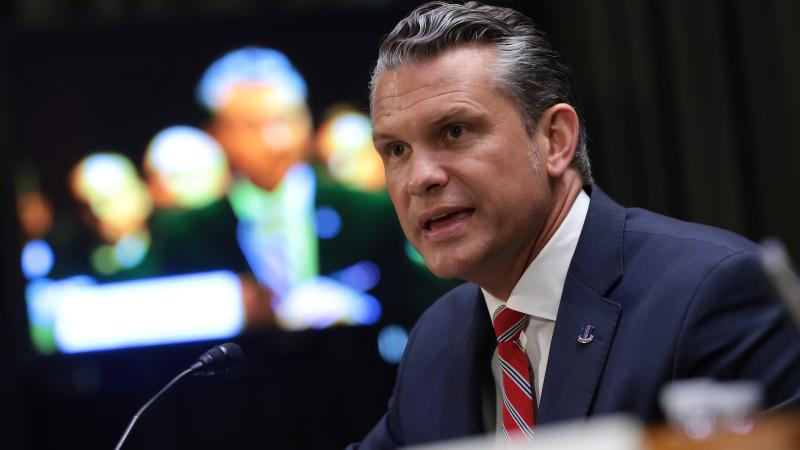
During his State of the Union speech on Tuesday, President Donald Trump announced a program to address concerns that data centers are driving up electricity costs.
“We're telling the major tech companies that they have the obligation to provide for their own power needs. They can build their own power plants as part of their factory so that no one's prices will go up, and in many cases, prices of electricity will go down for the community — and very substantially down,” Trump said.
Across the U.S., there’s been a growing hostility to data centers from local communities that is comparable to the opposition to renewable energy facilities, and the primary concerns are water use, impacts on jobs and increased electricity rates.
In March, Trump plans on meeting at the White House with major tech companies to have them formally sign the president’s Rate Payer Protection Pledge, Fox News reported. Amazon, Google, Meta, Microsoft, xAI, Oracle and OpenAI appear ready to take up Trump’s data center generator challenge.
While Trump will get credit for coordinating the companies’ compliance, their readiness to bend to the president’s will is likely because they already are doing what the president wants.
Electricity rates are more complicated than people realize
The president’s predecessors pushed to eliminate fossil fuels from the electric grid, and it’s no longer capable of scaling up the electricity supply to meet the exponential growth in electricity demand from data centers at the speed they need. In many cases, tech companies have been turning to on-site natural gas generators to satisfy their new data centers’ needs.
Electricity rates are rising, and data centers present an easy culprit to blame. Local opposition has been a primary impediment to the buildout of wind and solar power, so Trump’s Rate Payer Protection Pledge may be aimed more at mitigating what could be a major impediment to his A.I. goals than changing how the facilities get their electricity.
Energy expert Robert Bryce maintains a database on data center projects rejected as a result of local opposition since 2023. The database includes instances of communities restricting or placing moratoriums on the facilities, and it now has 39 entries. In the past month alone, there have been five new moratoriums on the construction of data centers in Michigan, Indiana, North Carolina and Colorado.
Trump has been pushing to help the U.S. accelerate data center construction to get ahead of competitors like China in the race to develop A.I. In July, he signed an executive order that provides financial support and streamlines permitting for new data facilities.
Data centers' energy requirements are uncertain
There is uncertainty as to how much electricity data centers will demand in the future. Independent research and energy intelligence company Rystad estimates that 100 gigawatts of demand from data centers in the U.S. will come online between 2024 and 2035. If that turns out to be accurate, that will be ten times the New York summer peak electricity demand, according to the Institute for Energy Research.
The Electric Power Research Institute estimates that from 2024 to 2030, data centers will consume between 4.6% and 9.1% of all electricity generation in the U.S. The U.S. Energy Information Administration (EIA) estimates that data centers will consume 350 terawatt-hours of electricity. For comparison, the average American home uses 10 megawatt hours per month. On the other hand, a study by the Bipartisan Policy Center and Koomey Analytics estimates no increased demand from data centers.
While the amount remains debated, wherever new data centers are being built, they will surely add demand to the grid. This year, according to the EIA, the nation’s electricity generation capacity will reach a record high of 86 gigawatts.
Of that total, 28% is battery storage, which doesn’t produce electricity. That leaves 61.7 gigawatts of new generating capacity in 2026, and of that, 89% will be intermittent wind and solar. This means only about 11% of new capacity — 6.3 gigawatts — coming online next year will be reliable generation from natural gas.
At the same time, U.S. power plant owners have scheduled 11 gigawatts of generation capacity for retirement this year. Almost all of that is coal- and natural gas-fired power generation. The Department of Energy had delayed some of those retirements, but the total amount of baseload power may be shrinking in the U.S.
Wind and solar won't cut it: Data centers turn to natural gas
Since data centers need constant electricity, almost none of them are turning to unreliable wind and solar, according to a report by Cleanview, which advocates for the wind and solar industry. Cleanview identified 46 data centers that plan to build their own power sources, with a combined capacity of 56 gigawatts. Of the generation equipment that Cleanview could identify for the facilities, 75% are natural gas-powered. The rest was nuclear, fuel cells and battery storage.
While Cleanview’s report appears to show that data centers’ energy demand is a problem, it’s inadvertently demonstrating that wind and solar power aren’t up to the task of satisfying industrial applications. They identified only one facility in Nevada — Switch’s Citadel Campus — that plans to utilize solar.
“Citadel shows that renewables-first behind-the-meter development is possible in the right location with the right economics,” Cleanview optimistically states.
State-level comparisons dispute narrative of blaming data centers for rate hikes
Alex Stevens, manager of policy and communications with the Institute for Energy Research, told Just the News that there are holes in the claims that data centers are driving up electricity prices. He said a comparison of New York and Texas highlights that data centers don’t necessarily drive up rates.
In 2025, data centers in Texas demand was 8 gigawatts, according to the Texas grid operator, the Electric Reliability Council of Texas. New York’s data center demand was approximately 850 megawatts, according to a report by Mordor Intelligence. If data centers drove up electricity rates, Texans should be paying through the nose. Instead, New Yorkers pay an average of $0.2387 per kilowatt-hour, compared to Texans who pay $0.1583 per kilowatt-hour. That's almost half of what New Yorkers pay.
Texas and Virginia lead the country in data center growth, and like Texas, Virginia's citizens pay below the national average electricity rate, at $0.1526 per kilowatt hour.
New York has an aggressive renewable energy mandate that rejects Trump’s energy policies. Those policies seek to unleash American energy, and although Texas is a leader in renewable energy, it has few renewable energy mandates and the most robust oil and gas sector in the country.
“Yes, data centers require electricity. Yes, when you have increases in demand, prices go up. But if your state has sensible energy policies, it's not something you need to worry about,” Stevens said.
What Trump might be thinking
The Institute for Energy Research's Stevens points out that preventing data centers from being constructed actually lowers the number of customers a utility serves and drives up electricity rates. Electricity is actually very cheap to produce, and electricity bills largely reflect the cost of infrastructure. Those costs are then distributed among ratepayers based on the amount of electricity they consume. More data centers means more ratepayers to help cover the cost of those infrastructure investments.
Trump is likely aware that data centers’ electricity demand only becomes a problem when the supply can’t be met, thus his “unleashing American energy” vision likely seeks to greatly increase the supply of energy to meet all demands.
While Trump’s Rate Payer Protection Pledge will help address concerns that data centers drive up energy costs, Stevens said that Trump isn’t doing himself any favors giving those concerns credibility. On the other hand, there’s only so much the federal government can do. Most policies and regulations driving intermittent "green" energy onto the grid and retiring baseload generators are at the state level, Stevens said.
Trump’s attention on the matter is likely welcomed by the communities fearing their bills are going to go up as a result of an increase in the number of data centers. Trump may be weighing the political capital of the pledge and deciding that it’s a net gain for his energy and data center policies.
Kevin Killough is the energy reporter for Just The News. You can follow him on X for more coverage.
The Facts Inside Our Reporter's Notebook
Links
- growing hostility to data centers
- Fox News reported
- primary impediment
- Robert Bryce maintains a database
- he signed an executive order
- Rystad estimates
- Institute for Energy Research
- Electric Power Research Institute estimates
- Energy Information Administration (EIA) estimates
- estimates no increased demand
- EIA
- 11 gigawatts of generation capacity
- delayed some of those retirements
- report by Cleanview
- Switchâs Citadel Campus
- Institute for Energy Research
- Electric Reliability Council of Texas
- according to a report by Mordor Intelligence
- $0.2387 per kilowatt-hour
- lead the country in data center growth
- rejects Trumpâs energy policies
- reflect the cost of infrastructure
- follow him on X
Top Stories




Trending
Just the News Spotlight
Just News, No Noise