Democrats try rhetoric to sell voters on a bill that would bring back Biden-era climate policies
Among other things, the Energy Bills Relief Act would promote the development of wind and solar farms on public lands, bring back Biden's LNG policies, and reinstate renewable energy subsidies that were ousted with the One Big Beautiful Bill Act. More than half of House Democrats have signed on in support of the bill, despite polling that shows a decline in popularity of "green" energy.
Rep. Sean Casten of Illinois and Rep. Mike Levin of California — both Democrats — are pushing a bill that would overturn many aspects of President Donald Trump’s unleashing American energy agenda and bring national energy policies back to the Green New Deal-style policies of the Biden administration.
Among other things, the Energy Bills Relief Act would promote the development of wind and solar farms on public lands and reinstate renewable energy subsidies that were ousted with the One Big Beautiful Bill Act.
It would also require assessments of liquified natural gas (LNG) export permits under guidelines that were the basis for former President Joe Biden’s pause on the permits, which includes factoring in climate impacts of LNG exports. More than half of House Democrats have signed on in support of the bill.
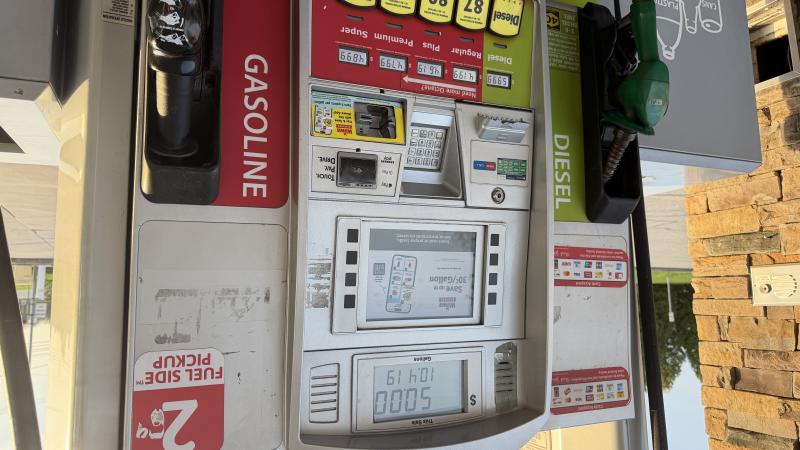
The conflict in Iran has driven up the price of gasoline. In this environment, the Democrats’ strategy may get some play with voters, at least as long as the prices remain high. Larry Behrens, communications director with Power the Future, told Just the News that if voters bet on Biden’s energy policies, they’re going to be disappointed.
“Nobody likes paying these energy prices, but they're still meaningfully lower today than under the same policies in this bill. No doubt voters have clearly had enough of the pain, empty promises, and dependence on Beijing’s supply chains. Americans want real relief through American energy production—not more taxpayer cash funneled overseas to prop up failed green fantasies,” Behrens said.
Serious about costs
While the bill aims to bring back the Biden-era climate policies, noticeably absent from Democrats’ promotion of the bill is any mention of climate. The focus is entirely on affordability.
“Families across America are struggling with ever-increasing energy prices. In the last year, electricity rates have soared, increasing by as much as 13% under the Trump administration. We can point to any number of things that have driven those increases, but at the center of it is that our current energy policy prioritizes the interests of energy producers over the interests of energy consumers,” Casten said in a statement.
A 2025 Gallup poll found that 48% of Americans believe that global warming will pose a serious threat some time in their lives, which was a record since the question has been asked. However, it’s not clear what Americans mean when they say it’s “serious.”
Polls that ask respondents how much they’re willing to pay to address the problem find rapidly falling support for any measures that raise costs. An Associated Press–NORC Center for Public Affairs Research from October, for example, found that less than 40% are willing to pay even $1 per month for a carbon fee. Only 22% would pay $100 per month.
In addition, a Pew Research study published last year shows that "the share [of Americans] who prioritize renewable sources is down significantly from a high of 79% in the spring of 2020" and adds that "Americans have become much more favorable toward more nuclear power plants in recent years. About six-in-ten (59%) now back more nuclear power plants to generate electricity."
When it comes to policy, climate change always takes a back seat to affordability. This is something Dr. Roger Pielke, Jr., senior fellow at the American Enterprise Institute, calls the "Iron Law of Climate Policy."
Climate hushers
The inability to motivate voters with fears of climate change likely explains why Democrats have become noticeably quieter about global warming.
Some Democrats don’t like the change in rhetoric. In a lengthy thread on X, Sen. Sheldon Whitehouse, D-R.I., a prominent climate hawk, bemoans what he calls “climate hushers” and insists the party should continue stoking fears about a climate crisis.
This week, Sen. Chuck Schumer, D-N.Y., unveiled a Senate plan to push renewable energy as an affordability measure. As with the House Democrats, the Senate plan calls for the construction of more intermittent wind and solar farms. It also demands permitting reform for renewable energy, upgrades to transmission lines, data center cost measures, and price protection for consumers.
Schumer unveiled the plan at a League of Conservation Voters Capital Dinner, and his speech contained more references to climate change than the announcement of the House bill. The central argument for the plan, however, is that it will bring down costs. The Wall Street Journal editorial board took Schumer to task for his claims, pointing out that states with high concentrations of renewable energy generally have higher costs.
The Journal's editorial board also pointed out that the problem with permitting reform is that Democrats love it when it advances renewable energy, but they fight it for fossil fuel projects. Unfortunately, you can't lower the burdens of permitting for one without doing the same for the other.
Data doesn't support cheap renewables
While the conflict in Iran will prime voters for talk about energy affordability, the strategy will still run up against the lack of data to support the claim that wind and solar drive down electricity rates.
A new report from the Independent Women’s Forum (IWF) — which touches upon the rising cost of living in a number of areas, including energy, and offers policy solutions — points out that Americans saw their electricity rates increase by 27% between 2019 and 2024. In that time, the share of electricity generated by wind and solar in the U.S. rose from 9.7% to 17.21%.
An analysis published in December by Always On Energy Research and the Institute for Energy Research found that residents of blue states see higher electricity bills than those of red states, and the main reason is the blue states have stricter renewable energy policies. In a separate analysis, researchers at Always On Energy Research found that states with clean energy mandates sought 32% higher rate increase requests since 2020 than those without.
The correlation between increases in renewable energy and electricity rates is seen across the globe as well. The more a country relies on weather-dependent energy sources, the higher its citizens pay for electricity.
States not feds, set utility policies
The IWF report points out that the federal government has little say over electricity regulation. Under the 1935 Federal Power Act (FPA), Congress maintained state power to regulate the electricity generated and sold within their borders.
“It's not some nefarious oil and gas company or the president who they think waves a magic wand determines the prices. It's actually baked into state policy,” Gabriella Hoffman, director of the Center for Energy and Conservation at IWF, told Just the News.
Congress could, however, reinstate the production tax credits that fuel much of the buildout of wind and solar. While Democrats say wind and solar provide the cheapest electricity, they also insist the industry requires ongoing taxpayer money to grow.
For example, monthly utility bills rose 16.9% in New Jersey, for an average annual increase of $260 per family, according to the report released by Democrats on the Congressional Joint Economic Committee. The highest cost increase in the nation forced Gov. Mike Sherrill to declare a State of Emergency on utility costs in January.
“They still haven't learned from the previous administration — the energy scarcity that those policies invited. They are still thinking that subsidies are going to lower prices. There's no correlation with that,” Hoffman said.
Bringing back Biden’s LNG policies
The bill would also, as explained in a three-page brief on it, “protect domestic natural gas prices from the higher-priced international market.”
Biden had paused export permits for LNG, which the DOE authorizes. The Biden administration claimed the pause was necessary to complete a study to determine if the permits are in the public interest, and that included determining how LNG exports would impact the climate and the cost of natural gas.
Energy Secretary Chris Wright later confirmed that the DOE had already completed a study before the pause was issued, but the Biden administration completed another study whose conclusions were, as expected, in line with Biden’s energy policies. This meant exports, according to the Biden administration’s science, would drive up emissions and energy costs.
However, the data has consistently shown that increased exports don’t result in higher natural-gas prices, and the research finding higher emissions from LNG was widely criticized for its questionable methodology.
To become law, the Democrats’ bill will need to somehow get through a Republican-controlled House and Senate, and then land the president’s signature. That’s more than a little implausible. However, the introduction of the bill suggests that there are many Democrats who long for a return to Biden climate policies, and they’re trying to find a way to force voters to get on board with the plan.
“This bill is nothing more than a sneaky push to revive failed Bidenomics, dressing up massive subsidies for Chinese-made solar panels and wind tech as ‘affordable’ energy while demonizing reliable energy sources,” Behrens with Power the Future said.
Kevin Killough is the energy reporter for Just The News. You can follow him on X for more coverage.
The Facts Inside Our Reporter's Notebook
Links
- Energy Bills Relief Act
- ousted
- Power the Future
- said in a statement
- 2025 Gallup poll
- Associated PressâNORC Center
- Dr. Roger Pielke, Jr.
- Iron Law of Climate Policy
- lengthy thread on X
- his speech
- Wall Street Journal editorial board
- new report
- IWF
- rose from 9.7% to 17.21%
- published in December
- Always On Energy Research
- Institute for Energy Research
- separate analysis
- more a country relies
- Federal Power Act (FPA)
- three-page brief
- later confirmed
- completed another study
- consistently shown
- widely criticized
- follow him on X
Top Stories

Trending
Just the News Spotlight
Just News, No Noise