Successful oil and gas lease sale in Alaska a win for Trump administration and Alaska Natives
While the Biden administration promised to listen to indigenous voices, it brushed those aside when they conflicted with Biden's climate policies. A successful lease sale in the National Petroleum Reserve Alaska this week signals big changes for Alaska's Iñupiat tribe on the North Slope.
The Department of Interior held an oil and gas lease sale this week for the National Petroleum Reserve Alaska (NPR-A). It was by every measure a huge success. The sale resulted in 187 leases and generated $163 million.
The sale brought in some of the big players in oil and gas, including Shell, Exxon, and ConocoPhillips. It signaled a lot of interest from the industry in oil and gas development on Alaska’s North Slope.
It was a big win for Trump’s unleashing American energy policy, but it’s also a win for the North Slope Iñupiat Alaska natives.
Consistent advocacy and messaging
Resource development provides over 95% of the North Slope’s tax revenue, which supports essential services in the remote region, including schools, health clinics, water and sewer systems, and wildlife management.
The Biden administration would often say it was listening to indigenous voices, but when those voices collided with the administration’s climate goals, Native Americans took a back seat. Former President Joe Biden passed regulation after regulation restricting resource development, including oil, gas, and mining.
The Voice of the Arctic Iñupiat (VOICE), a 501(c)(4) nonprofit that advocates for the Arctic Slope communities, spent years trying to get a meeting with Deb Haaland, Biden’s interior secretary. She finally sat down with them in the summer of 2024.
“Things have changed quite a bit. And I think it's a testament to our membership, our advocacy and our constant, consistent messaging, no matter who's in office,” since the VOICE was founded in 2015, Nagruk Harcharek, president of VOICE, told Just the News.
Unleashing Alaskan energy
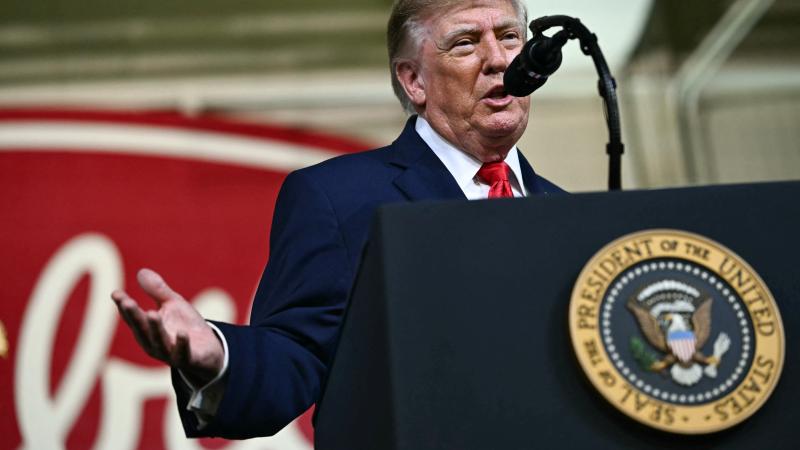
Upon taking office, President Donald Trump went about reversing Biden-era regulations limiting resource development in Alaska. He started with the “Unleashing Alaska’s Extraordinary Resource Potential” executive order.
The order acknowledged the value of Alaska’s resources and directed federal agencies to overturn regulations that aren’t consistent with policies to develop those resources. Among other things, it reopened the Arctic National Wildlife Refuge to oil and gas leasing and revoked Biden’s cancellation of oil and gas leases.
It also prioritizes development and permitting of Alaska liquified natural gas, including the pipelines needed to transport it, and it expedites the permitting of the Ambler Access road, which would allow for mineral development in Alaska’s interior.
Following the signing of the order, the Trump administration and Republicans in Congress continued to chip away at the restrictions the Biden administration placed on Alaska resource development.
Trump administration went to Alaska
When representatives of VOICE were finally granted their meeting with Haaland, they had to travel on short notice to Washington, D.C. That wasn’t the case with the Trump administration.
In June, Burgum, Energy Secretary Chris Wright and EPA Administrator Lee Zeldin traveled to Utqiagvik, Alaska, which can only be accessed by air and by sea in the summer.
The three cabinet members held a town hall meeting, where Burgum announced that the Department of Interior was proposing to rescind the Biden-era restrictions on oil and gas development in the NPR-A, which it did in November.
Besides the town hall meeting, the three cabinet members spent an hour and a half touring the area, looking at schools and civic buildings. “They visited us before they went to meet with industry,” Harcharek said.
The “One Big Beautiful Bill” act passed the following month, which mandates that the Bureau of Land Management hold at least five lease sales in the NPR-A by 2035. Each of these sales must offer no fewer than 4 million acres.
The state of Alaska will receive 50% of the $163 million in bid receipts this week’s sale netted. A portion of that then goes to the North Slope communities that are impacted by the development.
“As the North Slope’s Regional Alaska Native tribal government, we exist to advocate on behalf of our people. We support responsible onshore development […] because it benefits our communities, coexists with our subsistence traditions, and ensures our Iñupiat self-determination,” Morrie Lemen, executive director of the Iñupiat Community of the Arctic Slope, said in a statement.
Trump gave state, indigenous people a seat at the table
With the industry developing resources on their homeland, the Alaska Natives place a high value on responsible development.
The way Alaska state law works, the boroughs of the North Slope will also have a say over industrial activity. In addition to federal and state permits, operators also have to get permits from the borough for their projects.
One of the few projects that was allowed to move forward under the Biden administration was ConocoPhillips’ Willow Project, which is expected to produce 180,000 barrels of oil per day at its peak. Harcharek said representatives of the company had to meet with the North Slope Borough and its constituents in the assembly as part of its local permitting process. Before it could move forward, the borough had to sign off and issue a permit for it.
As projects move forward to develop the acreage sold in the lease sale this week, as well as those in the future, the industry will need to work with the boroughs as part of the permitting process for each project. Harcharek said the members of VOICE are finally getting a seat at the table — not only in allowing resource development but also in how it’s done.
“We have a say. When the time comes and these proposals move forward, they will have to go in front of the North Slope boroughs as well as the other organizations and elected leadership on the North Slope to be able to sell them and get them to move forward,” he said.
Kevin Killough is the energy reporter for Just The News. You can follow him on X for more coverage.
The Facts Inside Our Reporter's Notebook

Top Stories




Trending
Just the News Spotlight
Just News, No Noise