Trump’s rollback of fuel economy standards kicks the crutches from under Biden’s EV mandate
Automakers enthusiastically hopped onto the Biden-Harris administration's electric-vehicle agenda, spending billions — much of it tax money — to transition their lines to EVs. On Wednesday, they got on board the Trump administration's rollback of a key component of the previous administration's mandate.
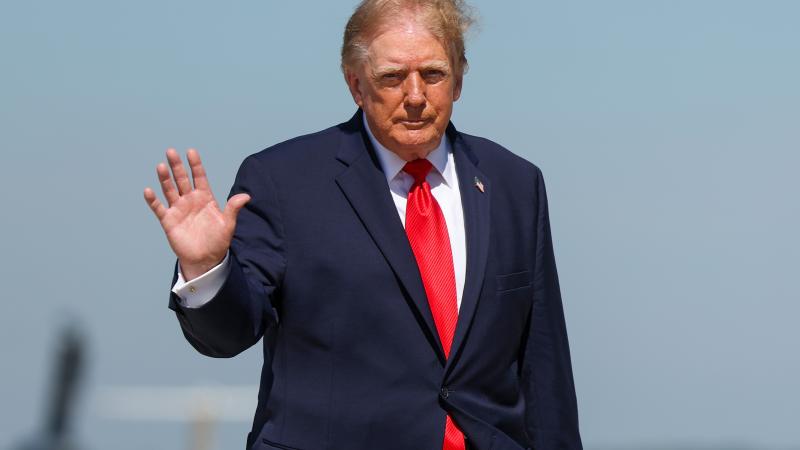
President Donald Trump and Congress have been gradually chipping away at the Biden-Harris administration’s electric vehicle mandate ever since Trump took office. On Wednesday, the Trump administration took aim at the last component.
The president and Transportation Secretary Sean Duffy announced proposed rulemaking that would roll back the National Highway Traffic Safety Administration’s corporate average fuel economy (CAFE) standards.
Under the Biden-Harris administration’s rules, new cars would need to get more than 50 miles per gallon by 2031. Standard automobiles today get approximately 24 miles per gallon. Under the proposed rule change, the standard would be lowered to 34.5 miles per gallon by 2031.
Undoing the mandate
The Biden-Harris administration never directly mandated Americans drive EVs. Instead, it passed a suite of rules that automakers couldn’t meet without producing EVs, in addition to incentives in the form of tax credits.
Among those regulations was the tailpipe emission standards, which set limits on emissions from vehicles. In July, Environmental Protection Agency Administrator Lee Zeldin announced he would rescind the “endangerment finding,” which formed the basis for the tailpipe emission standards.
The previous month, Trump signed three resolutions repealing a regulatory waiver that former President Joe Biden granted California just before Trump was sworn in. The waiver allowed California to set more stringent regulations than the federal government. Under California’s rules, 100% of all cars sold in the state would need to be electric by 2035. Since most states adopt California’s regulations, a large portion of America’s car buyers would be subject to the rules.
In addition to the rulemaking efforts, the One Big Beautiful Bill Act eliminated the EV tax credit, which provided up to $7,500 for the purchase of an EV. It officially expired on Sept. 30.
One more step
The act also eliminated the penalties that automakers faced for failing to comply with the CAFE standards. The rulemaking process to reduce the standards only helps bolster these regulatory changes against efforts by future administrations to bring them back.
The proposed CAFE regulations still require a gradually phased-in increase in fuel efficiency standards, starting with a 0.5% increase per year in fuel efficiency for passenger cars for model years 2023 to 2026. That increases to 0.35% for model-year 2027 cars, and 0.25% for model years 2029 to 2031. Though without penalties, it’s not clear automakers will bother to meet those targets.
The changes, if finalized, will also eliminate the CAFE credit trading program starting in model year 2028. The program allowed automakers to trade credits to comply with federal fuel efficiency standards. These were a significant source of revenue for EV automakers, but they drove up the cost of new vehicles. In the first quarter of 2025, for example, Tesla brought in $595 million from the sale of CAFE credits.
Trump: 'The Green New Scam'
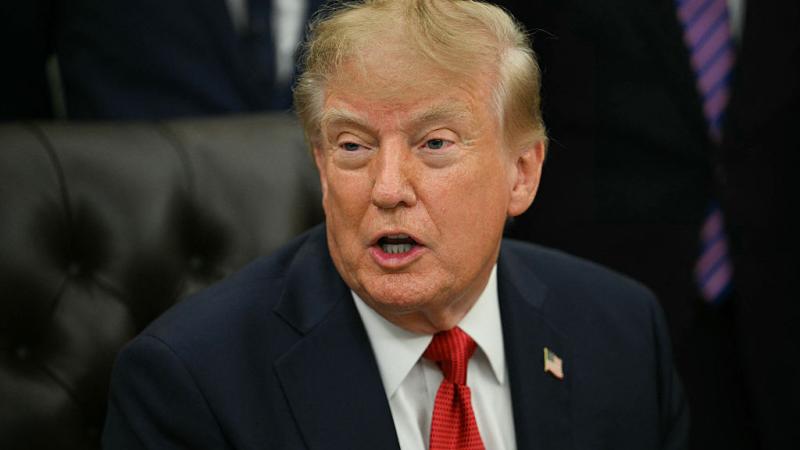
In a press conference announcing the proposed rules, Trump said that Biden’s regulations caused the price of cars to increase more than 25%. In one year, he said, they went up 18%, he said.
“Today, we’re taking one more step to kill the Green New Scam. It’s part of the greatest scam … in American history,” Trump said.
Transportation Secretary Sean Duffy said that the Biden administration’s standards were unattainable and drove up the costs of cars.
“These rules are going to allow the automakers to make vehicles that Americans want to purchase, not vehicles that Joe Biden and [former Transportation Secretary] Pete Buttigieg want them to build,” Duffy said.
Correcting market
During the Biden administration, Ford, Stallantis and General Motors enthusiastically aligned their production plans with Biden’s EV mandate. Car buyers, however, didn’t show as much enthusiasm for the transition, and the automakers were forced to retreat in the face of mounting financial losses.
“The CAFE standards were fairly stringent, but automakers were mostly on board because you still have to play politics,” Aaron Turpen, an automotive journalist who has test driven and written about many EV models, told Just the News.
Turpen said that electric vehicles were a bubble, and like any bubble, it had to pop at some point. “They've been artificially pushed. So they've had this artificial kind of inflation happening to them. And now that that's been removed, their market is correcting,” he said.
The early adopters drove up EV sales, which made it initially appear that the trend toward adoption would fall in line with the Biden administration’s wishes. Those early adopters will continue to buy new EVs, Turpen said, but that’s not going to impact future growth much.
As millennials and Generation Zers see incomes rise, they will become the next group of EV buyers. And it’s likely, he said, that the portion of cars that are electric on America’s roads will increase.
New best friends
Turpen said the new standards will be much better for automakers, allowing them to meet a natural shift in demand as it occurs. But the automakers are still beholden to the whims of Washington, D.C.
“Mostly what manufacturers want is some sort of stability, because they have to work in 10-year spans. Presidents only have to work in 4-year spans,” Turpen said.
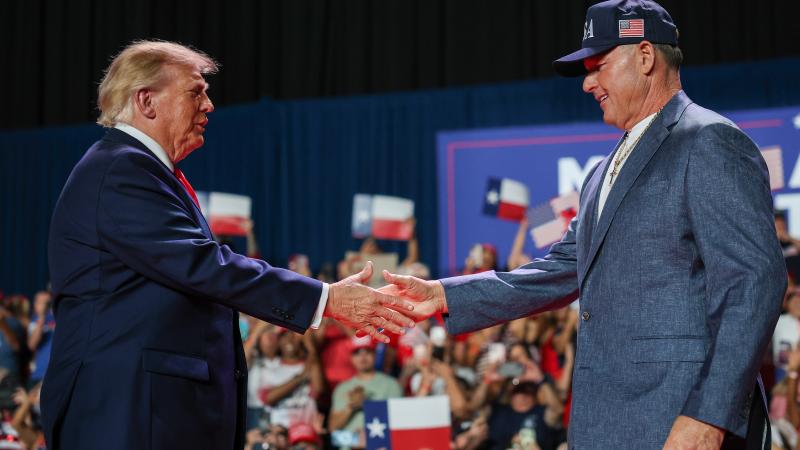
Leadership of the Big Three automakers were as enthusiastic about the proposed changes to CAFE standards as they were about the Biden administration’s regulations. At Wednesday’s press conference, Trump was flanked by the CEOs of Stellantis and Ford, as well as the manager of General Motors’ Orion Plant in Michigan.
Steve Milloy, senior legal fellow with the Energy and Environmental Legal Institute and publisher of “JunkScience.com,” blamed the automakers for making Biden’s EV mandate possible.
“It was their feckless political correctness that allowed the government to go down that path in the first place,” he said in a post on X.
In an interview, Milloy said the car companies have, over the past three decades, become entwined with the federal government. They would fight against government overreach in the 1990s. Then in the 2008 financial crisis, when the federal government provided General Motors and Chrysler with bailouts and Ford with loans, the automakers saw that working with the federal government could be lucrative, Milloy said.
“The car companies, they like regulation. They weren't complaining about an EV mandate. Those are more expensive. They like to sell more expensive stuff,” Milloy said.
The Facts Inside Our Reporter's Notebook
Top Stories



Trending
Just the News Spotlight
Just News, No Noise