Young farmer’s crusade to protect vanishing farmland pits her against solar developers in New York
A social media influencer bought a farm in upstate New York. She says her investment is now threatened by the "aggressive" tactics of solar developers who are buying up farmland where ever they can find it, and New York's siting regulations make little room for public participation in the process.
Renewable energy developers say local opposition is one of the biggest impediments to building wind and solar projects in the U.S. Besides the impact of large-scale industrial projects littering the view of the countryside, opponents are also concerned about the impact on their land values and the destruction of precious limited farmland.
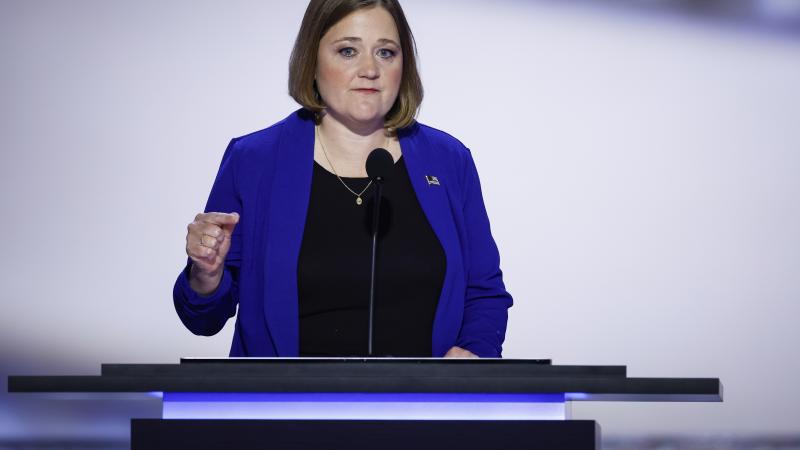
In 2023, Alexandra Fasulo bought 6.74 acres of land near Saratoga Springs in upstate New York, and she set out to create a pollinator farm. That’s a type of farm that produces a productive habitat for pollinators, such as bees and butterflies, with diverse native plants, water sources and nesting areas. She documents her farming efforts in her “House of Green” Substack.
“My goal this year was to see how many rare, endangered and common pollinators I could attract,” Fasulo told Just the News. She said she counted a couple dozen monarch butterflies on her land on one day in September.
Her involvement with solar opposition began one day when she was working in her garden and a neighbor told her that he’s often approached by solar developers looking to buy his land. “It kind of sent shivers down my spine. All these pollinators I've attracted to my farm, what would happen to them? What would happen to my investment?” she said.
Vanishing farmland: 24 million acres fewer than we had 2017
The neighbor assured her that he wasn’t going to sell his land to solar developers, but Fasulo said the developers are aggressive and many farmers do end up selling. Between 2017 and 2024, the U.S. saw a decline of 24 million acres of farmland, a trend that worries Fasulo.
The average age of farmers is rising, and few young people aren’t pursuing careers in agriculture, making it attractive to sell off unused farmland to developers.
Farmland is being sold for other types of development than renewable energy. But renewable energy takes up large amounts of land, and unlike other types of energy, rural land is an attractive location to site wind and solar projects.
Fasulo said on various social media platforms that young farmers will become rarer if farmland continues disappearing. To help protect farmland, she established the nonprofit American Land Rescue Fund, which pays for “environmental attorneys who take on industrial and governmental projects that threaten rural communities, ecological integrity, and agricultural sustainability.”
She posted a video about what her neighbor had told her, and soon after that, she went to Schuylerville, a small village near her farm, to speak to the Saratoga Town Board about a law placing more restrictions on solar development.
At this meeting, a representative of Cypress Creek Renewables came out from Santa Monica, California, to argue that the law was “excessively restrictive,” according to the minutes of the meeting.
“We're in the boonies up here. It's freezing. There's more trees than humans. It’s not New York City. So I was sitting there thinking, ‘why is there a person from California in our little town board meeting?’” Fasulo said.
Green energy fights back
Renewable energy developers are focusing more of their lobbying efforts on the local level.
Across the country, more and more renewable energy projects are being rejected, mostly due to local opposition. According to the Renewable Rejection Database — a project that energy expert Robert Bryce maintains — 1,134 solar, wind and battery projects have been rejected across the country since 2003, and 81 of those were in New York.
Developers “have decided that rural Americans don't matter. And that they're going to side with big business and big alternative energy companies over the wishes of local communities,” Bryce told Just the News.
In his short documentary “SUNBLOCK: The Global Fight To Save Farmland From Big Solar,” Bryce reports on a farm owner in Texas whose land is being surrounded by solar development. He also documents how it’s not a problem unique to the U.S.
The climate advocacy publication Heatmap hosted a webinar this week called “Clean Energy Fights Back,” which provided insight into strategies proponents and developers are using to overcome the local farmers' opposition to renewable projects.
President Donald Trump’s One Big Beautiful Bill Act removes production tax credits that renewable energy developers need to make their projects financially feasible. With the tax credits going away, the panelist said, there’s a rush to build as many projects as possible, so the owners can get within the remaining eligibility window.
“In this period of heightened urgency, it's really important that those things move forward quickly,” Traldi said.
He said a big problem with the local opposition to these projects is that opponents at local hearings far outnumber supporters.
Traldi: 'It's driven by disinformation'
“Elected leaders are responding to what their constituents ask for and what they think would be good for their community. They're not legal processes that have clear rules or standards or things that counties have to look for, have to set,” Traldi said.
Greenlight, he explained, identifies local renewable energy supporters and coordinates with them to counter the opposition.
“It's driven by NIMBY [not in my backyard] groups. It's driven by disinformation. But the good news is we can work with project developers. We can overcome it,” Traldi said.
According to its website, Greenlight America isn’t funded by renewable energy developers. Instead, it relies on funding from anti-fossil fuel groups, which have considerable resources to advance renewable energy. Greenlight's funders include the Rockefeller Brothers Fund and the ClimateWorks Foundation, which has ties to the Chinese Communist Party. The group also funnels donations through Act Blue, the controversial "funding" platform that has been subject to congressional investigation.
‘Siting travesty’
Fasulo has been a vocal opponent of a 1,800-acre solar project near Fort Edwards, New York, which is within a few miles of her farm. She’s not the only one raising the alarm about the project's location.
Roger Caiazza, an environmental analyst with more than 40 years of experience, has written extensively about the project on his “Pragmatic Environmentalist of New York” blog. The project, planned by Boralex, will sit directly on top of a wildlife management area. Caiazza calls it a “siting travesty,” and multiple conservation groups oppose it.
New York has one of the most stringent net-zero emission targets in the country, and to facilitate its ambitious goals, proponents of the targets convinced the New York Legislature to create the Office of Renewable Energy Siting (ORES) in 2020. It has the authority to override local zoning and land use laws for major renewable energy projects.
Shouting into the wind
Fasulo wanted to get more information about the project, and many of the documents she obtained were heavily redacted. Her calls and emails to ORES went unanswered. The state's FOIL Law requires agencies to make documents available for public inspection, so she traveled to Albany to do just that.
The Office of Renewable Energy Siting is part of the Department of Public Service, which is a Byzantine bureaucracy of various state agencies. The DPS is on the fourth floor of the Department of Tax and Finance. When Fasulo arrived in the lobby of the building, she was told she couldn’t go up to DPS without an appointment. However, no one at DPS would answer the phone, so making an appointment wasn’t possible.
Just the News reached out to ORES and did not receive a response. Following the publication of this article, a spokesperson for DPS said it's a single agency and not several. However, the DPS does list numerous different offices that fall under its umbrella.
“That's where they're hiding all of this, all of the files, in an unredacted state. That's where they're keeping a lot of really sensitive information from the public. The public has a right to know if you're going to start killing endangered species. The locals deserve to know the true extent of the environmental damage here,” Fasulo said.
The DPS spokesperson claimed that it always answers its phone. However, when Fasulo arrived at the agency's offices, a receptionist in the lobby called up to DPS and was unable to get a response.
Public participation locked out
On his blog, Caiazza writes about the work of New York attorney Gary Abraham, who has been involved in environmental and land use regulation in the state. According to Abraham, ORES “gutted” the requirements for public participation in siting renewable energy projects.
“The ORES framework represents a fundamental recalibration of state-local power dynamics for renewable energy siting. Municipalities and other local stakeholders no longer have the right to participate in a permit proceeding,” Abraham told Caiazza.
Abraham says that the Fort Edwards project is one of the most egregious examples of ORES omitting public participation. Despite the objections of a number of conservation groups seeking to assign a mediation judge to the issue, ORES hasn’t responded in any way, according to Abraham.
Fasulo said she’s not opposed to renewable energy, and she’s often accused on social media of “shilling for Big Oil.” Contrary to the accusation, her efforts to build a pollinator farm, as well as her writing, display an environmentalist who is committed to improving ecosystems and enhancing food security. Her concern is that renewable energy threatens both.
“I don’t see the point in being carbon-neutral by 2050 if we have essentially destroyed our entire planet by then. We’ll be carbon-neutral and have no food and all the bees will be dead. Will that make any sense to anyone?” Fasulo said.
DPS further responds
The DPS spokesperson said that ORES has expanded and not gutted community engagement. The office added requirements for meetings with local officials and the broader public. The spokesperson also claimed that ORES did respond to the request for mediation, but an agreement to mediate among the participants could not be reached.
"Furthermore, the permitting of major electric infrastructure has been handled at the state level for more than 50 years in New York, applying applicable state and local laws. One could argue that federal government (FERC) has preempted local and state laws in the context of hydroelectric facilities as far back as the 1930s. ORES is not a first of its kind 'fundamental recalibration' of this concept," the DPS spokesperson said.
The Facts Inside Our Reporter's Notebook
Videos
Links
- say local opposition
- House of Green
- saw a decline of 24 million acres of farmland
- takes up large amounts of land
- American Land Rescue Fund
- posted a video
- according to the minutes of the meeting
- Renewable Rejection Database
- SUNBLOCK: The Global Fight To Save Farmland From Big Solar
- Clean Energy Fights Back
- Greenlight America
- considerable resources to advance renewable energy
- ties to the Chinese Communist Party
- Pragmatic Environmentalist of New York
- planned by Boralex
- On his blog
Other Media
Image
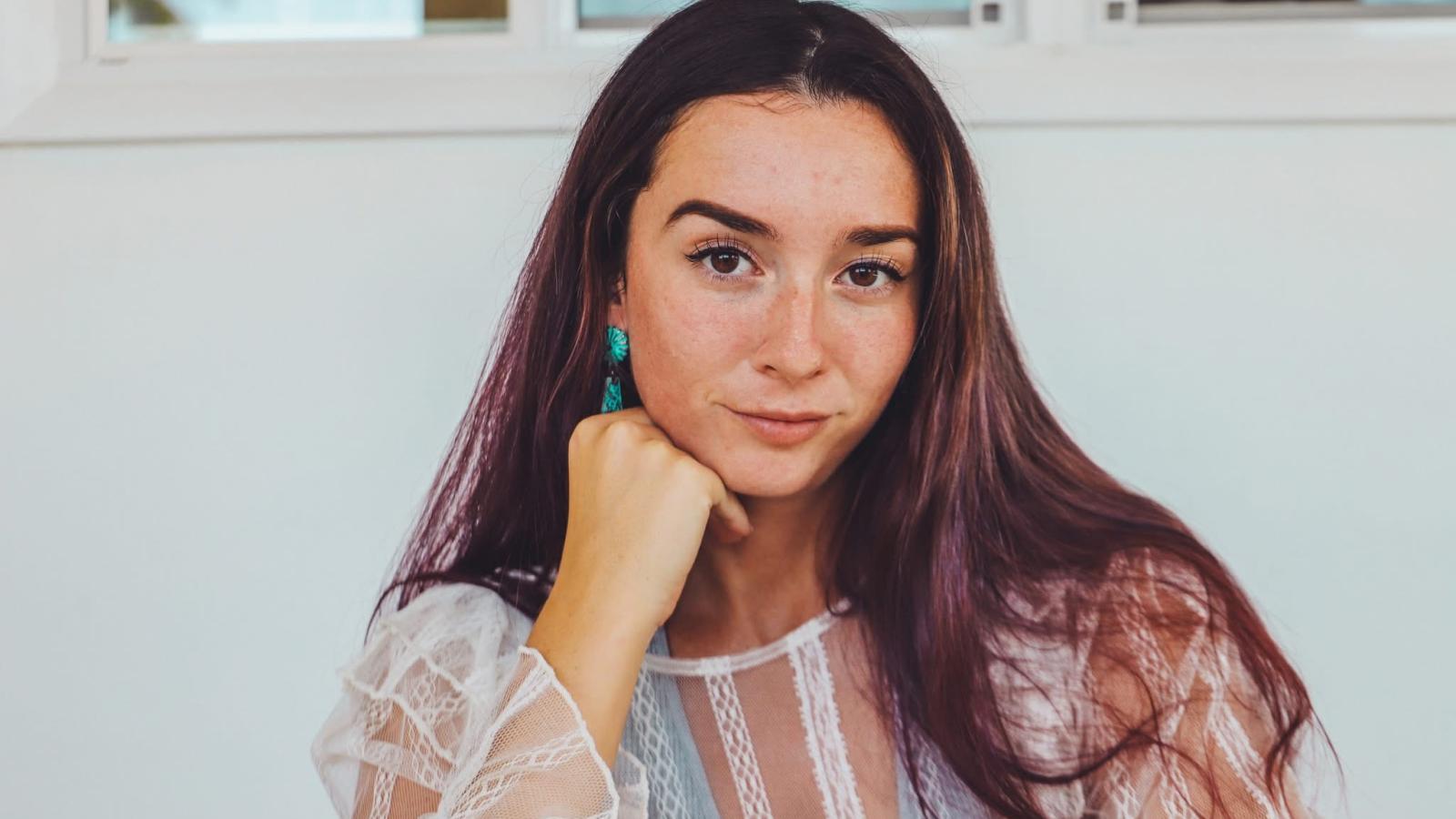
Alexandra Fasulo
Courtesy photo
Top Stories



Trending
Just the News Spotlight
Just News, No Noise