Red states follow Trump’s model, seek to rid Islamist influence in local lawmaking
Illegal aliens from 27 Islamic nations entered the U.S. under Biden, broadening concerns of Muslim influences across some of America’s largest cities and states. When any particular religion is baked into legislation, problems arise between the First Amendment's required separation of church and state.
As President Donald Trump's second term produces immigration policies, deportations and cultural shifts toward a more concentrated citizen population, red states are passing their own legislation and running candidates focused on thwarting Islamic community developments and reducing their influence.
"This is a major offensive in North Texas right now that I don't understand, but we are pushing back hard. We've got several organizations that are helping us. The governor is doing his part now, so I'm pretty optimistic that people are waking up to the dangers of Sharia in North Texas," Rep. Keith Self, R-Texas, told Just The News.
Texas banning state-funded "Muslims Only" events
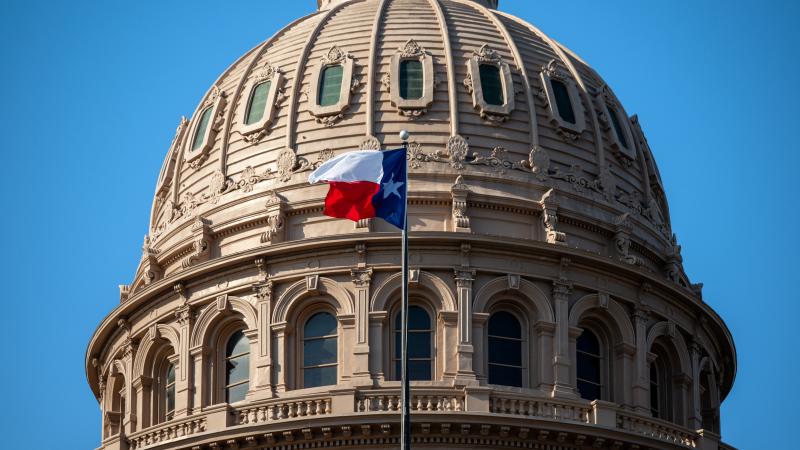
Texas Republicans are intensifying efforts to counter what they call security and cultural risks from the state’s growing Muslim population, moves that dovetail Trump’s America First priorities on immigration vetting and assimilation.
Gov. Greg Abbott moved Tuesday to block a planned Eid al-Adha celebration at the taxpayer-funded Epic Waters Indoor Waterpark in Grand Prairie. He threatened to withhold $530,000 in state public-safety grants unless the city canceled the event, which was initially advertised as open to “Muslims only.” City officials quickly scrapped it after revising the policy to require “modest dress only” and open access.
The action fits a broader pattern in the Lone Star State. Abbott has signed legislation banning “Sharia compounds” and backed Attorney General Ken Paxton’s investigations into the proposed East Plano Islamic Center residential development, which critics argue could create isolated enclaves.
Republican lawmakers have formed “Sharia-Free” caucuses, targeted the Council on American-Islamic Relations and seen strong primary-voter support — 95% in a non-binding poll — for measures to bar Sharia law in Texas courts.
Also on the Federal level, Texas Rep. Chip Roy and other GOP leaders have supported the push as essential to national security and preserving American values.
The state-level initiatives and coordination with Trump reinforce goals of preventing parallel societies, protecting public resources and ensuring cultural compatibility, without waiting for Washington. Texas is home to roughly half a million Muslims, one of the nation’s largest such populations.
Texas is hardly on a political island on the issue. Florida, Oklahoma, Missouri, Arkansas and other states are getting in on the action as well.
Florida, Oklahoma and Missouri
In early April, DeSantis signed HB 1471, which explicitly strengthens bans on courts enforcing foreign or religious laws (citing Sharia as an example), allows state officials to designate domestic terrorist organizations, and bars state funds from schools or programs linked to such groups. This builds on his prior executive order designating CAIR and the Muslim Brotherhood as terrorist organizations, restricting their activities and funding. It serves as a model for proactive state-level enforcement complementing federal Trump administration counter-terrorism and border policies.
In Oklahoma, state lawmakers, including Sen. David Bullard, advanced a constitutional amendment to bar courts and municipalities from applying any foreign or religious law undermining the U.S. or state constitutions. This follows the Broken Arrow City Council’s January 2026 denial of a rezoning request for a new mosque amid public concerns over infrastructure, compatibility, and broader Sharia-related issues; Attorney General Gentner Drummond launched an investigation. GOP gubernatorial candidates have highlighted radical Islam and Sharia threats in campaigns.
Additionally, Missouri lawmakers debated bills barring the application of foreign and religious laws in courts. Arkansas saw similar resolutions. These build on a decade-long trend (with states like Alabama, Tennessee, Louisiana, Arizona, Kansas, North Carolina, and South Dakota having adopted earlier anti-foreign law measures) but gained fresh energy in 2025–2026 legislative sessions tied to Trump momentum and midterm priorities.
The Facts Inside Our Reporter's Notebook
Top Stories



Trending
Just the News Spotlight
Just News, No Noise