Willingness to circumvent will of voters, even by cheating, most pervasive among Dem elites: Survey
"Either MAGA extremists are gonna break the country or we are gonna break them,” House Minority Leader Hakeem Jeffries said this month.
In the wake of several close elections and a few Republican upsets, Democratic Party elites are increasingly embracing rhetoric that suggests a growing contempt for the will of the voters and an eagerness to circumvent the democratic process to beat the opposition party.
The redistricting wars have resulted in Republicans gaining a modest advantage in the upcoming race for control of the House, and legal setbacks to Democratic countermeasures have resulted in pivotal political leaders voicing their frustrations in increasingly provocative ways.
"Either MAGA extremists are gonna break the country or we are gonna break them,” House Minority Leader Hakeem Jeffries said this month. “We have to beat them electorally and then we have to break their spirit.”
Polling data, moreover, appears to suggest that a conscious willingness to circumvent the will of voters, even through cheating, has become a pervasive attitude among a top slice of party elites.
Accusations of cheating and electoral fraud have become commonplace, especially since President Donald Trump spearheaded a campaign questioning the veracity of the 2020 election results. Despite limited evidence to support those specific claims, the idea of cheating itself is, unsurprisingly, broadly unpopular with the public.
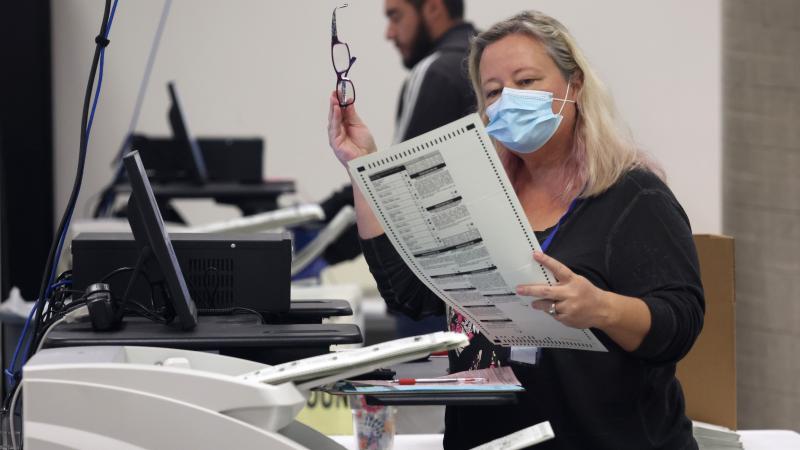
A recent Napolitan Institute/RMG Research survey found that a mere 7% of voters would actively support their preferred party cheating to win an election. Despite broad public sentiment against it, however, support for outright cheating in elections rose dramatically among a group of voters that Napolitan identified as the “Elite 1%.” Of that group, 73% identified as Democrats, 67% were aged 35-54, 86% were white, and 47% embraced “Sanders-like policies.”
Among that block, 35% expressed support for cheating to win elections. But the survey broke it down further to address “politically active elites,” 69% of whom said they would support their side cheating to win an election.
“These attitudes reveal an elitist revolt against the nation’s founding principles,” pollster Scott Rasmussen wrote of the results in a USA Today column. “A growing faction within America’s leadership class increasingly believes it is better suited to rule than the public itself.”
Rasmussen’s analysis appears to validate some longstanding Republican gripes about the “left-wing political elite,” which have persisted for decades but grew even more prevalent after then-Democratic presidential candidate Hillary Clinton’s notorious “basket of deplorables” comment.
Further data suggests an equally significant disconnect between the average voter and the elite voter on basic ideals like individual freedom.
Overall, 35% of the elite 1% said the U.S. had “far too much” individual freedom, compared to 58% of politically active elites who said the same and a mere 4% of voters overall. A further 19% of the elite 1% said the U.S. had “somewhat too much” individual freedom, while another 11% of the politically active elite said the same and just 12% of voters overall did.
Some such attitudes and comments seemingly dismissing the intelligence of the average voter have brought trouble for Democratic candidates this cycle.
State Sen. Mallory McMorrow, D-Mich., for instance, is seeking the Wolverine State’s open Senate seat and caught flak in April over a CNN report documenting her deletion of “thousands of old tweets” in which she criticized the Midwest, speaking as a Californian, and demonized the “morons from the other side of the country.” McMorrow defended her past comments as “normal” and suggested that she had not curated her Twitter feed to be a politician.
The recent redistricting effort in Virginia, moreover, drew widespread accusations of an antidemocratic, pro-elite sentiment among state Democrats.
To be sure, Republicans have faced similar allegations over redistricting, but the specific redraw in Virginia notably split the heavily Democratic-leaning suburbs of Washington, D.C., across several congressional districts to create a 10-1 Democratic-leaning slate of maps in a state that broke for that party by mere single digits in the last presidential election.
The state Supreme Court ultimately invalidated the referendum in which voters narrowly approved the change, prompting Democrats to make claims of antidemocratic actions against Republicans.
Ultimately, neither the survey data nor public comments from political figures have suggested that an open embrace of undemocratic methods and attitudes would go over terribly well in either party. Nevertheless, the evidence of such sentiment among the top brass will potentially undercut any messaging from the party claiming to represent the downtrodden.
The Facts Inside Our Reporter's Notebook

Top Stories



Trending
Just the News Spotlight
Just News, No Noise