Democrat presidential hopefuls turn decades-old Munich Security Conference into anti-Trump soapbox
European press concluded forum has become as much about political messaging as security policy
The first blows of the Democratic Party’s next presidential primary fight weren’t thrown in Iowa or New Hampshire, but this past weekend in Munich, Germany.
A year after JD Vance appeared at the Munich Security Conference and berated European leaders in a preview of the then-new Donald Trump administration’s confrontational foreign policy posture, a lineup of high-profile Democratic leaders appeared at the event, one-upping each other to show they belonged on the global stage.
Among those attending the conference: California Gov. Gavin Newsom, New York Rep. Alexandria Ocasio-Cortez, Michigan Gov. Gretchen Whitmer, and Arizona Sen. Ruben Gallego – all potential Democratic contenders in 2028. They fanned out across panels, workshops, private meetings and side events.
None of them had officially declared presidential ambitions, but their target was clear.
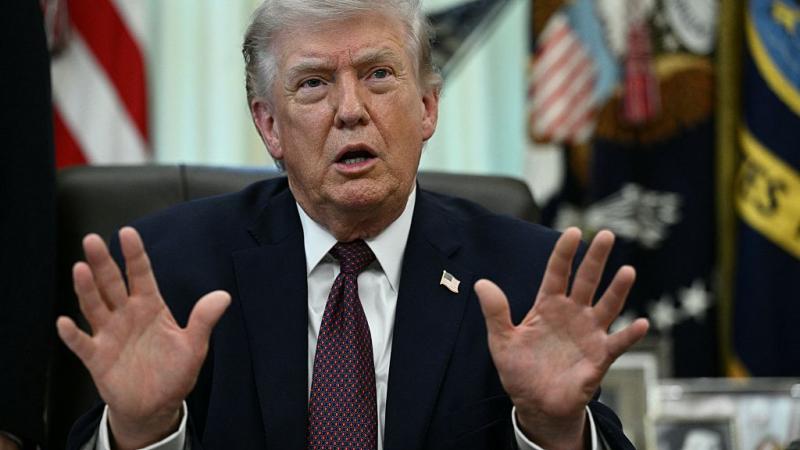
“Donald Trump is temporary,” Newsom said from the same plenary stage where Vance spoke a year earlier. “He’ll be gone in three years.”
Ocasio-Cortez was more incendiary in her criticism of the Trump White House.
“We are seeing our presidential administration tear apart the trans-Atlantic partnership and rip up every democratic norm,” she said. “Wrecking ball politics have destabilized the rules-based international order."
Whitmer and Gallego also criticized the president and sought to reassure European leaders that if a Democrat wins the White House in 2028, U.S. policy would return to within traditional norms.
The comments drew murmurs of approval in a room clearly unsettled by Trump’s skepticism toward historic alliances and multilateral institutions.
Ocasio-Cortez appeared to draw the most enthusiastic response from attendees, as she stressed a contrast not just with Trump but also with more establishment Democrats.
Traditionally, the 62-year-old Munish Security Conference is dominated by heads of state and defense minister, and adjacent to the procession of likely Democratic hopefuls, that still took place, with panel discussions on Ukraine, China, Gaza, NATO, and climate change.
One of the most closely watched moments came on the sidelines, where U.S. Secretary of State Marco Rubio met with Ukrainian President Volodymyr Zelenskyy. The bilateral discussion was described as having reiterated Washington’s support for Ukraine in its four-year-old war with Russia, but it also illustrated the changes in U.S. policy toward Ukraine under Trump.
Rubio, the formal head of the U.S. delegation who has long opposed open-ended foreign commitments, stressed the need for Zelenskyy to increase his country’s accountability and to establish timelines. The matched U.S. previous statements indicating support was increasingly conditional.
There was more unease when Danish Prime Minister Mette Frederiksen told attendees that Trump continued to express interest in taking over Greenland, a month after Trump himself backed away from those demands in remarks in Davos, Switzerland.
In Munich, Frederiksen warned that Trump had not lost interest in the Danish territory. “He remains very serious,” Frederiksen said, adding the president’s interest was “totally unacceptable.”
Media coverage of the Friday-to-Saturday event said that the last two editions of the gathering proved it was morphing into more than a low-key security forum, citing Vance’s head-turning remarks in 2025, just a month into Trump’s second term, and this year’s showcase of prominent Democrats.
“The forum has become as much about political messaging as much as security policy,” reported The Guardian from the U.K.
The Facts Inside Our Reporter's Notebook
Links
- berated European leaders
- Donald Trump is temporary
- tear apart the trans-Atlantic partnership
- the most enthusiastic response
- Secretary of State Marco Rubio met with Ukrainian President Volodymyr Zelenskyy
- was increasingly conditional
- Trump himself backed away from those demands
- totally unacceptable
- political messaging


Top Stories


Trending
Just the News Spotlight
Just News, No Noise