Related Articles

Last year, Dominican authorities deported nearly 380,000 undocumented migrants, almost all of them to Haiti. That’s nearly as many as the 442,000 undocumented migrants the U.S. deported the 2025.
As the U.S. continues to debate immigration enforcement and humanitarian protections, the Dominican Republic has quietly implemented one of the most stringent migration crackdowns in the hemisphere.
The immigrants in question in the Dominican Republic are coming from Haiti, the poor French-speaking country that occupies the western third of the island of Hispaniola. The border between the two countries represents the only international land border in the Caribbean.
According to World Bank data for 2024 (the latest comprehensive data available), the per capita share of the GDP in the Dominican Republic is around $10,900 per year, more than five times higher than in neighboring Haiti. And it will only get worse: the Dominican economy is growing at roughly 5% a year, while Haiti’s economy is contracting at nearly the same rate.
Last year, Dominican authorities deported nearly 380,000 undocumented migrants, almost all of them to Haiti. That’s nearly as many as the 442,000 undocumented migrants the U.S. deported the 2025.
So far this year, the number has been even higher, with 68,000 deportations over the first two months of the year.
In context, the deportation numbers are striking: the Dominican Republic’s overall population is 11.5 million, around the same as Georgia or Ohio and nearly 30 times smaller than the overall U.S. population.
If the U.S. were to deport illegal migrants at the same rate as the Dominicans did in 2025, it would deport more than 11 million per year, more than four times the highest estimates for the number of undocumented migrants who attempt to enter the country.
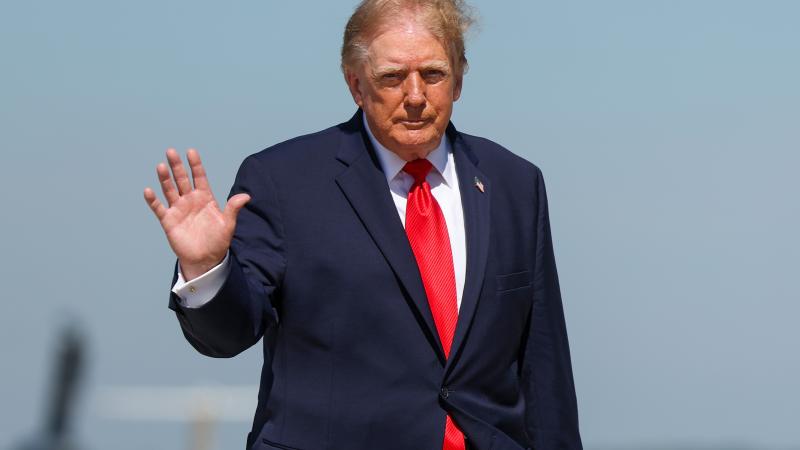
The United States since President Trump took office again in 2025 has effectively shut down the country's southern border to illegal immigration and has since turned its focus on detaining illegal immigrants living inside the country.
Still, the administration has dialed back on hard line tactics by such federal agencies as Customs and Border Patrol and Immigration and Customs Enforcement after public outcry over two Minnesota residents having been killed earlier this year in an effort in that state known as "Operation Metro Surge."
In addition, the Supreme Court last week heard arguments in a case examining the administration’s attempt to terminate Temporary Protected Status for hundreds of thousands of Haitian and Syrian nationals.
But there are other key differences between the situations.
The situation in Haiti is extreme by any measure. The country’s government and institutions have collapsed. Basic services like electricity, water, and police have broken down and armed gangs control large parts of the capital.
Dominican President Luis Abinader said that the country is obligated to protect its borders.
“Our infrastructure does not have the capacity to receive this many people,” Abinader said. “We have to take action.”
Abinader unveiled a plan to deport as many as 10,000 illegal arrivals per week – a 50% increase compared to current levels – despite outcry from the United Nations and advocacy groups like Amnesty International, which call the policies racist and xenophobic.
Increasing deportations would intensify “existing unlawful practices of collective expulsions, including people in need of protection, pregnant women, children, stateless individuals, and asylum seekers,” Amnesty International said.
The Dominican Republic has built a wall spanning the entire 244-mile border between the two countries, but all indications are that it is ineffective because of the ease of using rivers that pass beneath the wall or bribing Dominican border officials to look the other way. Reports are that the border area has degraded into a “lawless frontier.”
Dominican Republic residents, meanwhile, appear to be mostly sympathetic to the Haitian situation, though nobody thinks the border should be open.
“They don’t have a government there and people are murdered every day,” Valentin Nerez, a retired hardware store owner now working part-time as a taxi driver, told Just the News. “If I was as desperate as they are, I’d bribe someone to try to cross the border.
“I know it’s terrible what is happening there. But we have our own problems here,” Nerez said.
Juan Garcia Reyes, a school administrator, told Just the News that the world should do more to improve the situation in Haiti and not to point a finger at the Dominican Republic.
“There is no way to stop that many people trying to enter the country,” Garcia Reyes said. “But we’re a poor country, too. The only solution is for the situation in Haiti to improve and that requires a major international effort.”