House passes Hamadeh's Kayleigh’s Law to protect victims of dangerous crimes from their abusers
The legislation previously passed on the state level in Arizona and Wisconsin.
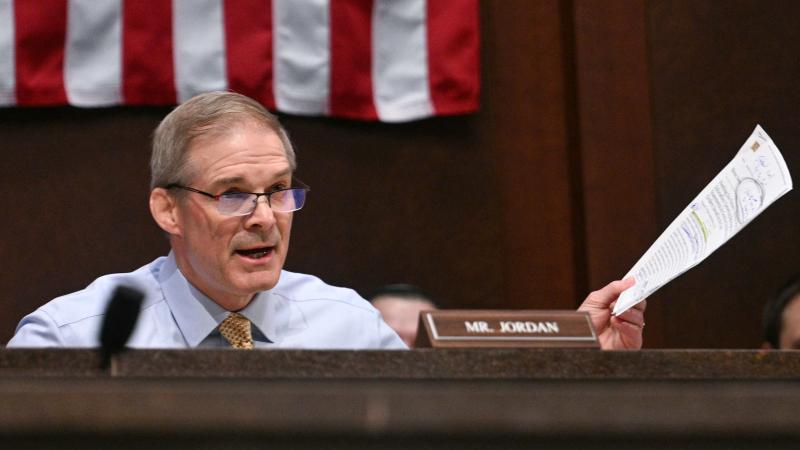
The House in a voice vote on Monday passed Arizona GOP Rep. Abraham Hamadeh's legislation, "Kayleigh's Law," which enhances protections for victims of abuse by shielding them from having to face their abusers for the rest of their lives.
The legislation previously passed on the state level in Arizona and Wisconsin and now grants lifelong protection to survivors of federal sex crimes and violent felonies by making courts issue permanent no-contact injunctions against convicted offenders.
“I want to thank my colleagues for their votes today," Hamadeh said in a statement. "In its first year alone, more than a thousand survivors in our state secured lifetime protection from the people who hurt them. H.R. 8481 would give every American victim of a federal sex crime or violent felony that same shield.
"This bill is simple. When a predator is convicted, federal courts must issue a lifelong no-contact injunction," he continued. "Not until probation ends. Not until some judge decides the offender has 'moved on.' For life. Victims should never again have to fill out another form, sit across from their abuser, or look over their shoulder because the sentence ran out and the system shrugged.”
The legislation was named after Kayleigh Kozak, who was abused as a child by someone she knew.
“I have sat across from victims,” Hamadeh said. “I know how vulnerable they are. I know how determined their predators are. And I know how often modern courts fail them, how they treat lifetime safety like an afterthought and force survivors back into a legal tug-of-war just to stay free of the person who hurt them.
"Kayleigh lived that failure. She should not have had to," he continued. "Healing cannot begin if the abuser can show up again the day after release. Justice is not complete if the victim still lives in fear."
The legislation prohibits all forms of direct or indirect contact with a victim for the rest of the felon's life, remaining in effect even after prison, probation, or supervised release ends.
The legislation still needs to pass the Senate and be signed by President Donald Trump in order to become law.
Misty Severi is a news reporter for Just The News. You can follow her on X for more coverage.
The Facts Inside Our Reporter's Notebook
Links
Top Stories

Trending
Just the News Spotlight
Just News, No Noise