Related Articles
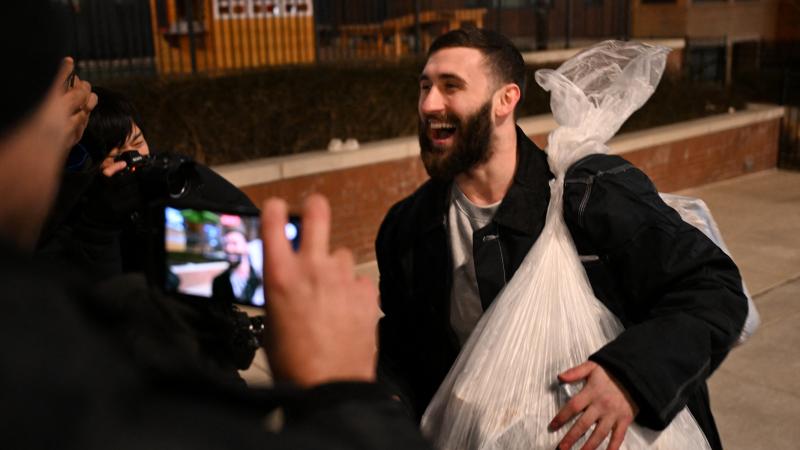
Running out the clock: The FBI and DOJ slow-walked their investigation into the Clinton Foundation and the sale of Uranium One to Russia-backed interests. As a result of roadblocks, the statute of limitations was allowed to lapse on any prosecution.
Federal investigators believed there was significant evidence worth pursuing related to possible criminality involving the Clinton Foundation and the State Department’s approval of the sale of Uranium One to Russian state-owned interests, but delays by the Justice Department and FBI led the inquiry to whither and die because of statute of limitations issues.
The sale of the Canada-based Uranium One to the Russian state-owned Rosatom was the focus of great controversy and scrutiny from Republicans and others who argued that then-Secretary of State Clinton helped approve the deal and that the Clinton Foundation may have stood to benefit from it.
Career agents and line prosecutors at the FBI and DOJ also believed the saga may have been a criminal one, but orders from DOJ leaders such as then-Deputy Attorney General Sally Yates and then-FBI Deputy Director Andrew McCabe slow-walked and stonewalled the inquiry to the point where it could no longer be pursued.
FBI agents and DOJ prosecutors in Little Rock, Arkansas and elsewhere closely scrutinized the scandal — but were largely blocked from serious investigative action due to leadership delays and, following those delays, arguments that the statute of limitations had run out.
Jonathan Ross, then the First Assistant U.S. Attorney for the Eastern District of Virginia, argued in a 2018 email that “there is no legal barrier in continuing the present investigation” into the Clinton Foundation and Uranium One. Ross has served as U.S. Attorney in Arkansas since 2022, including during Trump’s second term.
Then-U.S. Attorney Cody Hiland of Arkansas also sent a 2018 email to then-U.S. Attorney John Huber of Utah, largely summarizing Ross’s arguments, stressing that “we do not believe the prosecution is time-barred by a statute of limitations” in part “because payments from the subjects of the investigation to the Foundation were made continuously from 2007 through 2014.”
A newly-declassified internal FBI investigative timeline also argued that claims that the statute of limitations had run out on the Uranium One inquiry “failed to include whether Acts of Concealment such as deleting emails in 2015 and making additional statements and representations about those deletions would have extended the statute of limitations” and also pointed to possible federal criminal statutes such as the Racketeer Influenced and Corrupt Organizations (RICO) Act, major fraud against the United States, and bank fraud.
The timeline also argued that 18 U.S. Code § 3287 — Wartime Suspension of Statute of Limitations Act — should have extended the statute of limitations for this alleged criminality as well.
Senate Judiciary Committee Chairman Chuck Grassley, R-Iowa, made the records produced to him by FBI Director Kash Patel and Attorney General Pam Bondi available to Just the News this past weekend.
Uranium One was a Canadian company that mined uranium around the world, with assets in Eurasia, Africa, and North America. Its facilities in Wyoming, Utah, and other states accounted for approximately 20% of U.S. uranium capacity at the time, which prompted a review by the Committee on Foreign Investment in the United States (CFIUS) to approve an acquisition by the Russian state-backed company. Then-Secretary of State Clinton sat on that committee and had a prominent role in shaping the Obama administration’s foreign policy.
Uranium One shareholders poured millions of dollars into the Clinton Foundation prior to the CFIUS approval, but nevertheless the investigation petered out due to delays from the top and the internal debates on whether the statute of limitations had expired.
The Clinton Foundation did not respond to a request for comment.
Once the investigation had essentially been delayed for a year and dragged past the November 2016 election, the timeline shows that DOJ officials under Trump then began to raise their “concerns regarding the statute of limitations” around the Clinton Foundation investigation and the Uranium One saga. Ross would argue that claims related to the statute of limitations running out were flawed, and that substantial evidence existed to investigate.
The timeline stated that the FBI’s New York field office “initiated a Preliminary Investigation” on January 22, the Little Rock field office “initiated a Full Field Investigation” on January 27, and the Washington field office “initiated a Preliminary Investigation" on January 29, 2016. The Clinton Foundation’s intersection with the Uranium One saga was part of the investigative mix from the start.
The timeline also said that “FBI Little Rock submits case opening requesting full field investigation regarding Clinton Giustra Enterprise Partnership, Clinton Giustra Sustainable Growth Initiative, Uranium One, Uranium One Americas, Frank Giustra, Ian Telfer.”
The timeline stated that, in late November 2016, then-Criminal Chief James Gatta “advised EDNY had some concerns regarding statute of limitations” while then-U.S. Attorney Robert Capers said that “the case could have statute of limitations issues” and that “Capers wanted to close this chapter and move forward.”
Then-First Assistant U.S. Attorney Patrick Harris at the end of January 2018 “sends email to entire investigative team and U.S. Attorney Hiland indicating that, in his opinion that we've deemed to be faulty, the statute of limitations for the entire investigation ends on 2/1/2018,” according to the timeline.
Hiland sent a June 2018 email to Huber providing “an update on the CF investigation” and saying that “Jonathan” — presumably Jonathan Ross “put much of this together for you.” The email said that “the Bureau has 17 302s [interviews] and 9 Intelligence Summaries” and said that “the majority of the existing 302s pertain directly to the Uranium One component of the investigation.”
The prosecutor said that the team did not believe that the statute of limitations had run out, stressing that “the last act in furtherance of a conspiracy is the date from which a statute of limitations commences to run, not the date from which a public official resigned/left their office.”
“I would be less than forthcoming if l didn't convey my belief that our local agents continue to have an issue concerning their confidence in their authority to investigate the matter due to an email message containing a flawed statute of limitations opinion from a man they have worked with for years and respect,” Hiland wrote. “The email was sent on January 30, 2018 and has cast a permanent pall over the local agents’ attitude toward the very investigation they fought so hard to reinitiate after being shut down in January of 2016.”
Hiland added: “There are remaining investigative tasks that should be completed before making a final assessment of the U/O [Uranium One] matter. This includes potential interviews with (1) Frank Guistra, (2) Ian Telfer, (3) [Redacted], (4) the foreign nationals specifically identified by [Redacted] as having made statements concerning the attempts to use the Foundation as a vehicle to influence the Secretary of State, (5) the career official at the State Department that Undersecretary Fernandez communicated with prior to voting to approve the transaction, (6) officials at DOE [Department of Energy] that approved the export authorization for the trucking firm owned and operated Rosatum after CFIUS approval of the U/O acquisition.”
The prosecutor also argued that “the intelligence summary regarding Uranium One … fails to account for the dynamic related to possible deliberately false statements that may have been made by U/O officials to CFIUS to induce the authorization to sell U/O to Rosatum (i.e. that Rosatum could not export uranium).”
“It’s time to make significant movement on this matter if it is to be properly and effectively run to ground… especially as it relates to wrapping up the U/O Investigative tasks,” Hiland added.
Ross wrote a September 2018 message where he argued that “I believe the agents here have a depressed morale issue concerning their confidence in their authority to investigate the matter due to the email sent by” former First Assistant U.S. Attorney Patrick Harris that he “sent to the investigative team” at the end of January 2018.
“Thursday, February 1 will be five years since Clinton resigned at state. I believe the statute of limitations has expired and the investigation of Uranium One/CFIUS has expired, as we were assuming that the statute would extend until she was no longer Secretary of State,” Ross quoted Harris as having said on January 30, 2018. “I think after February 1, 2018 we have no evidence to suggest we have jurisdiction to investigate matters that occurred more than five years ago, and we should not be using [Redacted]. If there are interviews to conduct, so be it but I haven’t seen the evidence to suggest another crime. I know there may be allegations of pay-to-play involving the foundation, but I haven’t seen the evidence that gets us out of the statute of limitations problem in as much as Clinton resigned on 2/1/13.”
Ross said that “[Redacted] is simply wrong in his assessment concerning how statutes of limitation impact this investigation. I have met with [Redacted] and asked him if he was aware of 18 U.S.C. 3287 when he drafted that email. His answer was ‘No. I’ve never heard of it’.”
Ross also wrote that “However, I believe, due to their long-term relationship with [Redacted] and their high confidence in his opinions, the agents here in Little Rock continue to have some question in the back of their minds that suppresses their impetus to run this investigation to the ground.”
Ross argued that the FBI “must allocate some additional agent support” and “perhaps, even completely reassign this matter to a separate team of investigators” and contended that “the unique dynamics of how this case has been handled here in our office by the previous management team and the significant caseload of our office is such that I don’t have confidence in the ability of our existing staff to support this investigation.”
“Further complicating our need for resources is that the standard ‘go to’ for such support on Public Corruption cases is Public Integrity at Main Justice, but as we have previously discussed, there appear to be conflicts of interest for the leadership there related to the 2016 investigations that undermine any confidence we might normally have in looking to them for assistance,” the prosecutor added.
The Obama administration penned the new 123 Agreement with the Kremlin, which was designed to increase cooperation on civil nuclear energy and further commercial opportunities between the two economies. The deal led to billions of dollars in contracts for U.S. utilities to buy Russian uranium to power their nuclear reactors.
Russia's state-controlled nuclear company, Rosatom, was also making moves to corner the global supply at the same time. The Russian company’s efforts to acquire the Canadian company, Uranium One, became a scandal for the Obama administration because it saw the virtual elimination of U.S. domestic production of uranium and raised corruption concerns about some of its chief officials.
The acquisition became a scandal that plagued her 2016 presidential campaign after investigative author Peter Schweizer and his Government Accountability Institute found nine Uranium One shareholders allegedly funneled $145 million into the Clinton Foundation before the deal was set to be considered.
The acquisition was subsequently approved, and Clinton’s team has repeatedly denied that the secretary had a major role in approving the sale.
The New York Times reported in 2015 that “as the Russians gradually assumed control of Uranium One in three separate transactions from 2009 to 2013 … a flow of cash made its way to the Clinton Foundation. Uranium One’s chairman used his family foundation to make four donations totaling $2.35 million. Those contributions were not publicly disclosed by the Clintons, despite an agreement Mrs. Clinton had struck with the Obama White House to publicly identify all donors. Other people with ties to the company made donations as well.”
“And shortly after the Russians announced their intention to acquire a majority stake in Uranium One, Mr. [Bill] Clinton received $500,000 for a Moscow speech from a Russian investment bank with links to the Kremlin that was promoting Uranium One stock,” the Times reported. “At the time, both Rosatom and the United States government made promises intended to ease concerns about ceding control of the company’s assets to the Russians. Those promises have been repeatedly broken, records show.”
The Hill had reported in October 2017 that “before the Obama administration approved a controversial deal in 2010 giving Moscow control of a large swath of American uranium, the FBI had gathered substantial evidence that Russian nuclear industry officials were engaged in bribery, kickbacks, extortion and money laundering designed to grow Vladimir Putin’s atomic energy business inside the United States.” The Hill said that “federal agents used a confidential U.S. witness working inside the Russian nuclear industry to gather extensive financial records, make secret recordings and intercept emails as early as 2009 that showed Moscow had compromised an American uranium trucking firm with bribes and kickbacks in violation of the Foreign Corrupt Practices Act.”
“They also obtained an eyewitness account — backed by documents — indicating Russian nuclear officials had routed millions of dollars to the U.S. designed to benefit former President Bill Clinton’s charitable foundation during the time Secretary of State Hillary Clinton served on a government body that provided a favorable decision to Moscow,” The Hill reported.
Sen. John Barrasso, R-Wyo., argued in a December 2010 letter to then-President Barack Obama that “this transaction would give the Russian government control over a sizable portion of America’s uranium production capacity.”
Greg Jaczko, then the chairman of the Nuclear Regulatory Commission, contended in March 2011 that “in order to export uranium from the United States, Uranium One … would need to apply for and obtain a specific NRC license authorizing the export of uranium for use in reactor fuel.”
Grassley sent a letter to then-Attorney General Loretta Lynch in June 2015, contending that “during critical stages of the acquisition approval, interested parties made large donations – some in the millions of dollars – to the Clinton Foundation while Ms. Hillary Clinton held the position of Secretary of State.”
The senator said that “in light of the gravity of the decision to allow a Russian takeover of almost a quarter of U.S. uranium assets, it is in the public interest to determine the facts and circumstances of the transaction, including any potential donations that could have influenced the CFIUS review process.”
The GOP-led House Oversight and House Intelligence Committees in October 2017 announced “a joint inquiry into Obama administration regulatory approvals related to the U.S. uranium industry, foreign donations seeking to curry favor and influence with U.S. officials, whether a federal nuclear bribery probe developed evidence of wrongdoing connected to the Uranium One mining company, and Department of Justice criminal and counterintelligence investigations into bribery, extortion, and other related matters connected to Russian acquisition of U.S. uranium.”
Grassley also sent a letter to then-Secretary of State Rex Tillerson the same month, arguing that “very serious questions remain about the basis for the finding that this transaction did not threaten to impair U.S. national security” and that “employees of Rosatom were involved in a criminal enterprise involving a conspiracy to commit extortion and money laundering during the time of the CFIUS transaction.”
Barrasso sent a December 2017 letter to then-Energy Secretary Rick Perry and then-Nuclear Regulatory Commission Chairperson Kristine Svinicki, saying that “based on information that has recently come to light, I now believe the response I received [from the Obama administration], and the process by which I received it, were both misleading.”
Attorney General Jeff Sessions asked U.S. Attorney John Huber of Utah to review allegations related to Uranium One and the Clinton Foundation in late November 2017, but did not make Huber a special counsel.
Then-Assistant Attorney General Stephen Boyd had sent a letter to the GOP-led House Judiciary Committee in 2017 in response to letters “in which you and other Members request the appointment of a Special Counsel to investigate various matters, including the sale of Uranium One, alleged unlawful dealings related to the Clinton Foundation, and other matters.”
Sessions then forwarded that letter to Huber and told the federal prosecutor that “I have requested that you review the matters referenced” in the letter but to avoid any matters being looked at by then-special counsel Robert Mueller.
Hiland met in mid-August 2019 with DOJ officials at the Public Integrity Unit “to discuss need for additional resources to support CF investigation, or in the alternative, closing the case as a result of insufficient resources and remaining time under statute of limitations,” according to the longer timeline.
A leak to The Washington Post in January 2020 later indicated that Huber was winding down his effort by January 2020. It was reported by Fox News in September 2020 that “aspects” of “Huber’s investigation into the Clinton Foundation have been assumed” by then-U.S. Attorney John Durham “as part of his review into the origins of the Russia probe.”
But Special Counsel John Durham’s 2023 special counsel report said that his appointment order by then-Attorney General Barr did not include the Uranium One saga within its scope, with the Durham report stating that “we have not interpreted the Order as directing us to consider matters addressed by the former United States Attorney for the District of Utah.”
Just the News previously reported on how the ongoing U.S. dependence on Russia-sourced uranium was a long time in the making, cemented by several deals signed by the Clinton and Obama administrations that hooked the United States on Moscow's uranium supply, according to the 2020 book Fallout: Nuclear Bribes, Russian Spies, and the Washington Lies that Enriched the Clinton and Biden Dynasties.
The U.S. nuclear energy sector’s dependence on Russian uranium, created during a failed Obama-era "reset" with Moscow came back to bite Americans as the Kremlin moved to block future exports of the vital fuel.
Vladimir Putin imposed new restrictions on uranium exports to the U.S. in November 2024, which came as the country’s war in Ukraine continued to heighten tensions with the United States and the West.
Enriched uranium is a vital component of nuclear power plants in the United States, which account for a fifth of electricity production across the nation. The United States is also almost entirely dependent on imports to acquire enriched uranium.
Congress passed and Biden signed the Prohibiting Russian Uranium Imports Act shortly after Russia’s invasion of Ukraine in 2022.
The Department of Energy's Energy Information Agency revealed in September that Russia was responsible in 2024 for 20% of the enriched uranium upon which America’s nuclear reactors rely. While a substantial percentage, this is down from the year prior. Bloomberg News reported last year that “Russia covered 27% of US enriched uranium demand in 2023.”
The latest revelations from the FBI and DOJ inquiry into the Clinton Foundation — stalled by political leadership, delayed by McCabe, slow-walked by prosecutors, and riven by internal debate — indicate the process by which Uranium One was handed over to Russia was never properly investigated.