DOJ announces arrests, charges against two Chinese men over alleged smuggling of Nvidia chips
“Operation Gatekeeper has exposed a sophisticated smuggling network that threatens our Nation’s security by funneling cutting-edge AI technology to those who would use it against American interests,” U.S. Attorney Nicholas J. Ganjei said
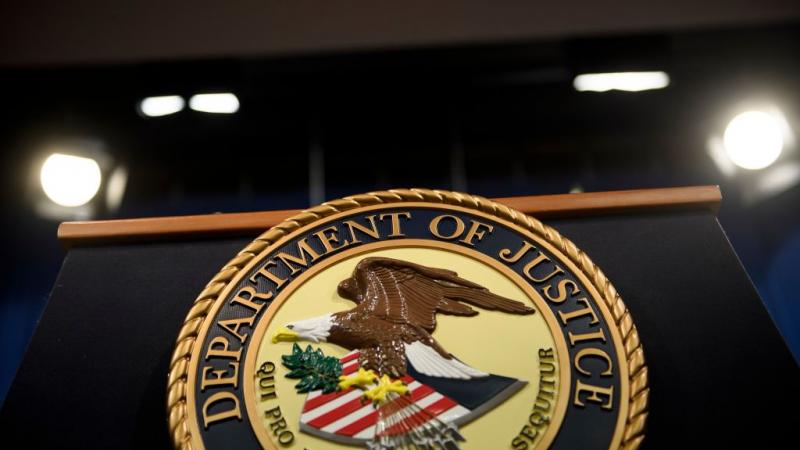
The Department of Justice announced that two Chinese men have been arrested and charged over allegedly smuggling Nvidia chips to China.
The DOJ said Monday after court documents were unsealed that Haochun Hsu, 43, of Missouri City, and his company, Hao Global LLC, pleaded guilty to smuggling and unlawful export activities Oct. 10. Between October 2024 and May 2025, Hsu and others exported and attempted to export at least $160 million worth of export-controlled Nvidia H100 and H200 Tensor Core graphic processing units, according to court documents.
The high-speed GPUs are used for AI applications and high-performance computing, and designed to process massive amounts of data, advancing generative AI and large language models, and accelerating scientific computing. Exporting them to China is prohibited.
Hsu and others falsified shipping paperwork, misclassifying the nature of the products and their recipients to conceal the ultimate destination. He and Hao Global received more than $50 million in wire transfers that originated from China to help fund the scheme. The GPUs were ultimately shipped to China, Hong Kong, and other destinations in violation of U.S. export laws.
Also, two men from China — Fanyue Gong, 43, a Chinese citizen who resides in New York City, and Benlin Yuan, 58, a Canadian citizen who resides in Mississauga, Ontario — were charged and arrested by law enforcement on Dec. 3 in New York City, and on Nov. 28 in Sterling, Va., respectively.
Yuan is the CEO of an IT services company in Sterling that is the U.S. subsidiary of a large Chinese IT company based in Beijing, and Gong is the owner of a New York technology company.
Gong and Yuan independently conspired with employees of a Hong Kong-based logistics company and a China-based AI technology company to circumvent U.S. export controls, according to their charges.
Gong's alleged co-conspirators obtained Nvidia GPUs through straw purchasers and intermediaries, falsely indicating that the chips were for U.S. customers or customers in other countries that do not require a license to export, according to the criminal complaint.
The chips were shipped to multiple U.S. warehouses where people who worked for Gong allegedly removed Nvidia labels and re-labelled the GPUs with the name of a fake company, “SANDKYAN,” and then prepared them for export, according to the charges. The GPUs' shipping and export paperwork allegedly misclassified the chips as generic computer parts. The charges also allege co-conspirators then shipped the chips or attempted to do so to China and Hong Kong in violation of U.S. laws.
Yuan allegedly helped recruit and organize individuals to inspect the mislabeled GPUs on behalf of the Hong Kong logistics company, according to the charges. He allegedly agreed to direct inspectors not to say the goods were destined for China.
According to the charges, Yuan allegedly had several conversations about giving false information to U.S. authorities regarding the ultimate customer of the chips.
Yuan also allegedly participated in and agreed to direct actions involving the handling and storage of another export of Nvidia GPUs on behalf of the Hong Kong logistics company.
Hsu will be sentenced on Feb. 18, and faces up to 10 years in federal prison, while Hao Global LLC could be fined up to twice the gross gain from the offense and given a term of probation.
Yuan faces up to 20 years for conspiracy to violate the Export Control Reform Act if convicted, while Gong was charged with conspiracy to smuggle goods from the U.S. and faces a maximum prison sentence of 10 years.
Hsu remains on bond pending sentencing, while Yuan and Gong are in custody pending further criminal proceedings.
“Operation Gatekeeper has exposed a sophisticated smuggling network that threatens our Nation’s security by funneling cutting-edge AI technology to those who would use it against American interests,” U.S. Attorney for the Southern District of Texas Nicholas J. Ganjei said in a statement.
“These chips are the building blocks of AI superiority and are integral to modern military applications. The country that controls these chips will control AI technology; the country that controls AI technology will control the future. The Southern District of Texas will aggressively prosecute anyone who attempts to compromise America’s technological edge.”
An attorney for Yuan declined Reuters' request for comment, while a representative for Gong could not be identified.
A Chinese Embassy spokesperson in Washington, D.C., told the news wire, "the Chinese government requires Chinese citizens abroad to strictly abide by local laws and regulations, while also legally protecting the legitimate rights and interests of Chinese citizens overseas."
A Nvidia spokesperson told Reuters, "While millions of controlled GPUs are in service at businesses, homes, and schools, we will continue to work with the government and our customers to ensure that second-hand smuggling does not occur," calling the sale of older generation products on the secondary market "subject to strict security and review."
The Facts Inside Our Reporter's Notebook
Links

Top Stories





Trending
Just the News Spotlight
Just News, No Noise