Related Articles
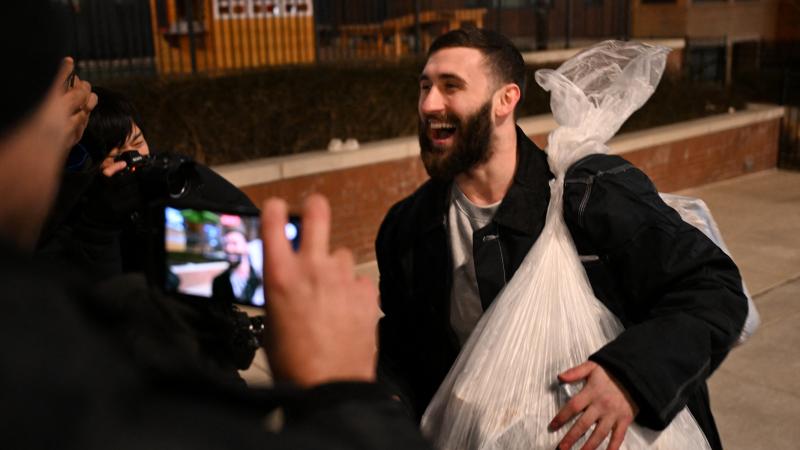
NYT published a critical story on “A Year Inside Kash Patel’s FBI.” The article contained several factual errors, but never seemed to challenge -- or even research -- Strzok's false allegations. A simple review of public records could have avoided that.
The New York Times allowed fired FBI special agent Peter Strzok to mislead about the conclusions reached years ago by the Justice Department inspector general about bias related to the bureau’s Crossfire Hurricane investigation during the paper’s critiques against FBI Director Kash Patel this week.
The outlet published an article on Thursday which parroted Strzok's claims without challenge. Strzok, who displayed significant anti-Trump bias while playing a key role in the FBI’s investigations related to Hillary Clinton’s classified information on an illicit private email server and to unproven claims of Trump-Russia collusion, told the Times “that the Justice Department’s inspector general found that political bias did not influence decision-making in the Russia investigation.” The Times provided zero pushback or fact-checking on this incorrect assertion.
In fact, then-DOJ inspector general Michael Horowitz’s 2019 public report harshly critiquing the FBI’s handling of Crossfire Hurricane and the watchdog had repeatedly testified to Congress that he was not saying that political bias had not impacted the Russiagate inquiry. Horowitz said only that he had been unable to conclude whether it was “gross incompetence” or “intentional misconduct” which had led to the abuses of the Foreign Intelligence Surveillance Act during the Trump-Russia inquiry.
The article by The Times also prominently republished critiques against Patel made by Michael Feinberg, who had been the assistant special agent in charge at the FBI’s Norfolk field office in Virginia. Feinberg resigned from the FBI at the end of May, saying his direct superior told him that then-FBI deputy director Dan Bongino was scrutinizing his longtime friendship with Strzok. Strozk was fired following the emergence of biased anti-Trump texts he had exchanged with FBI lawyer and paramour Lisa Page.
Even though The Times referenced Feinberg’s “firing” in its Thursday article, Feinberg himself has never claimed he was fired by the bureau. Indeed, in his own telling, rather than take a possible polygraph test about his relationship with Strzok, Feinberg says he quit the FBI instead of risking the possible demotion he says he was facing in place of the big promotion to FBI headquarters which he had been expecting.
Danielle Rhoades Ha, the senior vice president of communications for the Times, did not answer the specific questions sent to it by Just the News about Horowitz, Strzok, and Feinberg, saying only, "Editors have reviewed our article, and no update or correction is necessary. Our reporting presents a fair and accurate set of events, outlined by first-hand interviews from 45 current and former FBI employees."
Strzok did not respond to a request for comment sent to him through Georgetown University, where he is listed as an adjunct professor. A university spokesperson told Just the News that "Prof. Strzok is not available at this time, but appreciates you reaching out."
Feinberg did not respond to a request for comment sent to him through his employer, Lawfare.
Despite what The Times wrote about him being included in “firings” at the FBI, Feinberg has made it clear that he resigned from the FBI rather than have to face the polygraph test about his friendship with Strzok — a threat he said had been relayed to him by his boss from Bongino.
Feinberg was even quoted by The Times in the same Thursday article that “within 30 seconds of hanging up with her [his boss], I knew that I was going to quit.”
The now-former FBI agent wrote a lengthy article for a leftwing and anti-Trump outlet, Lawfare, describing his side of the story in why he resigned from the FBI.
Feinberg made it clear during an interview on a Lawfare podcast in July that no one at the bureau had threatened to fire him, claiming he had been told that “you should prepare to actually be demoted, and you're probably going to be called up to D.C. for a polygraph or series of polygraphs about the nature of your relationship with Pete” and that, if he had stayed, he may have been transferred to an FBI office in Huntsville, Alabama, or perhaps “they would create some made up job somewhere else where I would just be bored to death until I voluntarily left.”
Feinberg repeatedly claimed that he had been on a “glide path” to a Senior Executive Service job at FBI headquarters prior to the call about his relationship with Strzok.
Horowitz, the now-former DOJ watchdog repeatedly stressed that his investigation had not concluded that bias played no role in the decision-making related to the FBI’s flawed Trump-Russia investigation. While he did say that he had found no firm evidence of such bias, he was unwilling to rule out the presence of such bias due to the large volume of improper actions taken by the FBI during the inquiry.
Horowitz said in June 2018 testimony related to his inquiry into the FBI’s Midyear Exam investigation into Clinton that “we were deeply troubled by text messages exchanged between Strzok and Lisa Page that potentially indicated or created the appearance that investigative decisions were impacted by bias or improper considerations.”
“[Trump’s] not ever going to become president, right? Right?!” Lisa Page texted Strzok in 2016, to which Strzok replied, “No. No he won’t. We’ll stop it.”
Horowitz concluded at the time that that exchange was “not only indicative of a biased state of mind but, even more seriously, implies a willingness to take official action to impact the presidential candidate’s electoral prospects.”
FBI agent John Robertson, who worked in the bureau’s child sex crimes unit in New York, unearthed tens of thousands of Clinton emails in late September 2016 on the laptop belonging to Abedin’s husband, disgraced former Rep. Anthony Weiner, D-N.Y. But for weeks after being alerted, key FBI leaders — including Strzok — took little to no action to investigate.
Horowitz wrote in 2018, “We did not have confidence that Strzok’s decision to prioritize the Russia investigation over following up on the Midyear-related investigative lead discovered on the Weiner laptop was free from bias.”
Strzok wrote in 2020 that “of course” he prioritized the Trump-Russia investigation over the Clinton emails investigation because “there was simply no equivalence between Midyear and Crossfire.”
Horowitz uncovered huge flaws with the FBI’s Crossfire Hurricane investigation in a December 2019 report, finding at least 17 “significant errors and omissions” related to the FISA warrants targeting former Trump campaign associate Carter Page. Horowitz also criticized the “central and essential” role of British ex-spy Christopher Steele’s debunked dossier in the FBI’s politicized FISA surveillance. Steele had been hired by the opposition research firm Fusion GPS, which was being paid by Clinton campaign lawyer Marc Elias. That campaign was fined more than $100,000 after misreporting spending related to the now-infamous Steele dossier.
The DOJ watchdog also said Steele’s alleged main source — Igor Danchenko — “contradicted the allegations of a ‘well-developed conspiracy’ in” Steele’s dossier.
The report by Horowitz did conclude that “we did not find documentary or testimonial evidence that political bias or improper motivation influenced the decisions to open the four individual investigations” into Carter Page, Mike Flynn, George Papadopoulos, and Paul Manafort, and that “we did not find documentary or testimonial evidence that political bias or improper motivation influenced the FBI's decision to seek FISA authority on Carter Page” — but Horowitz stressed that that was not the same as him concluding that no such bias existed or none influenced the inquiry.
Sen. Mike Crapo, R-Idaho, questioned Horowitz during a Senate Judiciary Committee hearing a few days after the December 2019 report was released.
Speaking about Strzok and Lisa Page, the DOJ watchdog said that “we found that those text messages evidenced bias by them.” Horowitz said part of why he did not conclude that political bias influenced the decision to open the inquiries into Carter Page, Flynn, Papadopoulos, and Manafort was because the ultimate decision to open those inquiries was made by Bill Priestap, then the assistant director of the FBI Counterintelligence Division, in consultation with Strzok.
“We asked all the witnesses — not just him [Priestap] — as to whether bias or other improper considerations had any impact, but we also looked for emails, text messages, documents that could show what we found, frankly, with Strzok and [Lisa] Page,” Horowitz told Crapo. “That is how you find evidence of bias. But beyond that, I’m stuck trying to figure out what is in somebody’s head.”
Horowitz agreed with Crapo’s statement that “in this case, what you’re saying is you could not find any documentary or testimonial evidence to contradict the statements of the investigators that they were not letting bias influence their decision.”
Stressing that he could “only speak to the evidence we found,” Horowitz said that “I think the important point here, that I made earlier is, all the evidence is here. People are free to consider, evaluate what they think ultimately people’s motivations were [...] We’re not making a decision on, ultimately, information or evidence we don’t have that somebody may have acted,” Horowitz added.
Crapo asked, “If someone were to characterize what you’re telling us to be that you’re telling us there’s ‘no bias’ here, that’s not what you’re telling us?”
“That is not, as to the operation of these FISAs, what I’m telling you,” Horowitz said.
Crapo said it was “mind-numbing” to think that all the missteps “could be just accidental.”
“I would be skeptical, but I understand why people would be skeptical of that,” Horowitz said, adding that “there is such a range of conduct here that is inexplicable.”
The watchdog said, “The answers we got were not satisfactory that we’re left trying to understand how could all these errors have occurred over a nine-month period or so among three teams, hand-picked, one of the highest profile, if not the most high-profile case, in the FBI going to the very top of the organization and involving a presidential campaign.”
Sen. Gary Peters, D-Mich., questioned Horowitz during a Senate Homeland Security and Governmental Affairs hearing a few days later, and the DOJ watchdog again shot down claims that he was saying he had found no bias influencing the Trump-Russia inquiry. That hearing is easily available to anyone who felt the obligation to fact-check Strozk's claims.
Peters asked Horowitz if he had concluded that political bias played no role in the conduct of the FISA investigation into Carter Page, and the inspector general said that wasn’t something he would say because the bureau had committed too many mistakes and their explanations weren’t believable. Horowitz said he couldn’t decide whether the FBI’s improper actions were due to incompetence or if they were done purposely.
“As to the failures that occurred, we didn’t find any of the explanations particularly satisfactory — in fact, unsatisfactory across the board,” Horowitz said. “In the absence of satisfactory answers, I can’t tell you as I sit here whether it was gross incompetence. And I think with the volume of errors, you could make an argument that that would be a hard sell, that it was just gross incompetence, to intentional, or somewhere in between, and what the motivations were.”
The DOJ watchdog said that he “can think of plenty of motivations” but that he didn’t have “hard evidence” to prove it.
In his report, Horowitz said agents and supervisors told him “they either did not know or recall why the information was not shared” with DOJ leadership and with the FISA court, with bureau employees claiming “the failure to do so may have been an oversight, that they did not recognize at the time the relevance of the information to the FISA application, or that they did not believe the missing information to be significant.”
Horowitz said the failures were tied to fundamental parts of the process and that FBI agents ignored basic rules about making sure information was accurate and updating the court when they learned more. Horowitz replied that there were so many errors that his team couldn’t reach a conclusion on their motivation.
“It certainly wasn’t the reasons that were offered to you,” Hawley said, and Horowitz agreed. Hawley also asked Horowitz if he found “that political bias did not affect any part of the [Carter] Page investigation — any part of Crossfire Hurricane — is that what you concluded?”
“We did not reach that conclusion,” Horowitz said. Horowitz stopped short, however, of concluding it was political bias, though he did not rule it out.
Hawley said the possibilities were either that “these people were really incompetent, or they had an agenda they were pursuing.”
Strzok incorrectly claimed in his 2020 book, Compromised, that Australian diplomat Alexander Downer was spurred to inform the U.S. government about a May 2016 conversation he had in a London wine bar with Papadopoulos, in which the Trump campaign associate allegedly mentioned that Russia might have information on Clinton, after hearing then-candidate Donald Trump say in July 2016, “Russia, if you’re listening, I hope you’re able to find the 30,000 emails.”
Strzok also seemed to make that false claim in March 2017 when briefing Justice Department and FBI officials about the Trump-Russia investigation.
Despite Strzok’s false claim, Downer informed the United States of this conversation on July 26, 2016 — one day before, not after, Trump made the comment about Russia. The tip from Downer was received the exact same day as the alleged approval of the alleged Clinton Plan intelligence.
Strzok admitted in September 2020 he had gotten the timing detail wrong in his book, though he downplayed it. The alleged mistake was part of a larger pattern. Handwritten notes labeled as written by Tashina Gauhar, then the associate deputy attorney general, indicate that Strzok made the same misleading claim about Trump’s remarks prompting the Australian to reach out to the FBI when briefing then-acting Attorney General Dana Boente and others in March 2017.
The “opening electronic communication” for Crossfire Hurricane was authored by Strzok and authorized by Priestap at the end of July 2016. The investigation didn’t interview Papadopoulos until January 2017.
Then Attorney General William Barr concluded in December 2019 that “the FBI launched an intrusive investigation of a U.S. presidential campaign on the thinnest of suspicions that, in my view, were insufficient to justify the steps taken.” Then-U.S. Attorney John Durham argued then that “we advised the Inspector General that we do not agree with some of the report’s conclusions as to predication and how the FBI case was opened.”
“We found, through the text messages, evidence of people’s political bias,” Horowitz said in December 2019, in reference to Strzok and Lisa Page.
Since leaving the bureau, Feinberg has been hailed this summer by some as a possible “Resistance 2.0”-style hero by multiple anti-Trump foes, appeared on CNN and MSNBC, talked with Daily Show "comedian" Jon Stewart, got a job at the Brookings Institute-affiliated anti-Trump outlet Lawfare, and more, all while lashing out at the FBI under Patel. He is now a “national security and intelligence analyst” at MS-NOW, formerly MSNBC, according to his Bluesky profile.
Feinberg has often hinted at a nefarious connection between Trump and Russia, has compared the current bureau to Communist-style spy agencies, and has suggested the Trump administration had commonalities with the Nazi regime, while promoting the views of his friend Strzok and seeking to downplay the FBI’s wrongdoing during its Crossfire Hurricane inquiry into baseless and what appear to be politically-motivated claims of Trump-Russia collusion.
Feinberg has since written Lawfare articles criticizing the DOJ’s attempted prosecution of fired FBI Director James Comey, the Trump Administration’s decision to limit foreign student visas, Patel’s targeting of Antifa, and the actions by ICE in Minneapolis.
He has also lent his name to an amicus brief opposing the firing of James Comey’s daughter Maureen, defended former special counsel Jack Smith, attacked the integrity of DOJ leadership, said he was “mourning how far we’ve fallen” when comparing Comey to Patel, and suggested he was “rethinking” his opposition to court packing due to his dissatisfaction with the six GOP-nominated Supreme Court justices.
FBI spokesman Ben Williamson referred to the anti-Patel Times article featuring Feinberg as a “hit job.”