Related Articles


Steele 2.0? FBI Director Kash Patel told Just the News that "paying openly anti-Trump activists to identify Americans using questionable technology" was "a clear violation of longstanding informant rules."
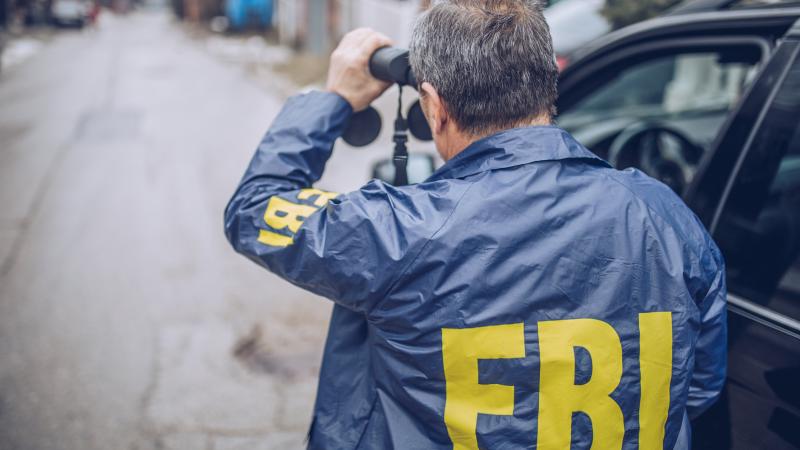
The Biden-era FBI made more than $100,000 in payments to informants who were members of an anonymous group of tech sleuths known as the "Sedition Hunters" to gather and analyze video evidence in the January 6 Capitol riot — echoing the bureau’s reliance on paid FBI informant and British ex-spy Christopher Steele in 2016.
Just the News reported this week that the FBI made payments to a number of so-called "sedition hunters" as confidential human sources (CHS) as part of the January 6 Capitol riot and Arctic Frost probes despite the online network’s significant anti-Trump pronouncements and known ties to foreigners.
The payments are due to be disclosed by FBI Director Kash Patel to Congress along with acknowledged concerns that the Christopher Wray-run bureau’s approval of certain members of the Sedition Hunters as confidential human sources may have violated bureau policies concerning informant bias, informant secrecy, foreign influence, and contracting transparency, officials said.
The revelations of source payments are certain to revive FBI concerns among Republicans that date back to the now-discredited Crossfire Hurricane probe, where agents used Steele as a CHS to pursue unsubstantiated allegations of Trump colluding with Russia. This was despite Steele’s foreign connections, his clear anti-Trump bias, and his work as a contractor for the campaign law firm of Trump’s main 2016 rival, Hillary Clinton. Wray had promised significant reforms in the wake of the 2016 debacle at the bureau.
Steele was eventually terminated in November 2016 as an FBI informant for violating his confidentiality requirements as a confidential human source, disclosing his role with the bureau, and making unauthorized disclosures to the media.
Government officials said a half decade later, the bureau may have entered into another troubling relationship by treating members of the Sedition Hunters as informants in a new Trump probe when, in fact, they were essentially performing computer analysis contract work identifying January 6 defendants around the Capitol and clearly expressed dislike for Trump.
DOJ inspector general Michael Horowitz uncovered huge flaws with the FBI’s Crossfire Hurricane investigation in a December 2019 report, finding at least 17 “significant errors and omissions” related to the FISA warrants targeting former Trump campaign associate Carter Page. Horowitz also criticized the “central and essential” role of Steele’s debunked dossier in the FBI’s politicized FISA surveillance. Steele, a years-long FBI CHS, had been hired by the opposition research firm Fusion GPS, which was being paid by Clinton campaign lawyer Marc Elias. Elias was later fined for "misleading" filings to the court in his advocacy for Democratic Party candidates.
The DOJ watchdog also said Steele’s alleged main source — Russian national Igor Danchenko — “contradicted the allegations of a ‘well-developed conspiracy’ in” Steele’s dossier. Danchenko was made an FBI CHS for years after 2016, up until his indictment by now-former special counsel John Durham.
Horowitz’s report noted that Steele’s FBI interview “highlighted discrepancies between Steele’s presentation of information in the election reporting and the views of his Primary Sub-source” — Danchenko — and “revealed bias against Trump.”
Stefan Halper was a Pentagon consultant and academic, and he, along with Steele, was used as a CHS by bureau agents to build the politicized Crossfire Hurricane case against Trump and his advisers during the end of the 2016 election and the beginning of Trump's first term in office.
Horowitz wrote in a November 2019 report that “the FBI's vetting process for CHSs, known as validation, did not comply with the Attorney General Guidelines.”
“We also found deficiencies in the FBl's long-term CHS validation reports which are relied upon by FBI and Department of Justice officials in determining the continued use of a CHS,” the DOJ watchdog said. “Further, the FBI inadequately staffed and trained personnel conducting long-term validations and lacked an automated process to monitor its long-term CHSs.”
Wray quickly spoke with the press after the release of the December 2019 report, with the Associated Press writing that “Wray said the FBI would make changes to how it handles confidential informants.”
He also sent a letter to Horowitz that month where he assured the DOJ inspector general that the FBI was fixing its CHS process.
“We are making significant changes to how the FBI manages its Confidential Human Source Program. Many FBI investigations rely on human sources, but the investigative value derived from CHS-provided information rests in part on the CHS’s credibility, which demands rigorous assessment of the source,” the now-former FBI chief wrote. “The modifications we are making to how the FBI collects, documents, and shares information about CHSs will strengthen our assessment of the information these sources are providing.”
Wray also sent a letter to the Foreign Intelligence Surveillance Court in January 2020, where he laid out further plans to reform the bureau’s handling of informants.
The now-former FBI director said that one “FISA-related Corrective Action I have directed will require that all information known at the time of a FISA request and bearing on the reliability of a CHS whose information is used to support the FISA application is captured as part of the FISA Request Form and verified by the CHS handler.”
Wray said that “in coordination with the FBI's Directorate of Intelligence, the working group is developing a new CHS Questionnaire, which will be used as an addendum to the FISA Request Form, identifying the categories of source information (e.g., payment information, criminal history) that [the Office of Intelligence] should be informed of when preparing FISA applications that rely on CHS reporting. Completion of this Corrective Action will require consultation with external partners, finalization of the CHS Questionnaire, and the training of FBI personnel.”
Wray also insisted to the Senate in March 2021 that the FBI was fixing its CHS process.
“We accepted all of the findings and recommendations in the Inspector General's report. I ordered, at the time, over 40 corrective actions to go above and beyond the recommendations of the inspector general's report, and those have been implemented,” he said. “Those include everything from strengthening our procedures to ensure accuracy and completeness, to make sure the court gets all the information it's supposed to, changes in our protocols for CHS, confidential human sources, training changes.”
The FBI used Steele’s discredited dossier to obtain four Foreign Intelligence Surveillance Act warrants and renewals targeting Trump campaign associate Carter Page, and fired FBI Director James Comey and former FBI Deputy Director Andrew McCabe pushed to include the dossier’s baseless collusion allegations in the 2017 Intelligence Community Assessment on Russian election meddling in the 2016 election.
During all this, the FBI concealed the extent of Steele’s anti-Trump biases from the FISA Court. Just the News revealed last year that a declassified House Intelligence report showed the Steele Dossier was directly cited in the highly classified version of the ICA on Russian meddling.
Horowitz wrote in 2019 that “the FBI was aware of the potential for political bias in the Steele election reporting from the outset of obtaining it.”
Ex-DOJ official Bruce Ohr, who served as a conduit between Steele and the FBI even after the former MI6 agent was cut off as a confidential human source, told the bureau by late November 2016 that Steele was “desperate that Donald Trump not get elected and was passionate about him not being the U.S. president.” The DOJ watchdog noted that during a 2017 interview with the FBI, Steele described Trump as his “main opponent” and that an FBI analyst said this was “clear bias.”
FBI analyst Brian Auten, who interviewed Steele’s alleged main source, Russian lawyer Igor Danchenko, in early 2017 and was there when the Justice Department set up a partial immunity agreement with Danchenko, was among the FBI employees who interviewed Steele in Rome in early October 2016 as the FBI sought more details on the dossier. Auten revealed in court that the FBI had offered Steele an incentive of up to $1 million if he could prove the allegations of collusion in his dossier and if the evidence led to prosecutions, but Auten said the former MI6 agent was unable to corroborate any of his dossier claims.
FBI notes of a January 2017 interview with Danchenko showed he told the bureau he “did not know the origins” of some Steele claims and “did not recall” other dossier information. Nevertheless, Danchenko was put on the FBI’s payroll as a confidential human source from March 2017 to October 2020 before he was charged in November 2021 with five counts of making false statements to the bureau. The FBI agent assigned to be the handler for Danchenko testified that he sought to have the bureau pay Danchenko more than $500,000.
Danchenko was found not guilty at trial.
Just the News also revealed in 2025 that declassified records released last year also included a “Human Source Validation Report” (HSVR) by the FBI’s Validation Management Unit (VMU) related to Steele.
The VMU assessed in 2017 that the bureau had only “medium confidence” that Steele had contributed to the FBI’s criminal program, in part because “Steele’s reporting has been minimally corroborated.” The unit said that, despite Steele working for the bureau for years, including on the high-profile Trump-Russia collusion investigation, “this is the first HSVR completed on Steele.”
The FBI unit said that, in addition to baseless collusion claims, Steele had provided the bureau with information on a bribery scandal related to FIFA and Russia, a cyberattack from China, and “Weapons of Mass Destruction issues.”
The VMU also claimed that “during Steele’s operation, VMU found no issues regarding his or her reliability” and that “VMU did not locate any information to suggest Steele fabricated information during the operation.”
Yet declassified footnotes from Horowitz’s report showed that “a 2015 report concerning oligarchs written by the FBI’s Transnational Organized Crime Intelligence Unit (TOCIU) noted that from January through May 2015, ten Eurasian oligarchs sought meetings with the FBI, and five of these had their intermediaries contact Steele.” The TOCIU report “noted that Steele’s contact with five Russian oligarchs in a short period of time was unusual and recommended that a validation review be completed on Steele because of this activity,” Horowitz said.
According to Horowitz, the FBI’s Validation Management Unit “did not perform such an assessment on Steele until early 2017” — well after the bureau had deployed the dossier in the FISA court and in the 2017 intelligence community assessment on alleged Russian meddling in the election.
The Horowitz report’s declassified footnotes also said that some of the Steele dossier’s claims about now-former Trump lawyer Michael Cohen were “part of a Russian disinformation campaign to denigrate U.S. foreign relations.” The footnote also added that a U.S. intelligence community report concluded that the Steele dossier’s baseless and salacious claims about Trump at the Ritz-Carlton Moscow were the result of Russian intelligence who "infiltrate[d] a source into the network" managed by Steele.
Steele and his company, Orbis Business Intelligence, worked for Russian oligarch Oleg Deripaska in 2016, allegedly helping recover millions of dollars the Russian oligarch claimed Paul Manafort had stolen from him. Steele sought help in this anti-Trump research effort from Fusion GPS, the founders of the company wrote, and Fusion GPS hired Steele soon after.
The Senate Intelligence Committee’s 2020 report assessed that “the Russian government coordinates with and directs Deripaska on many of his influence operations.” The report found “multiple links between Steele and Deripaska” and “indications that Deripaska had early knowledge of Steele’s work” and said Steele’s relationship with Deripaska “provid[ed] a potential direct channel for Russian influence on the dossier.”
Just the News also reported last year that declassified documents show that Stefan Halper, a key FBI informant in the widely-debunked Russia collusion case, was paid nearly $1.2 million over three decades and was motivated in part by "monetary compensation" — and that he continued snitching for the bureau even after agents concluded he told them an inaccurate story about future Trump National Security Advisor Mike Flynn.
FBI agents ultimately deemed Halper's accounts to be "not plausible" and "not accurate", but the bureau proceeded to investigate Flynn, kept paying Halper and continued to vouch for his veracity as a confidential human source codenamed "Mitch," the memos show. A March 2017 memo showed the FBI's Validation Management Unit (VMU) wrote that it "assesses it is likely HALPER is suitable for continued operation, based on his or her authenticity, reliability, and control.”
The VMU’s review from May 2013 to March 2017 recommended that the FBI continue using Halper as a source despite FBI agents working the Flynn case determining that he had provided them incorrect information. Nonetheless, the bureau unit also contended that “during the period of review, VMU found no derogatory issues regarding MITCH’s reliability” despite later admitting that “VMU notes there is no corroboration concerning MITCH’s reporting. Due to the singular nature of his or her access, VMU was unable to locate corroboration concerning MITCH’s reporting.”
That memo made no mention in its unredacted portions of the concerns about the account Halper gave about Flynn and Lokhova, which were confirmed in a memo from William Barnett, the FBI agent who handled the retired Flynn’s case in 2016 and 2017.
Senate Judiciary Committee Chairman Chuck Grassley, R-Iowa, has continued to push for more answers related to the presence of FBI confidential informants during the Capitol riot.
It is likely that the revelations by Just the News related to the FBI’s use of paid “Sedition Hunter” informants to provide assistance in identifying January 6-related suspects will lead to further scrutiny of the bureau’s CHS program.
"The American people deserve the truth about how the FBI was weaponized against them. Paying openly anti-Trump activists to identify Americans using questionable technology is a stunning abuse of bureau authorities and a clear violation of longstanding informant rules," Patel said in a statement to Just the News on Tuesday.
"Under my leadership, the FBI will fully disclose these actions to Congress and ensure the bureau never again serves partisan or political ends instead of the Constitution," the FBI chief added.