Drugs, drones, and bombs: Mexico’s most powerful cartel at the center of violent rampage
The Jalisco New Generation Cartel’s reprisal against Mexican authorities for the killing of its leader highlights the threat of the powerful group armed with military weapons and billions in wealth.
By all reports, it was a usual Sunday morning in the wealthy Pacific port city of Puerto Vallarta, Mexico when gunshots began to ring out and sirens began to blare. Mexican cartel bandits scattered across the city, lighting vehicles on fire and ambushing Mexican police and national guard. Scenes more reminiscent of a Middle East insurgency than a Mexican resort town began to circulate online.
The culprits were members of the Jalisco New Generation Cartel, Mexico’s most powerful and well-equipped cartel that has carried out several attacks against Mexican government forces in the past. The attacks followed the death of the cartel’s leader, Ruben Nemesio Oseguera Cervantes, known as “El Mencho,” in a Mexican military operation last weekend.
CJNG, as the name of the cartel is abbreviated, rose to power in Jalisco following a dispute with the infamous Sinaloa cartel once headed by the famed Joaquin “El Chapo” Guzman. Since 2016, it has consolidated its control in Jalisco and operates a global drug trafficking empire with interests spanning from China to North Africa. Its primary source of income is moving crystal methamphetamine from Mexico to the United States.
"International cartels and transnational organizations"
The widespread attacks vindicate the Trump administration’s warnings about the violent cartels, who export drugs to America but also wield “military grade weaponry” that poses a threat to Mexican law enforcement and the United States.
Though initially hesitant to cooperate with American forces and crack down on the cartels, Mexican President Claudia Sheinbaum has adopted a tougher stance towards the criminal organizations. Since Trump took office last year, the Mexican government has extradited at least 92 cartel members for trial in the United States. The Mexican armed forces have also increased operations against the cartels like the one that targeted El Mencho last weekend.
Derek Maltz, a retired special agent in charge for the Drug Enforcement Agency, told Just the News that he has seen a shift in Mexican policy in recent months.
“I've been a very big critic for many years now, on the Mexican government's soft on crime, hugs for drugs, policies down there,” Maltz told the John Solomon Reports podcast on Monday. “And what I've seen is completely the opposite.”
Maltz said that he met with Mexico’s Secretary of Security and Civilian Protection Omar Harfuch on his visit to the United States and “it was very clear” that he and his team “were very serious about going after these cartels and working with America.”
He added, “Action speaks louder than words, right? We’ve heard a lot of talk in the past, but now we’re seeing action.”
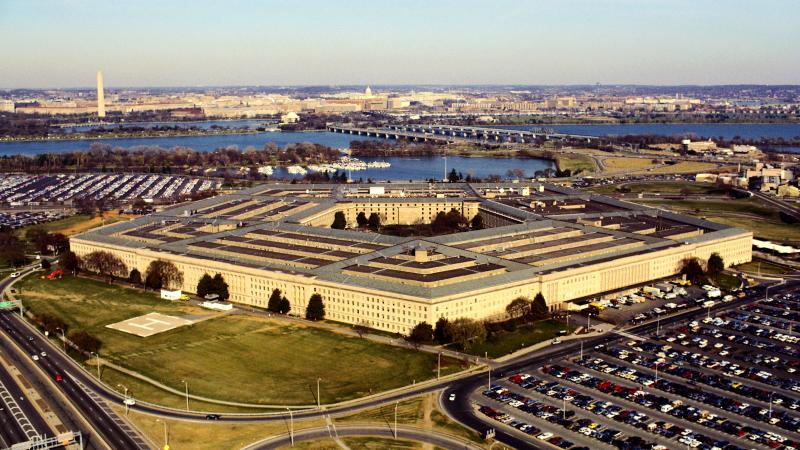
For example, the Pentagon has been collaborating closely with Mexican security officials. Last summer, it hosted an intelligence-sharing effort with the U.S. Drug Enforcement Agency and Mexican officials, Just the News reported.
“Trump has said to the President of Mexico, either you take care of these cartels or I will,” Fred Fleitz, the chief of staff of Trump’s National Security Council during his first term, told the John Solomon Reports podcast on Monday. “That led to the extraordinary action by the Mexican government to go up against cartels, which they never do. Right now, the government is at war with two of them, and we can see what happens when you go after them. This is a reaction to Trump's strong leadership.”
Mexico’s most powerful cartel designated terrorists by the U.S.
President Donald Trump officially designated CJNG and other cartels as terrorist organizations last year as part of a U.S.-led effort to degrade the criminal organizations and secure America’s southern border. The president initially directed the Pentagon to draft options for military
The U.S. Department of State has described CJNG as a “transnational organization with a presence in nearly every part of Mexico” that trafficks fentanyl, engages in extortion, smuggles migrants, steals oil and minerals, and trades in weaponry.
“The Cartels have engaged in a campaign of violence and terror throughout the Western Hemisphere that has not only destabilized countries with significant importance for our national interests but also flooded the United States with deadly drugs, violent criminals, and vicious gangs,” President Trump said in his 2025 executive order designating the groups as terrorist organizations.
According to the U.S. administration, cartels like CJNG pose a “national-security threat beyond that posed by traditional organized crime” because they have developed close ties with “extra-hemispheric actors” like other terrorist organizations, have engaged in insurgency, and have infiltrated governments in the Western Hemisphere.
CJNG is one of Mexico’s richest cartels and a substantial portion of its billions of dollars in annual income comes from targeting Americans. Like other cartels, CJNG is engaged in the illegal drug trade, shipping crystal methamphetamine across the U.S. southern border as well as to countries like Canada and Australia. Its “de facto” control of the Mexican port of Manzanillo in Colima, Mexico, “allows the group to import precursor chemicals to produce fentanyl and methamphetamine,” according to the U.S. Director of National Intelligence.
But, the group has also diversified its income by embarking on novel ventures, including scamming U.S. seniors through timeshare fraud and extortion. Just days before the Mexican military operation targeted “El Mencho,” the U.S. Treasury Department sanctioned the Kovay Gardens Mexican timeshare resort, five individuals, and 17 companies associated with what it called a “timeshare fraud network” led by CJNG in Puerto Vallarta.
According to the Treasury Department, CJNG would obtain information from insiders on U.S. owners of timeshare properties inside Mexico. A cartel-controlled call center would then contact the owners and attempt to offer services for advance payments. The scammers have also gone on to re-victimize the U.S. owners by posing as lawyers offering to help recover the lost funds, the Treasury Department said.
Cartels adopt military-grade weapons, outclass police
The cartels, and especially CJNG, present a new and dangerous problem. They are increasingly employing military grade weaponry like drones, improvised explosive devices, and rocket-propelled grenade launchers.
Recent battles between CJNG and rival cartel cells have terrorized villages, some within just a few hundred miles of the U.S. border. The use of drones in particular has made them more dangerous, which they use to drop explosives on their enemies, both Mexican police and rivals.
“CJNG has conducted intimidating acts of violence, including attacks on Mexican military and police with military grade weaponry, the use of drones to drop explosives on Mexican law enforcement, and assassinations or attempted assassinations of Mexican officials,” says the State Department.
Secretary of State Marco Rubio says that the adoption of such weaponry by the cartels makes them more dangerous than traditional criminal organizations or gangs.
Not just local street gangs
“We cannot continue to just treat these guys as local street gangs,” Secretary of State Marco Rubio said in an interview with Catholic TV network EWTN last year. “They have weaponry that looks like what terrorists, in some cases armies, have.”
Cartels have steadily adopted military-grade weapons over the last decade, a trend that is fueled by the arms race between rivals. In 2015, CJNG was the first cartel to use a rocket-propelled grenade to shoot down a Mexican military helicopter that was participating in an operation against the gang. In many cases, Mexican police have found themselves at a disadvantage against the cartels’ military equipment.
“They’ve been a step ahead of us for years,” former state security chief Alfredo Ortega told The New York Times last year. He led operations in Michoacán, Mexico, a state where CJNG has recently battled its rivals.
“They have unlimited resources and access to weapons and technology our local forces simply don’t. They came at us with Barrett .50-caliber semiautomatic rifles, and our local police forces didn’t even have anything close to that."
The Facts Inside Our Reporter's Notebook
Links
- rampaged across the city
- most powerful and well-equipped
- consolidated its control
- warnings about
- 92 cartel members
- collaborating closely
- State Department
- sanctioned the Kovay Gardens Mexican timeshare resort
- obtain information
- says the State Department
- said in an interview
- told the New York Times last year
Top Stories


Trending
Just the News Spotlight
Just News, No Noise