Trump secures outlines of a Greenland deal, now economics will have to win over its people
Art of the Deal Part Deux: As naysayers shouted down Trump’s aspiration as ridiculous and colonial, he defied his critics, including those present at the Davos conference, as he proposed a framework.
This year's World Economic Forum conference became President Donald Trump's "Greenland gambit," and now a framework deal has been reached for the United States to play a larger role inside the world's largest island, the president announced.
"Based upon a very productive meeting that I have had with the Secretary General of NATO (North Atlantic Treaty Organization), Mark Rutte, we have formed the framework of a future deal with respect to Greenland and, in fact, the entire Arctic Region," Trump posted to his Truth Social account.
The early descriptions did not specify the terms of the deal or whether Trump had achieved his stated goal of a full acquisition.
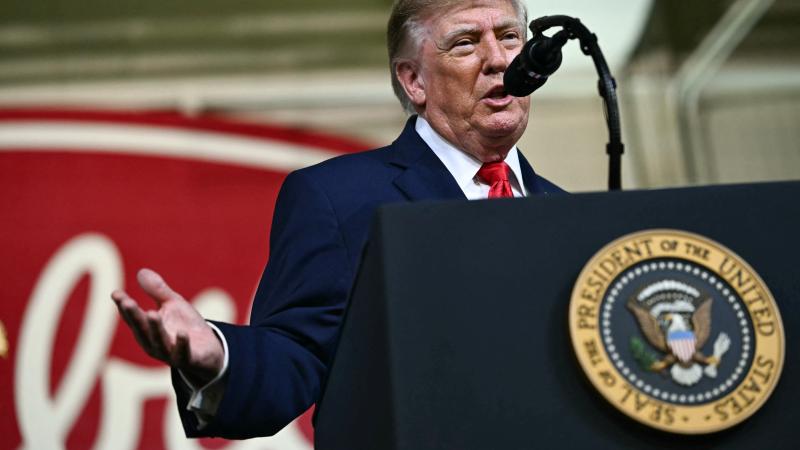
Trump delivered multiple messages to the thousands who attended the World Economic Forum in Davos, Switzerland. He warned for the second year in a row that European-style globalism has failed in nearly every regard to protect, produce or progress, and that therefore, the U.S. acquiring Greenland might actually strengthen NATO's security rather than threaten it.
Trump cites the EU's failures with immigration, eroded cultural identity
Trump sharply criticized European leaders for failing to control mass migration, asserting that unchecked immigration policies have rendered certain places on the continent completely unrecognizable and eroded their cultural identity. He told the crowd in Davos that Europe is not heading in the right direction, linking this decline to environmental regulations and the outsourcing of industry that have weakened economies across the region.
Trump has made it clear that he intends for the United States to acquire Greenland, though what that looks like exactly is unclear. Trump framed it as essential for North American security, characterizing the island as part of "our territory" and arguing that only the United States can properly defend it through full ownership rather than leases or agreements.
Trump continued in his post: "This solution, if consummated, will be a great one for the United States of America, and all NATO Nations. Based upon this understanding, I will not be imposing the Tariffs that were scheduled to go into effect on February 1st. Additional discussions are being held concerning The Golden Dome as it pertains to Greenland."
Trump's post did not specify what the nature of this new agreement would look like, though a few different options have emerged:
-
Outright purchase
The United States could acquire full sovereignty over Greenland through a direct sale from Denmark, similar to historical territorial purchases like Alaska or the Louisiana Territory, granting the U.S. permanent ownership and control over the island's resources and strategic position.
-
Long-term lease
Trump poured cold water on this option, at least for the time being, during his Davos speech on Wednesday, when he said, "You can't defend it on a lease. Legally it's not totally defensible. And also psychologically, who the hell wants to protect a lease?"
Trump has repeatedly raised concerns that if the U.S. is not allowed to proceed with the acquisition, another more hostile nation might move in, like China or Russia.
The agreement might involve the U.S. leasing significant portions of Greenland—or the entire territory—for an extended period (e.g., 99 years), allowing American military basing and resource development rights while Denmark retains nominal sovereignty, akin to the U.S. arrangement with Guantanamo Bay in Cuba.
-
Enhanced military basing rights
It could expand U.S. access to existing and new military installations under the 1951 Denmark-U.S. defense agreement, giving America dominant NATO-led control over Arctic defense without transferring sovereignty, effectively making Greenland a key U.S. strategic outpost.
-
Joint NATO administration or security pact
The framework might establish shared NATO governance or a special Arctic security arrangement where the U.S. leads operations and investments in Greenland, with allied contributions, to counter threats from Russia and China while preserving Danish formal ties.
Preferential rights
The deal could grant the United States preferential rights to Greenland's rare earth minerals, oil, and other resources in exchange for security guarantees and investments, tied to NATO's broader Arctic strategy, without altering political control.
American economic might was certainly an argument for Greenland's cooperation. Trump emphasized the unmatched economic strength of the United States as the primary driver of global prosperity. He touted domestic achievements like rising incomes, controlling inflation, and positioning America as the "economic engine on the planet," stating that when America booms, the world follows. While firmly insisting on full U.S. ownership of Greenland—describing it as part of North America and vital for security—he explicitly ruled out the use of military force, emphasizing peaceful immediate negotiations instead.
Trump also utilized the speech to bring global attention to his administration's successes at home. He highlighted initiatives to make housing more attainable for Americans, announcing an executive order to restrict large institutional investors from buying single-family homes. He also called for a temporary cap on credit card interest rates at 10% to ease financial burdens and help citizens save for homeownership.
Says Canada's prosperity owed to U.S. support
Trump admonished Canada to show more gratitude toward the United States, suggesting its prosperity and security depend heavily on American support. This remark fit into his broader narrative of allies acknowledging historical and ongoing U.S. contributions.
Trump pressed Ukrainian President Zelensky and Russian President Putin to swiftly negotiate a peace deal, warning that failure to do so would make them "stupid." He expressed confidence in facilitating a resolution while prioritizing American interests.
Trump referenced plans to impose tariffs on imports from several European countries, framing them as responses to unfair practices or disputes. This underscored his commitment to using trade policy to advance American economic priorities.
Trump concluded his post by announcing that Vice President JD Vance, Secretary of State Marco Rubio, Special Envoy Steve Witkoff, and others will be leading negotiations and report directly to the president.
The Facts Inside Our Reporter's Notebook
Top Stories

Trending
Just the News Spotlight
Just News, No Noise