Trump focuses on domestic policy, continuing work on economy, inflation, manufacturing
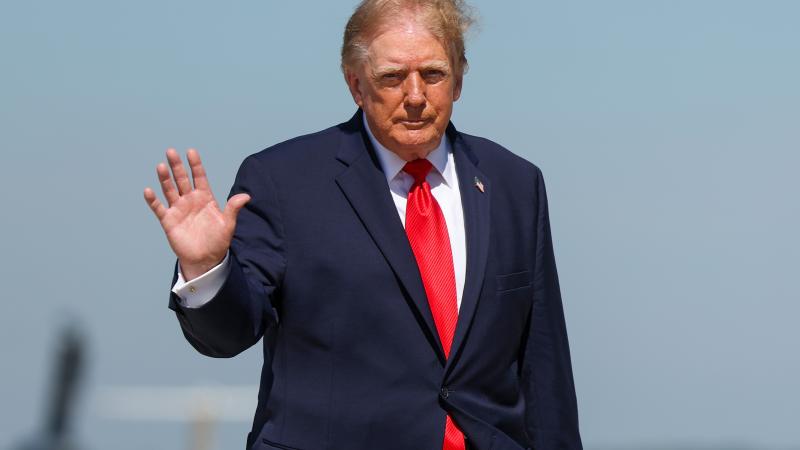
Despite criticism — sometimes in-house — for his concentration on foreign affairs, Trump is focusing squarely on domestic issues like the economy and affordability in preparation for this year’s midterm elections.
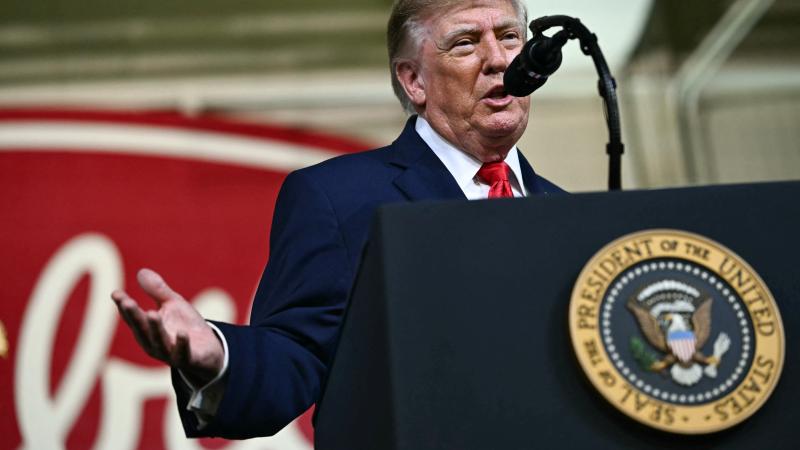
On Tuesday, President Donald Trump traveled to Michigan to visit one of Ford Motor's premier factories that produces its popular F-150 pickup truck, and to speak at the Detroit Economic Club, disregarding criticisms that his focus has been too oriented towards foreign policy.
Whether there's any veracity to the criticism, Trump made it abundantly clear on Tuesday that his focus is squarely on the homeland.
American manufacturing, jobs and "Making Driving Great Again" were center stage during his speech to the group at the MotorCity Casino Hotel, including the dramatic turnaround of the U.S. auto industry since Trump took office last year. His America First policies appear to have stoked a resurgence in the auto industry that could spell sustained growth and renewed strength in the sector.
U.S. automakers make gains
The latest Consumer Price Index report for December 2025 showed headline inflation holding steady at 2.7% year-over-year, with core inflation at 2.6% — one of the lowest annual rates in years and a marked cooling from the higher levels inherited at the start of the Trump administration.
He believes this stable, near-target inflation rate bolsters his message on affordability and how his administration's economic policies are successfully restraining price growth, delivering greater purchasing power and relief to American families struggling with everyday costs.
Since Trump's inauguration and implementation of auto-related policies, major automakers posted impressive gains, with the past year delivering the highest new vehicle sales since 2019. Ford recorded its strongest annual performance in six years, General Motors achieved exceptional SUV results, and Stellantis saw Jeep sales increase for the first time since 2018.
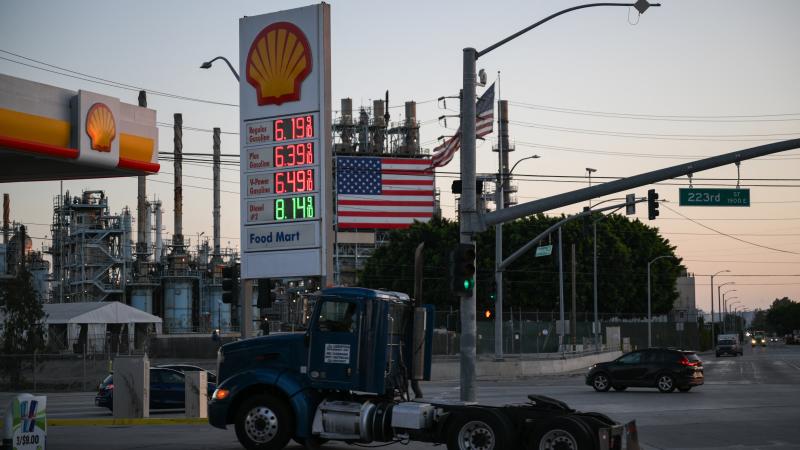
Affordability is another domestic issue that Trump's supporters have urged attention to. To that end, vehicle prices have fallen for both new and used models since President Trump took office, while costs for maintenance, repairs, insurance, and fuel have also declined significantly. A new tax deduction for interest on loans exclusively for American-made vehicles is further boosting demand and making car ownership more affordable for families.
Leading companies including Ford, General Motors, Stellantis, Honda, and Toyota have committed billions to expand U.S. manufacturing facilities. These investments are creating high-quality jobs and reinforcing domestic supply chains, particularly in states like Michigan.
Trump says tariffs are an "America First" policy
President Trump’s tariffs are credited with encouraging domestic production without raising vehicle prices, contrary to earlier predictions. Combined with the rollback of burdensome fuel economy rules and electric vehicle mandates, these reforms have lowered costs for consumers and earned broad support from automakers and dealers. In his speech Tuesday, he framed tariffs as an America First policy and said that "an anti-tariff person is a pro-Chinese person."
The critics of Trump’s presidency as disproportionately focused on foreign policy often point to high-profile international engagements such as trade negotiations, conflict disputes, and a confrontational stance toward NATO allies. However, this, Trump claims, overlooks the core motivation behind much of his foreign policy: a deliberate effort to advance America's domestic interests.
Trump frames his approach to international relations as a means to protect and strengthen the U.S. economy, workers, and national sovereignty, rather than an end in itself. Trade deals, tariffs, and diplomatic pressure are tools designed to address perceived imbalances that harm American jobs and industries, Trump believes, revealing that foreign policy is rarely detached from domestic priorities.
Much of the opposition to his geopolitical focus comes from within his own base. Rep. Marjorie Taylor Greene, R-Ga., who recently had a fallout with the president over such issues, was one of the first to criticize Trump on the issue. Even as recently as December she asked on X, "Zelensky today, Netanyahu tomorrow. Can we just do America?" Greene was referencing two meetings Trump held at his "winter White House," Mar-a-Lago in Palm Beach, with Ukraine's President Volodymir Zelensky and Israel's Prime Minister Benjamin Netanyahu.
Another one of Trump's most vocal supporters who became one of his most vocal critics on the issue is Steve Bannon. Bannon, who on his show "War Room" has advocated strongly for Trump's domestic campaign stances on issues like immigration and the economy, came out aggressively against the perceived preoccupation with foreign matters.
Efforts to revive domestic manufacturing — through incentives to reshore production and confront unfair foreign competition — reflected a clear focus on rebuilding American industrial strength. Similarly, immigration enforcement, including border security measures and reforms to legal immigration pathways, was a centerpiece of his agenda, driven by concerns over job competition, wages, and public safety.
Far from being sidelined, these domestic priorities were central to Trump’s political identity and agenda, demonstrating that his focus on making America prosperous and secure at home often overshadowed or directly informed his actions abroad.
The Facts Inside Our Reporter's Notebook
Links
- speech
- Consumer Price Index
- impressive gains
- strongest annual performance
- SUV results
- Jeep sales increase
- vehicle prices have fallen
- tax deduction
- Ford
- General Motors
- Stellantis
- Honda
- Toyota
- without raising vehicle prices
- trade negotiations
- stance toward NATO
- approach to international relations
- One Big Beautiful Bill Act
- energy independence
- reshore production
- fallout
- December she asked
Top Stories



Trending
Just the News Spotlight
Just News, No Noise