Trump brings family legacy full circle with merger of nuclear power startup and Trump Media Group
Dr. John George Trump had a clear passion for energy innovation and domination and that legacy is carried on through the President of the United States, his nephew, Donald Trump.
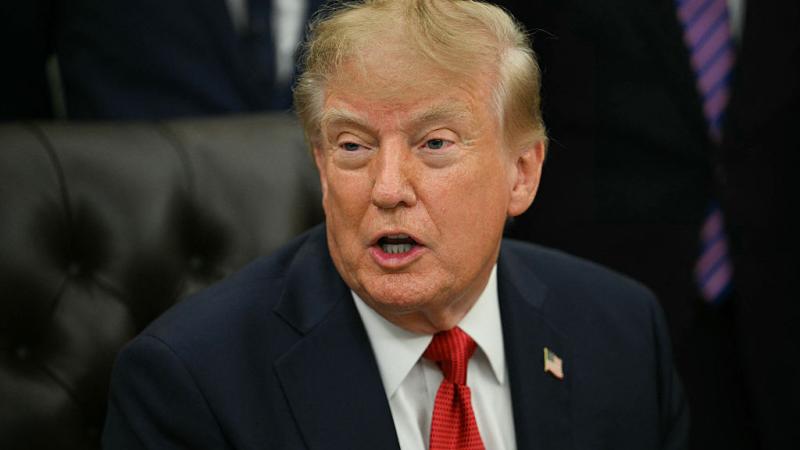
President Donald Trump will bring to fruition a major component of his family's legacy to the energy space as his social media company and a nuclear technology firm are set to merge.
In December, Trump Media & Technology Group (TMTG, the parent company of Truth Social, majority-owned by President Donald Trump) announced a $6 billion merger with TAE Technologies, building on the legacy of Trump's uncle, Dr. John George Trump, who was a physicist and MIT (Massachusetts Institute of Technology) professor.
TAE is a leading nuclear fusion startup, and has its eyes set on funding the construction of the world's first utility-scale fusion power plant starting in 2026. The high-profile involvement of the president's company in a major fusion merger strongly signals at the very least, a soft endorsement, but almost certainly a commitment to advancing the field.
High-tech manufacturer Peak explains that "Fission occurs when a neutron slams into a larger atom, forcing it to excite and split into two smaller atoms, also known as fission products. Additional neutrons are also released, which can initiate a chain reaction. When each atom splits, a tremendous amount of energy is released."
By contrast, they explain, "fusion occurs when two atoms are squeezed together to form a heavier atom, like when two hydrogen atoms fuse to form one helium atom. This process powers the sun and creates vast amounts of energy — several times greater than fission."
Trump's uncle was a professor at MIT, Trump says
The president frequently speaks proudly of his uncle, who he refers to as a brilliant genius, in touting his family's intelligence and good genes. "I had an uncle who was a great professor for, I believe, 40 years at MIT. And I used to discuss nuclear with him all the time. He was a great expert. He was a great, brilliant genius. Dr. John Trump at MIT," Trump told a campaign crowd in 2016.
John George Trump (who bears Trump's middle name, John) is the younger brother of Trump's father, Fred Trump. Beyond his work as a physicist and professor, he worked as an electrical engineer and was renowned for his work on high-voltage generators, radar during World War II and radiation therapy for cancer.
Wedbush security analyst Dave Ives noted after the merger that TAE will likely receive "major political support from President Trump," positioning fusion as a key U.S. energy bet for AI power demands, national security, and economic dominance.
While the president's broader energy policy emphasizes nuclear expansion (primarily fission), his administration has continued and built on fusion-related initiatives, such as the Department of Energy's Fusion Science and Technology Roadmap released in October 2025 to accelerate commercialization.
During his first term (2017–2021), Trump supported reviving nuclear energy in general (referring to fission as "clean, renewable and emissions-free"), but he did not specifically highlight fusion. Fusion remains a long-term, high-risk technology without commercial viability, despite private investments.
Dr. Trump's long record of advanced engineering
Born in the early 20th century, Dr. John Trump made significant contributions to high-voltage technology and particle acceleration, earning recognition as a pioneer in his field. His work spanned academia, industry, and innovation, influencing nuclear physics and related applications. Notably, President Trump has publicly discussed his uncle, mentioning how John Trump educated him on topics related to "nuclear" energy and its implications.
In the early 1930s, Trump's research focused on advanced electrical engineering concepts during his PhD studies. He collaborated with Robert J. Van de Graaff on a thesis and co-filed patents that explored vacuum insulation techniques. This work extended to innovative ideas for high-voltage direct current (HVDC) power transmission, including a proposed vacuum-insulated long-distance transmission line. The concept was licensed to the Massachusetts Institute of Technology (MIT), where Trump was affiliated, and it garnered interest from the Tennessee Valley Authority. However, despite the potential, no full-scale project materialized from these early explorations.
Dr. Trump co-founded the High Voltage Engineering Corporation (HVEC) in the late 1940s, where he served as chairman and technical director. HVEC had a profound impact on scientific research; by 1970, nearly 70 percent of experimental nuclear physics papers depended on data generated from HVEC accelerators. Over time, HVEC diversified its offerings to include accelerator-enabled industrial products, serving a diverse clientele that included research institutions, hospitals, nuclear physics laboratories, and industrial users focused on sterilization and material modification processes.
The merger in the nuclear energy space adds to the Trump family legacy in other sectors, most notably real estate, which began with the president's father, Fred Trump, who was a mogul like his son. Fred Trump built a highly profitable empire by developing more than 27,000 affordable apartments and townhouses in Brooklyn and Queens during the mid-20th century. Donald Trump later transformed the business into a global luxury brand, marked by iconic Manhattan properties such as Trump Tower and high-profile hotel and resort developments that prominently feature the Trump name.
Ethical considerations of corporate structure, ownership
While TTMG remains majority-owned by the president, in December 2024 (before his second inauguration), Trump transferred his approximately 115 million shares — representing about 52-57% of the company — into the Donald J. Trump Revocable Trust. His eldest son, Donald Trump Jr. serves as the sole trustee with full voting and investment control over the shares.
This arrangement is similar to what Trump did with other business assets during his first term: it provides some separation for ethics purposes but allows him to retain economic ownership and indirect influence (since the trustee is a family member).
Critics, such as The New York Times, have noted it doesn't fully eliminate potential conflicts of interest, as it's not truly "blind" (independent management with no knowledge of holdings). In addition, Benzinga and others are reporting a sizable jump in the amount of money short-sellers are betting against the company.
The pending merger with TAE Technologies (expected to close mid-2026) would dilute ownership to roughly 50/50 between current TMTG and TAE shareholders, but Trump's trust would still hold a major stake in the combined company.
The Facts Inside Our Reporter's Notebook
Top Stories


Trending
Just the News Spotlight
Just News, No Noise