Trump prods Congress to nationalize election integrity, but Supreme Court may deliver first
Nation's nine justice could reshape election integrity when it comes to redistricting and post-Election Day ballot counting.
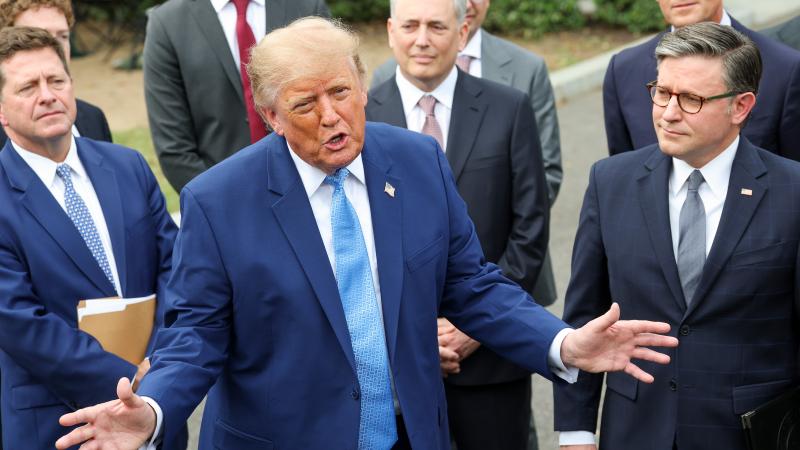
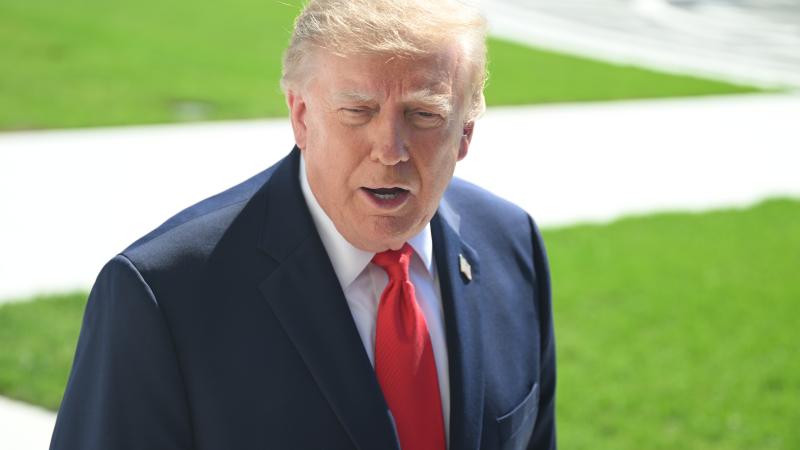
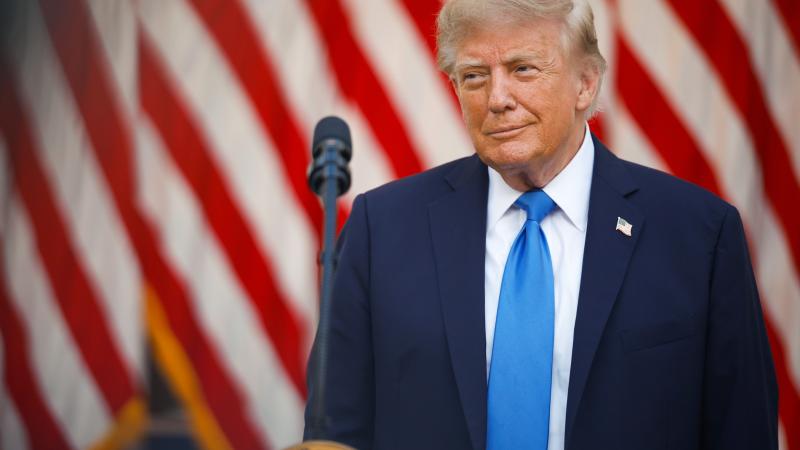
President Donald Trump is facing some conservative backlash after calling on congressional Republicans to “nationalize” election integrity in states he claims are plagued by corruption. But two of his biggest wishes — ending racially gerrymandered districts and banning ballot counting after Election Day — could be delivered instead by the Supreme Court.
Trump first floated the idea of nationalizing elections during a podcast interview Monday with Dan Bongino, the president’s former deputy FBI director. In the interview, Trump urged Republican lawmakers to take control of election administration in as many as 15 states, though he did not identify which states he had in mind.
He argued that federal intervention is warranted when states fail to ensure fair and transparent elections.
“The Republicans should say, ‘We want to take over,’” Trump said. “We should take over the voting, the voting in at least many —15 places. The Republicans ought to nationalize the voting.”
The following day, Trump reiterated the proposal during remarks to reporters in the Oval Office, again alleging widespread election corruption. “Look at some of the places—there’s horrible corruption on elections—and the federal government should not allow that,” he said. “The federal government should get involved.”
Trump’s comments revived a long-running debate over the constitutional limits of federal power in election administration.
Under Article I, Section 4 of the U.S. Constitution, states are charged with determining the “Times, Places and Manner” of congressional elections, though Congress retains authority to alter those regulations. Presidential elections are governed by a similar division of authority, with states overseeing election mechanics while Congress sets the date on which presidential electors are chosen.
MAGA influencer Steve Bannon endorsed the president’s call to action and went even further, calling for Immigration and Customs Enforcement officials and U.S. military troops to be deployed to polling sites.
House Speaker Mike Johnson (R-La.) also echoed the president’s concerns about election integrity during a telephone town hall with constituents.
“We had three House Republican candidates who were ahead on election day,” Johnson said. “Every time a new tranche of ballots came in, their leads were magically whittled away until they were lost. It just looks on its face to be fraudulent.”
But some prominent Republicans pushed back on Trump's plan, warning his proposal would violate constitutional principles and upend the traditional decentralized election system.
Senate Majority Leader John Thune (R-S.D.), the top Republican in the Senate, told reporters he was “not in favor” of the president’s plan. Sen. Rand Paul (R-Ky.) and Sen. Ron Johnson (R.-Wis.) likewise rejected the idea, dismissing it as unconstitutional.
But Trump may not need Congress to advance core components of his election agenda.
Several of his top election-related priorities—such as eliminating race-based congressional districts and putting an end to vote counting after Election Day—could be achieved through Supreme Court rulings as early as this summer.
One such case, Louisiana v. Callais (consolidated with Robinson v. Callais), could be decided any day now.
The high-stakes dispute centers on whether Louisiana’s 2024 congressional map, which created a second majority-Black district to comply with Section 2 of the Voting Rights Act, amounts to an unconstitutional racial gerrymander under the 14th and 15th Amendments of the U.S. Constitution. The case was initially argued in March 2025, held over, and reargued in October 2025 with a renewed focus on the constitutionality of race-conscious redistricting.
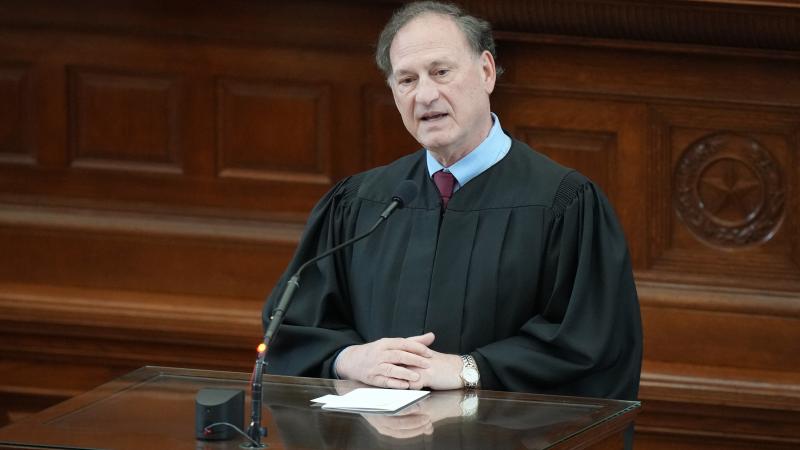
Court watchers widely expect the conservative-leaning Court to rule at least partially in favor of the challengers, a decision that could significantly narrow when and how states may consider race in drawing congressional districts. The Court could also weaken the practical force of Section 2 of the Voting Rights Act and reshape redistricting nationwide ahead of the next round of map-drawing.
The Court is also set to opine on another issue central to Trump’s election agenda: counting votes after Election Day.
In late March, the Supreme Court is scheduled to hear oral argument in Watson v. Republican National Committee, a case challenging Mississippi’s law that permits absentee ballots postmarked by Election Day to be counted if they are received within five business days. See Miss. Code Ann. § 23-15-637(1)(a).
Three federal election-day statutes—2 U.S.C. § 7, 2 U.S.C. § 1, and 3 U.S.C. § 1—designate the Tuesday after the first Monday in November, in certain years, as “the day for the election” of Members of the U.S. House and Senate and the President. And under the Supremacy Clause of the U.S. Constitution, federal law preempts conflicting state law.
At issue is whether those federal election-day statutes conflict with—and therefore preempt—Mississippi’s absentee-ballot deadline. The U.S. Court of Appeals for the Fifth Circuit concluded that they do, holding that federal law requires ballots to be both cast by voters and received by election officials by Election Day.
On that basis, the court ruled that the federal statutes override Mississippi’s postmark-based deadline. The Supreme Court will now decide whether that interpretation is correct.
The Republican National Committee argues that the ordinary meaning of “the day for the election” resolves the case, requiring final receipt of ballots by Election Day. Mississippi counters that the statutes impose only a casting deadline, not a receipt deadline.
A wide array of political parties and voting-rights organizations have weighed in through amicus briefs, advancing competing legal and policy arguments over the permissibility of counting ballots received after Election Day.
A decision in Watson is expected by June 2026, just months before the midterm elections. A ruling in favor of the Republican National Committee could invalidate postmark-based ballot deadlines nationwide, forcing states to discard ballots that arrive after Election Day in the upcoming midterm elections.
With multiple high-stakes election cases on the Court’s docket and the midterms approaching, Trump may yet find a viable path to advancing his election agenda with the help of the Supreme Court rather than Congress.

Top Stories

Trending
Just the News Spotlight
Just News, No Noise