Trump moves to restore home ownership dream by cutting mortgage costs, boosting factory-built homes
President Trump’s new executive order aims to cut mortgage insurance and title costs, expand factory-built homes, and reverse years of supply constraints so more Americans can afford to buy a home again.
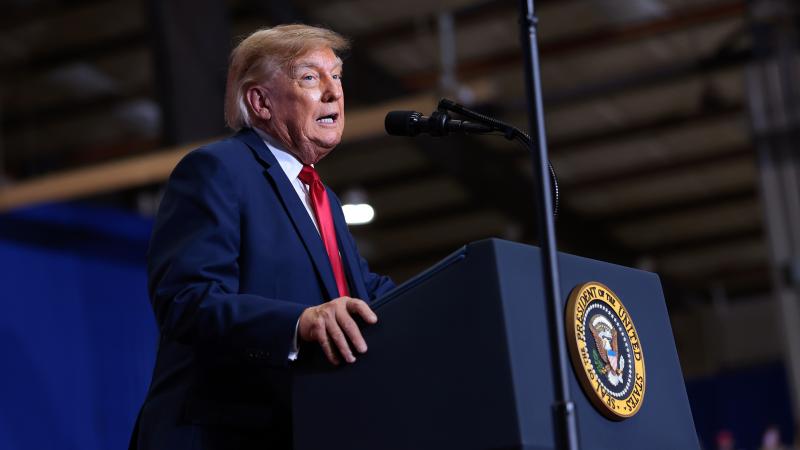
President Donald Trump on Thursday signed an executive order aimed at lowering single-family homeownership and mortgage costs, placing renewed emphasis on restoring the American Dream of homeownership amid persistent affordability challenges.
“The American Dream of homeownership is a vital pillar of our great country," the order reads.
To be sure, the issue of homeownership – amid the larger issue of affordability in housing and in general – is a concern among Americans that has also become a midterm election issue.
According to Freddie Mac, the average 30-year fixed-rate mortgage was at 7.32% on Thursday, compared to 3.15% in 2021. That same year, the average sale price of homes sold in the U.S. was roughly $475,000, compared to $502,700 now.
"It is the policy of my Administration to reduce regulatory barriers to mortgage origination and costs impeding homeownership; embrace innovative risk and value assessment technologies that incorporate Super Intelligence to drive down mortgage and homeownership costs; and promote competition and innovation throughout the housing and mortgage market," Trump said in announcing his executive order.
The order directs the Federal Housing Finance Agency to launch a pilot program that proactively cancels mortgage insurance premiums for qualifying borrowers once they meet equity thresholds based on current market values, using automated valuation models, and to expand its title insurance waiver pilot into a permanent nationwide program to cut refinance costs.
Private mortgage insurance is required on most conventional loans with less than 20% down and typically ranges from roughly 0.3% to more than 1% of the loan amount annually, adding $100 to several hundred dollars to monthly payments depending on credit score and down payment.
The pilot program seeks to remove this expense automatically for owners who have built sufficient equity, reducing a recurring cost that can persist for years. It also establishes a Task Force on Manufactured Housing Innovation, co-chaired by the HUD secretary and FHFA director, to promote modern factory-built methods and lower production costs for homes eligible for federal programs, while instructing the Agriculture and Veterans Affairs secretaries to reduce rates on certain direct single-family loans.
The initiative builds on the July 2026 ROAD to Housing Act’s elimination of the longstanding permanent chassis requirement for HUD-code manufactured homes and HUD’s Oct. 7 Next Generation Manufactured Housing Action Plan, which outlines steps to update construction standards, energy-efficiency rules, foundations, and installation for chassis-free designs.
New manufactured homes have averaged around $135,000 in recent Census data, a fraction of site-built prices, and the task force is charged with recommending ways to expand their eligibility and production while maintaining safety standards.
"Demand isn’t just outpacing supply," Realtor.com senior economist Hannah Jones said Thursday. "It is artificially suppressed because suitable, affordable homes aren’t available."
The new White House initiative continues a series of administration actions targeting demand-side pressures and supply constraints.
In January 2026, Trump signed an order directing agencies to limit large institutional investors’ purchases of existing single-family homes (with carve-outs for build-to-rent) and called on Congress to codify the policy, which Treasury has begun implementing via proposed rules under the ROAD to Housing Act that generally bar such investors controlling 350 or more homes from new acquisitions starting in 2027.
Data from sources including Realtor.com indicate the largest institutional buyers have accounted for only about 1% of total single-family purchases over the past decade and a declining share of investor activity, though overall investor purchases (mostly small and medium operators) have represented 10–30 percent of transactions in recent periods depending on the metric.
A March 2026 order focused on removing federal regulatory barriers, including reviews of stormwater/wetlands permitting, energy mandates, and other rules that the administration said inflated construction costs.
Building on previous actions
The new directives follow previous efforts by the Trump administration to tackle housing issues, including the April 2026 Economic Report of the President, which estimated a roughly 10-million-unit shortfall in single-family homes relative to pre-2008 construction rates.
The report attributed the affordability crisis to Biden-era policies that simultaneously boosted demand (via large-scale illegal immigration and institutional investor purchases of single-family homes) and constrained supply (through green building-code mandates, “equity plan” rules, and local regulatory costs estimated at more than $100,000 per new home).
Independent NAHB (National Association of Home Builders) analysis put total federal, state, and local regulatory costs at $131,734 – or 26.4%—of the average new single-family home price as of early 2026, with building-code changes alone adding over $40,000.
The report reviewed early Trump administration steps that reverse those pressures – securing the border, an executive order barring large institutional buyers from further single-family acquisitions and making Opportunity Zones permanent under the Working Families Tax Cuts (which HUD has credited with more than $100 billion in private investment and hundreds of thousands of housing units in distressed areas.
The report also reviewed directing Fannie Mae and Freddie Mac to purchase $200 billion in mortgage-backed securities to ease rates and rolling back federal green and equity mandates – while urging states and localities to adopt faster permitting, modular-construction code alignment, and elimination of non-safety barriers.
The Facts Inside Our Reporter's Notebook
Top Stories




Trending
Just the News Spotlight
Just News, No Noise