College faculty study shows campaign donations skew far to the left
Study attempts to more accurately assess a faculty member’s political ideology through culling campaign contributions, instead of merely finding a member’s political affiliation.
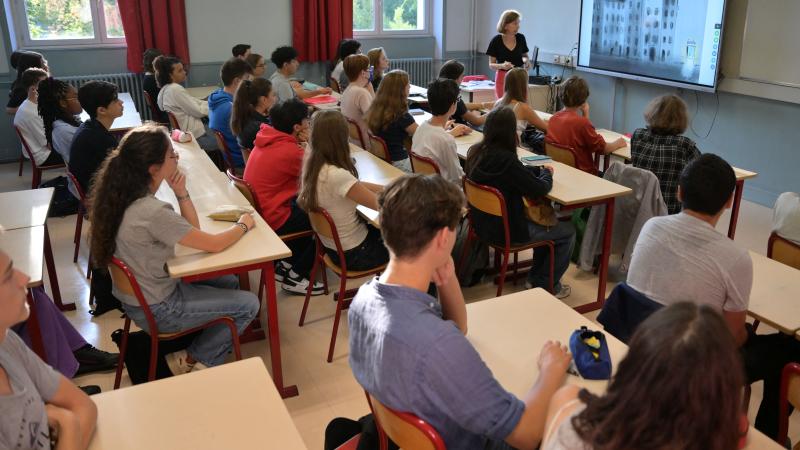
A new study finds that donations from faculty at U.S. top universities have become increasingly one-sided – suggesting that politically active faculty are clustered within a “narrow” and “ideological” far-left band.
To be sure, similar studies have long concluded that U.S. universities have more liberal-leaning than conservative-leaning faculty.
However, the new study, released Thursday and commissioned by the nonprofit civil liberties group the Foundation for Individual Rights and Expression, attempts to more accurately assess a faculty member’s political ideology through culling campaign contributions, instead of merely finding a member’s political affiliation.
The study consisted of cross-referencing the names of 100,000 faculty members at 55 universities to state and federal campaign contributions.
FIRE Vice President of Research Angela Erickson said the results also suggest politically active faculty are clustered within a “narrow ideological band, which raises serious concerns about whether students and scholars are getting the full benefit of the open inquiry universities promise.”
The study also gives faculty members a political ideology “score” based upon their donations.
University of Rochester professor David Primo culled the list of faculty members, then cross referenced the names with a database of over 850 million state and federal campaign contributions.
The members who could be matched with donations were assigned a score.
“Studying faculty campaign contributors provides a unique window into the views of politically active professors,” Primo said. “These data allow us to systematically measure viewpoint diversity at top universities and lay a foundation for strengthening discourse, teaching, and research on college campuses.”
The average ideology score of faculty donors in the 55-school sample was only slightly less left-leaning than some of the most left-wing members of the U.S. Senate, such as Vermont Independent Sen. Bernie Sanders and Massachusetts Democratic Sen. Elizabeth Warren, according to FIRE, which also says there was no equivalent critical mass of donations on the Republican side.
By analyzing the donations and scores, it was also possible to approximate which schools “might have greater intellectual diversity than others,” FIRE also said.
Other findings include:
- The humanities and fine arts show the least political diversity, while business and agriculture show the highest
- Eight of the 10 most politically diverse faculty bodies were at universities in the South. The two others were Kansas State University and Brigham Young University).
- Four of the 10 least intellectually diverse campuses were on the West Coast, and four were Ivy League schools in the Northeast.
FIRE Campus Advocacy Chief of Staff Connor Murnane says, “The lack of viewpoint diversity in academia is a crisis.” However, he argues that existing methods to diversify academic viewpoint among faculty like ideological testing or hiring quotas won’t work.
He instead suggests universities “recommit to creating a culture that makes room for students and faculty to challenge ideas from the left, right and center.”
The Facts Inside Our Reporter's Notebook

Top Stories

Trending
Just the News Spotlight
Just News, No Noise