Related Articles

Appeals court resurrects Wyoming doctor's lawsuit for removal from medical licensing board. SCOTUS petitioned to review same court's refusal to allow challenge to Colorado Legislature's "decorum" rules in public comment.
Speaking against gender ideology in the Rocky Mountain states got a doctor removed from a medical licensing board and residents censored at legislative hearings. The 10th U.S. Circuit Court of Appeals delivered for the former while setting back the latter.
Radiologist Eric Cubin's First Amendment retaliation lawsuit against Wyoming GOP Gov. Mark Gordon is moving forward again, while Gays Against Groomers, Rocky Mountain Women's Network and their Colorado leaders are petitioning the U.S. Supreme Court to stop lawmakers from enforcing "facially" unconstitutional "decorum" rules in public comment.
Cubin, a member of the Wyoming Medical Society but angry with the "far left" group for not polling members before endorsing so-called gender-affirming care, urged Equality State lawmakers to ban such procedures for minors through "Chloe's law." Detransitioner Chloe Cole is one of many suing her doctors.
Gordon signed the bill but demanded his appointee's resignation from the Wyoming Board of Medicine a month later for Cubin's "personal comments," which allegedly threatened public confidence in the board's neutrality in license investigations.
Overruling U.S. District Judge Scott Skavdahl, a 10th Circuit panel found "Cubin’s email addressed a matter of public concern." It said the judge – known for dismissing a lawsuit against the state's election integrity law – rushed to judgment by finding the government’s interest in "promoting efficiency" outweighed Cubin’s expressive rights.
The panel reinstated Cubin's civil rights claims against the governor in his official capacity while upholding Gordon's personal qualified immunity. It also "invite[d] the district court to reconsider supplemental jurisdiction over the state-law claim" Cubin made.
"This is a powerful victory for the principle that Americans do not surrender their First Amendment rights when they agree to serve their communities," said Cubin's lawyer, Liberty Justice Center senior counsel Buck Dougherty. "I spoke up because Wyoming lawmakers needed to hear the truth from physicians whose views were not being represented," Cubin said.
Gordon's office didn't answer a request for its response to the resurrected lawsuit.
Encouraging legislatures to 'silence dissenting or minority viewpoints'
When Rich Guggenheim and Christina Goeke testified against "Tiara's law," which would make name changes easier for transgender felons in Colorado, they were subject to "interrupting, chiding, and cutting off speaking time" in Colorado House and Senate Judiciary Committee hearings for using its namesake's legal name, calling him "gay" and an "admitted former prostitute," their SCOTUS petition says.
GAG's Guggenheim opined that early transgender icons – one a prostitute celebrated in school curricula for young children – were actually "gay men who were drag queens" like Tiara Kelley, who is legally "Duane Powell" in several Florida convictions. (Kelley has reportedly used at least three surnames and organized Colorado drag shows featuring children.)
Such language constituted "deadnaming," "misgendering," and "criticizing the namesake of a bill" in violation of legislative decorum rules, according to lawmakers. They additionally directed women's network founder Goeke to leave the House hearing room and, as documented in the 2024 lawsuit, erased her comments from the Senate hearing recording.
The 10th Circuit used an "exotic interpretation" of the legislative immunity phrase "individual capacities" – applying it to their "official capacities" as well – to shut down the Colorado lawsuit and immunize lawmakers from any judicial scrutiny for cutting off and retroactively censoring public comments, the petition says.
While SCOTUS has "long held" that official-capacity actions are "effectively claims against the underlying government," the Denver-based appeals court "treated absolute legislative immunity as a type of super-immunity" from both damages and equitable relief, the Institute for Free Speech argued in the petition.
If the high court doesn't reject legislative immunity for viewpoint-based censorship, the 10th Circuit's holding "will invite other legislative bodies to enforce speech rules that silence dissenting or minority viewpoints in violation of the First Amendment," it says.
IFS emphasized the 10th Circuit didn't find the decorum rules and active censorship constitutional, but simply exempted itself from having to evaluate them, worsening a split among federal appeals courts on legislative immunity and official-capacity claims.
"If courts can’t even stop elected officials from enforcing a political speech code that forces some citizens to lie in order to comment on pending legislation, the First Amendment becomes optional," senior attorney Del Kolde said.
Treated worse than nurses who steal, fabricate records, abuse patients
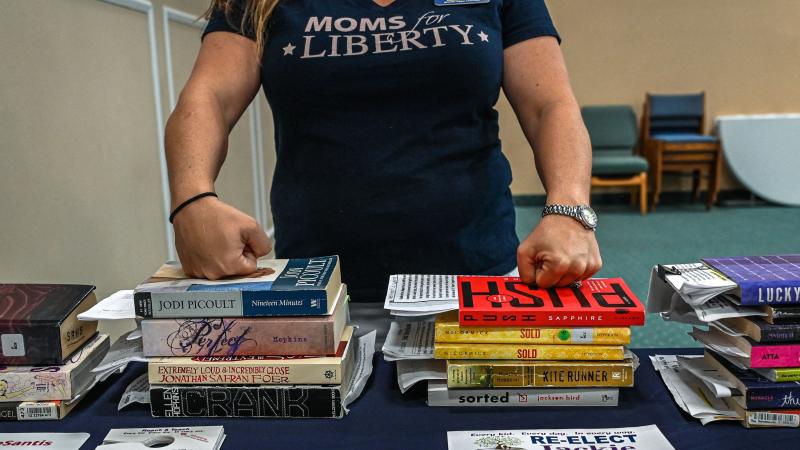
Viewpoint-based restrictions on public comment in government meetings have not fared well in U.S. courts, with Moms for Liberty notably defeating the Florida school district whose COVID-19 policies birthed the group at the 11th Circuit in 2024.
Criticizing gender ideology has subjected medical professionals throughout North America to license investigations with little pushback from the courts, on the other hand, perhaps none so severely as British Columbia's Amy Hamm.
The Canadian province's nursing regulator fined Hamm $93,000 and suspended her license for a month based on Hamm's years of commentary that men can't become women, starting with her "I (Heart) J.K. Rowling" billboard lauding the gender-critical Harry Potter author.
The penalty cost the single mother her job as well, and this spring her union cut off her representation against Hamm's former employer, Hamm wrote in The National Post.
"There are nurses who steal and abuse narcotics while on duty [...] harm patients, fabricate patient records, and inappropriately and illegally access patient records," yet they "continue to practice as members of their union," she wrote. "But if you challenge mainstream gender orthodoxy that falsely and harmfully insists that males can become literal females?"
The 10th Circuit rejected Judge Skavdahl's view that radiologist Cubin's email to Wyoming lawmakers was only a "matter of personal interest." Even though he "excoriated the internal processes of a private professional organization," Cubin was speaking "in opposition to the Society’s public advocacy against a bill Cubin endorsed."
His email "contributed to the legislative debate" beyond endorsing Chloe's law, informing "lawmakers of potential weaknesses in the Society’s testimony and its lobbying process," the panel wrote.
Skavdahl "jump[ed] the gun" by elevating the state's interest in protecting the medical licensing board's reputation over Cubin's expression on such a thin record, the ruling said. The court doesn't know "how the recusal process works or how likely it is to lead to actual or anticipated disruption," for example.
Why stop at legislative immunity?
One of the judges from that panel, President Biden-nominated Richard Federico, four months earlier wrote the opinion tossing the Colorado censorship challenge, which ruled out a court order to stop enforcement of the one-sided decorum rules and deemed lawmakers' policing of public comment to be ordinary "legislative" business.
The SCOTUS petition to review that decision invokes the high court's recent approval of state bans on males in girls' sports, quoting Justice Clarence Thomas's concurrence that using "language to obscure reality [...] is to lie to the public."
Guggenheim and Goeke consider "adherence to a transgender person’s pronoun preferences, assumed gender, or assumed name to be a form of lying" and "degrading and demeaning to themselves," the petition says.
The 10th Circuit had to ignore its own precedent, less than 20 years old, to gin up the fiction of "an official-capacity claim against a natural person," as well as SCOTUS precedent twice as old that requires official-capacity suits "to be treated as a suit against the [public] entity."
It's irrelevant that the "context" of the SCOTUS precedent was attorney's fees, as the 10th Circuit emphasized, because the precedent "includes no exceptions for legislative immunity," which is intended to "prevent civil liability for money damages from deterring public service," the petition says.
"If official-capacity defendants can invoke legislative immunity, then they can also presumably invoke other personal defenses, such as qualified immunity," but the 10th Circuit doesn't acknowledge the "implications of its holding," according to the filing.