Related Articles
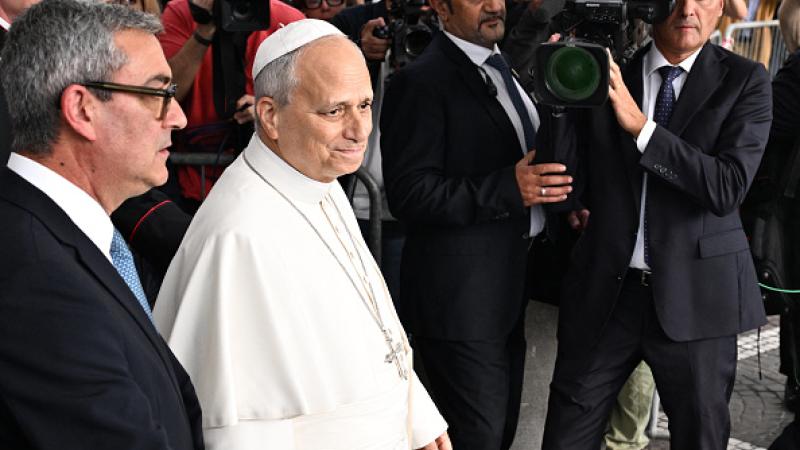

“The events in Venezuela, Ukraine and Greenland have raised basic questions about the use of military force and the meaning of peace,” the Cardinals wrote.
Three leading U.S. Catholic Cardinals called on President Donald Trump and his administration to adopt a “moral vision” of foreign policy that eschews threats and uses force only as a last resort.
The three clerics, Cardinal Blase J. Cupich, archbishop of Chicago, Cardinal Robert McElroy, archbishop of Washington and Cardinal Joseph W. Tobin, archbishop of Newark, publicly released a joint letter on Monday, wading into the current debate over U.S. foreign policy following President Trump’s ouster of Venezuelan dictator Nicolás Maduro and efforts to acquire Greenland.
“The events in Venezuela, Ukraine and Greenland have raised basic questions about the use of military force and the meaning of peace,” the Cardinals wrote.
The trio referenced Pope Leo’s remarks earlier this month to the Vatican City diplomatic corps. The Catholic leader warned that “a diplomacy that promotes dialogue and seeks consensus among all parties is being replaced by a diplomacy based on force, by either individuals or groups of allies.”
“War is back in vogue, and a zeal for war is spreading,” Pope Leo said. “The principle established after the Second World War, which prohibited nations from using force to violate the borders of others, has been completely undermined.”
Instead, Pope Leo said that a moral foreign policy should prioritize protecting the right to life, providing humanitarian aid where possible, and pursue peace “as a gift and a desirable good in itself.”
“As pastors and citizens, we embrace this vision for the establishment of a genuinely moral foreign policy for our nation,” the Cardinals wrote.
“We seek to build a truly just and lasting peace, that peace which Jesus proclaimed in the Gospel. We renounce war as an instrument for narrow national interests and proclaim that military action must be seen only as a last resort in extreme situations, not a normal instrument of national policy,” they added.