Related Articles
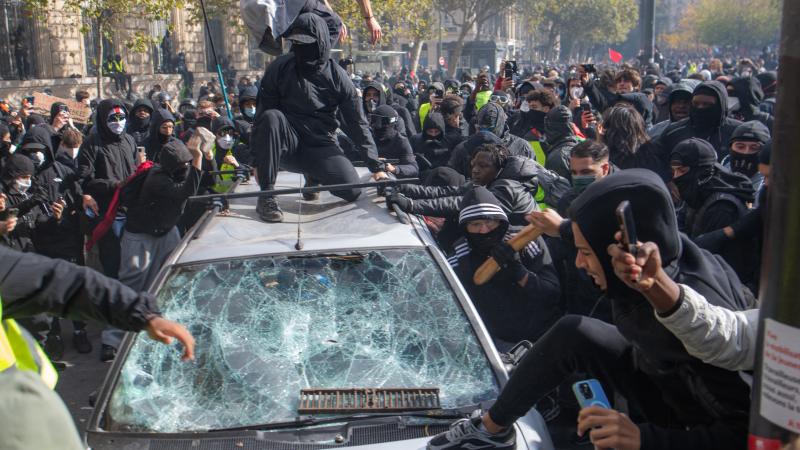
A network of U.S.-based activist groups isn't just voicing opposition to a hypothetical war with Cuba, it's pre-building the machinery to plant protesters outside ICE offices, military bases, recruiting centers and federal buildings within 24 hours of any U.S. military action, on a coordinated national timeline.
Organizations tied to Cuba have openly built a rapid-response protest apparatus attached to a possible U.S.-Cuba military conflict, at the same moment the U.S. government is formally treating that coalition’s Cuban state partner as a hostile influence operation.
The National Network on Cuba (NNOC) has been distributing a document since at least June 2026 urging organizers across the U.S. to prepare to protest in front of Immigration and Customs Enforcement (ICE) offices, military bases, recruiting centers and other federal institutions should the U.S. get involved in military action in Cuba. The document, first reported by ADN Cuba’s Gelet Martinez Fragela, provides a coordinated strategy for activists to organize protests within 24 hours should the U.S. military attack Cuba. Just The News was unable to independently verify the authenticity of the document, although a direct link to the document was posted on the "No War on Cuba" webpage.
ADN Cuba describes itself as an independent digital media outlet and news magazine dedicated to covering Cuba and the Cuban diaspora. Founded in 2017, the platform focuses on human rights, LGBTQ+ issues, racial integration and investigative journalism, often publishing content critical of the Cuban government.
“To support the organization of coordinated nationwide actions within 24 hours of a U.S. military attack on Cuba (or imminent threat), while simultaneously building long-term capacity for a massive anti-war movement,” the document says. “The goal is to make it politically and materially costly for the U.S. government to wage war on Cuba.”
The planning document provides a uniform national timeline for protests: if military action occurs before 3 p.m. local time, then protests would begin at 6 p.m., if the action occurs after 3 p.m., the protests would begin the next day at 6 p.m.
The document also lists targeted federal institutions (including federal buildings, courthouses, and post offices) and ICE field offices and detention centers as places to protest, to connect “Cuba solidarity to anti-ICE/immigrant defense work happening nationwide.” Sports arenas are listed as an “optional target.”
The plan has already resulted in protests, albeit insignificant. On June 7, around 150 people gathered outside Los Angeles' SoFi Stadium — holding as many as 70,240 fans to watch the match between Morocco and Norway. They protested against ICE, according to Mark Friedman, a union activist and teacher who reports on “environmental, labor and education through the perspective of an active socialist” and is a co-coordinator of the Los Angeles US Hands off Cuba Committee.
Photos and videos of the event posted by Friedman show roughly 10 people at the event. The event was organized by the Boycott Home Depot coalition and purportedly focused on countering ICE.
A few days later, Radio Habana Cuba (RHC), the Cuban government’s international broadcaster, picked up Friedman’s article. RHC copied Friedman’s article nearly verbatim, but added that LA Hands-Off Cuba Committee members were present outside the first World Cup game on June 12, distributing flyers calling for the removal of Cuba from the state sponsors of terrorism list and to lift travel bans and sanctions.
By June 13, Prensa Latina, Cuba’s official state news agency, was claiming that “expressions of solidarity with Cuba were abundant in Los Angeles” prior to the first World Cup game.
As ADN Cuba pointed out, Cuba-friendly organizations have attached themselves to other progressive campaigns as well, including the “No Kings” protests, which were listed in the Seattle Cuba Friendship Committee’s 2026 activity calendar. The Friendship Committee is part of the more than 60 groups connected to the NNOC coalition.
The coalition, in turn, according to ADN Cuba, has documented ties to the Cuban Institute of Friendship with the Peoples (ICAP), a Cuban state body that was sanctioned by the U.S. in June. Earlier in March, ICAP expressed "solidarity with Iran and condemns the United States and Israel's attack on that country." On July 1, Secretary of State Marco Rubio announced he had terminated the legal status of three Cuban nationals, including longtime ICAP operative Carlos Antonio Lloga Dominguez.
Rubio described Dominguez as a man who “spent more than a decade working as a foreign subversive for the Communist Cuban regime’s premier influence and intelligence front group in the United States.” Rubio also warned those connected to ICAP’s anti-American operations would be deported. Fox News reported that Dominguez and his family are in federal custody after Rubio revoked their legal status. ICAP did not respond to a Just the News inquiry prior to press time.
The protest planning document published by ADN Cuba is also part of a broader No War on Cuba campaign, author Martinez Fragela told Just the News. Records show that during the George W. Bush administration, pro-Cuba organizations launched a similar campaign, which received a letter of thanks from ICAP.
“Under the present conditions, when the Bush Administration insists on creating and maintaining a war environment, your organization — very properly named NO WAR ON CUBA — becomes a strong weapon to oppose the madness of the Empire and bring the light of PEACE to the world,” ICAP wrote at the time. “We're greatly grateful for all your efforts in organizing the counterdemonstration in Washington, D.C. last May. Also, we want to thank you for your support to oppose all forms of aggression against our people, and in favor of lifting the unjust blockade, as well as for your campaign to free our five heroes imprisoned in U.S. jails.”
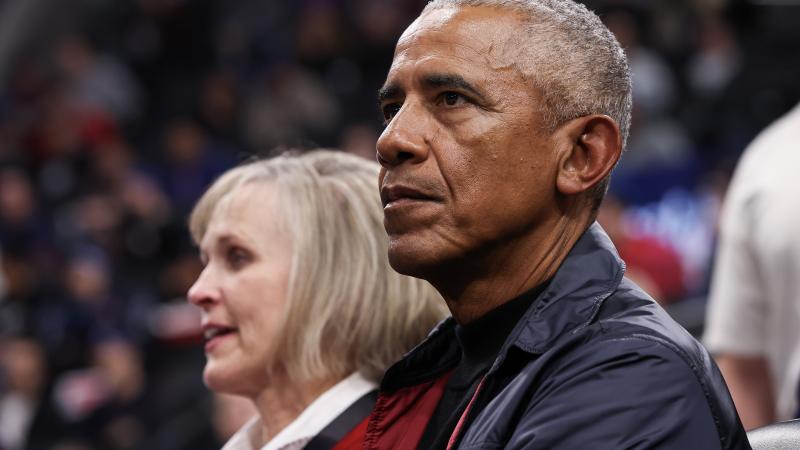
Those “heroes” were five Cuban intelligence officers who were arrested in 1998, convicted in 2001 of espionage and acting as unregistered foreign agents, and had their convictions upheld during the Bush administration. In 2014, the Obama administration released three of the five officers in exchange for America USAID contractor Alan Gross.
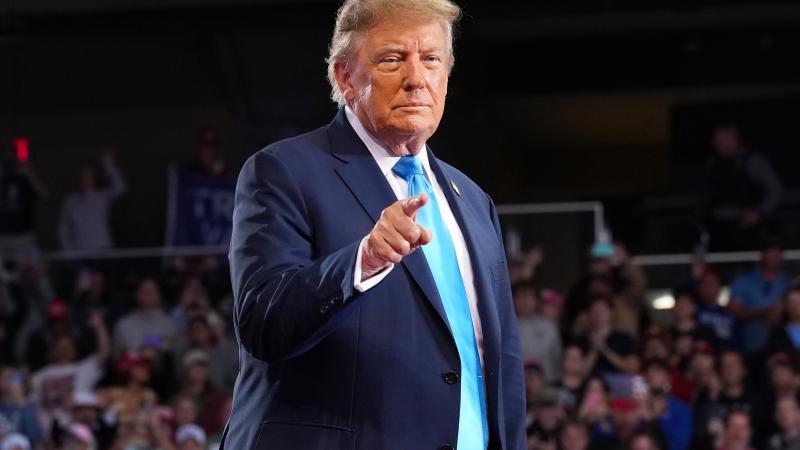
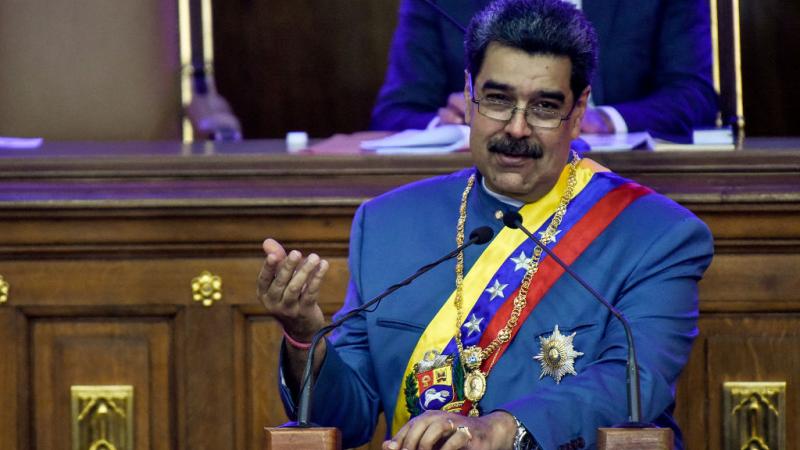
The protest strategy was created with news of a potential escalation of aggression between the U.S. and Cuba. In December 2025, the U.S. entered Venezuela and removed its dictator, Nicolás Maduro. Following that apprehension, Cuba’s oil supply was disrupted when President Donald Trump signed an executive order to impose tariffs on any goods from countries that supply oil to Cuba, the Associated Press reported in January.
The U.S. began blocking oil tankers heading to the island nation in February 2026 as part of Trump’s “maximum pressure” campaign. Since May, the administration has been sanctioning Cuba’s military regime, elites, its state-owned oil and gas company, and Cubans distributing anti-American materials.