Related Articles
Many in country awakened by loud booms of U.S. bombs at 2 AM on Saturday.
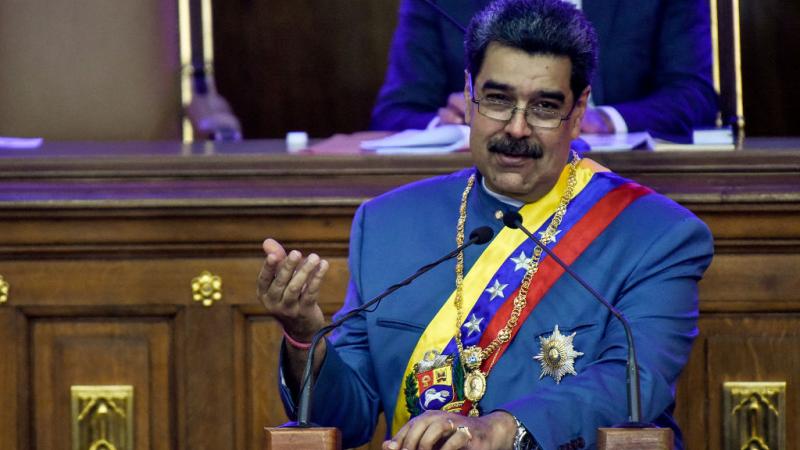
After U.S. military forces captured dictator Nicolás Maduro, Venezuelans went to grocery stores and onto the streets facing uncertainties from food to political succession.
ADN América visited several areas of Caracas and found long lines at different establishments. The outlet also spoke with various consumers to learn how they experienced the military intervention during the early morning hours Saturday.
“I’ve been in line for an hour trying to buy food. I know many people went out in the middle of the night for the same reason, but I didn’t want to leave because I kept hearing planes flying nearby. I still hope I can get something—at least enough for two weeks,” one customer who asked to remain anonymous told an ADN América correspondent.
Another shopper described in detail what he felt at the time of the U.S. intervention.
“I was sleeping with my wife when we heard a very loud noise and saw the roof and doors of the house shake around 2:00 a.m." one man recalled. "I thought it was an earthquake until a neighbor shouted that they were attacking the La Carlota air base. From that moment on, there were explosion after explosion until everything calmed down at 4:00 a.m.”
“Everything was going on like a normal day when the first bombs fell around 2:00 a.m. The Santa María (metal doors with roll-down locking systems) and the windows started shaking, and I thought they were lifting the Santa María to rob the place,” said an employee at a Farmatodo pharmacy in Caracas. “When I looked out through the sales window, I saw the trail of the falling bombs. By 4:00 a.m., people began buying in massive numbers.”
Attacks were also reported in other parts of Venezuela, such as La Guaira, near Caracas — especially in areas close to the port — as well as at the Higuerote airport in Miranda state, and in Maracay, the capital of Aragua state.
One resident of Higuerote, a tourist region two hours from Caracas, said there were approximately seven explosions throughout the night.
“I don’t know how the windows of my house didn’t break. I live near the airport, and the first explosion at 2:00 a.m. was very strong—everything shook.”
ADN América also spoke with two Venezuelans in Caracas about what they believe will happen in the country following Maduro’s capture.
“There’s a lot of uncertainty. I just hope they do the same with Diosdado,” one of them replied. The second interviewee said, “They’ll surely take them one by one, but I don’t know what might happen or when.”
Diosdado Cabello, who holds the role of minister of interior, justice and peace, is widely believed to be as powerful as Maduro.
Maduro and his wife, Cilia Flores, were detained in a lightning operation by U.S. special forces, and the dictator was flown to New York to face federal narcoterrorism charges.