Related Articles
With coca production at record highs and U.S.-Colombia ties strained, a June 21 runoff between a Trump-aligned populist and a leftist could determine the future of the hemisphere's drug war.
Colombia’s upcoming runoff presidential election pitches a conservative-populist candidate who promises to crack down on crime and the drug trade and a left-wing acolyte of the current executive who promises to continue the policies that have rankled the Trump administration.
The result of the showdown later this summer could have profound implications for the Trump administration’s relationship with Colombia, especially its effort to stem the flow of illicit narcotics in the hemisphere.
Though historically a close ally of the United States, especially in combating the drug trade, the relationship has grown icy under the presidency of Gustavo Petro, a leftist politician who has presided over a surge in illegal cocaine production in the country.
The populist Abelardo de la Espriella and leftist senator Iván Cepeda emerged as the top two vote-getters in Colombia's presidential election Sunday. Neither earned more than 50% of the vote, and therefore will compete in a runoff election on June 21.
De la Espriella earned 44% of the vote in the first round, just six points shy of a majority. Most polls in Colombia had shown the far-left Cepeda, the son of a Marxist senator assassinated in 1994, with a comfortable lead. Cepeda, however, received 41% in the first round.
“More than 10 million Colombians placed their trust in the tiger, joining the herd,” said de la Espriella, referring to himself by his nickname. “We will change the history of Colombia forever.”
The success of de la Espriella, a lawyer who has promised to target the armed groups that plague the country and the cartels that supervise its thriving cocaine industry, is a blow to Colombia’s traditional conservatives, who did not make it to the second round.
Cepeda, on the other hand, has similar policies to Petro, including promoting negotiations with guerrilla groups and cartels, rather than cracking down on their organized criminal activities and the cocaine trade in the country.
“U.S. interests, and a strong US-Colombia relationship, would be better served with Abelardo de la Espriella winning the runoff election,” Daniel Batlle, an adjunct fellow at the Hudson Institute who focuses on Latin America, told Just the News.
“Iván Cepeda reflects many of the worst instincts of the Gustavo Petro government, and would bring more strategy and discipline to efforts to reshape Colombia, including through a possible constituent assembly that might rewrite Colombia’s constitution," he also said.
“Abelardo de la Espriella is far from ideal, but he is far more aligned with the United States, especially on the security issues which are so central to the US-Colombia relationship."
Under Petro, U.S.-Colombia relations have reached a low point. Petro, a leftist and former member of an armed insurgent group in his country, has presided over an explosion in coca production – the key component in the manufacture of cocaine. His signature policy is negotiating with the armed groups and cartels, which studies have shown resulted in strengthening those groups, rather than reducing their influence.
The Colombian president has also strongly opposed the Trump administration’s military strikes against suspected drug trafficking boats in the Caribbean and the Pacific. He argues that Trump’s strikes against the vessels violate international law and the human rights of Latin Americans. Last year, Petro shockingly called for criminal proceedings against the U.S. president over the strikes.
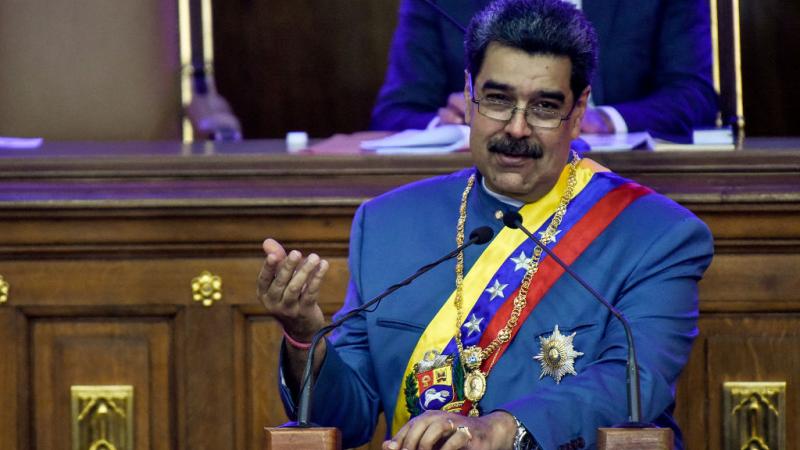
As tensions mounted, Petro suggested that Colombia could team up with Nicolás Maduro’s Venezuela to resist the United States’ encroachment. The same day, Petro also cut intelligence sharing with the United States over the drug boat strikes – threatening the reliable and longstanding U.S.-Colombia alliance that has been vital to the United States’ counter-narcotics and counterterrorism operations in South America.
Just months later, President Trump approved a U.S. military operation to capture Venezuelan dictator Maduro on drug charges. In a shot across the bow, Trump warned Petro that “he’ll be next” if the Colombian president didn’t do more to combat the cocaine trade in his country.
Colombia's cocaine crisis has deepened significantly under the Petro administration.
In a 2025 report, the United Nations found that coca cultivation rose from 230,000 hectares in 2022 to 253,000 in 2023, while cocaine production potential climbed to a record 2,664 metric tons – even as Petro touted record seizures. The Congressional Research Service concluded that “the Petro administration's de-emphasis of coca eradication has coincided with record cocaine production.”
Last September, the United States officially designated Colombia as a country that has "demonstrably failed" to uphold obligations to control drug trafficking during an annual certification process. The Trump administration cited the surge of cocaine production under Petro for the decision.
Cepeda, a Petro acolyte, has campaigned on continuing the current president’s policies, especially regarding Colombia’s cocaine problem. If he is victorious in June, this could lead to a greater strain on the relationship.
Hudson’s Batlle told Just the News that a Cepeda victory could certainly be an “obstacle” to the administration’s policy for Latin America.
“Iván Cepeda would not be helpful on most of the Trump administration’s policies in the region, and in many cases would be an obstacle, whereas de la Espriella would be an enthusiastic supporter of Trump policies,” he said.
On de la Espriella, Batlle said he “would expect him to move quickly to change key aspects of Colombian foreign policy, including aligning with the US on Venezuela, joining US security initiatives, and distancing from the regimes in Cuba and Nicaragua.”
For example, de la Espriella expressed support during the campaign for joining Trump’s Americas Counter Cartel Coalition, colloquially known as the Shield of the Americas. He has promised to adopt a strict approach to drug trafficking and production, including employing military strikes on targets and killing coca plants through chemical fumigation.
He has also called for the construction of at least 10 megaprisons, modeled after those of El Salvadoran President Nayib Bukele built during the crackdown on gang violence in that country. Like Argentinian President Javier Milei, de la Espriella has promised to shrink the size of Colombia’s government by 40%, cutting taxes and attracting foreign investment to Colombia’s hydrocarbon industry.
However, if Cepeda is successful this summer, Trump’s allies believe it would be a relationship-defining incident.
"This is the election where the Colombian people are going to decide which way they're going to go," Sen. Bernie Moreno, a Republican from Ohio who was born in Colombia, said during a panel hosted by the Atlantic Council last week.
"We've seen one way, and we just had to take military action in Venezuela to fix that. And we've seen other ways where you have unlimited prosperity, unlimited security, unlimited opportunities,” he also said. "If Colombia, heaven forbid, goes the wrong way, what you're going to see is all the bad actors that are currently in Cuba, Venezuela, Nicaragua, flow through to Colombia. That would be an abject disaster for Latin America."
Colombia’s President Petro and Cepeda both immediately cast doubt on the authenticity of the election results, an alarming development in a country that is increasingly wracked by armed groups and political violence.
“The so-called transmitted count has no binding force,” Petro posted to X on Sunday. He blamed a software company for adding individuals to the country’s census.
“The already impugned polling stations demonstrate that hundreds of thousands of votes were added without the existence of voters,” the president alleged.
De la Espriella has called on both the president and his opponent to acknowledge the results.
“Petro and you have to face the people, because you’re carrying out a plan to steal the elections,” de la Espriella wrote to Cepeda on social media. “Acknowledge the result; stop stoking a coup.”