Related Articles
Wall Street Journal takes three weeks to correct false sexual harassment report, days before FDA commissioner said targeted official was leaving.
Mainstream media are playing fast and loose with the facts that appear to launder whisper campaigns against Food and Drug Administration officials who get in the way of pharmaceutical profits, falsely claiming one was under investigation for sexual harassment and another violated nonexistent conflict-of-interest rules to help a "friend" she barely knows.
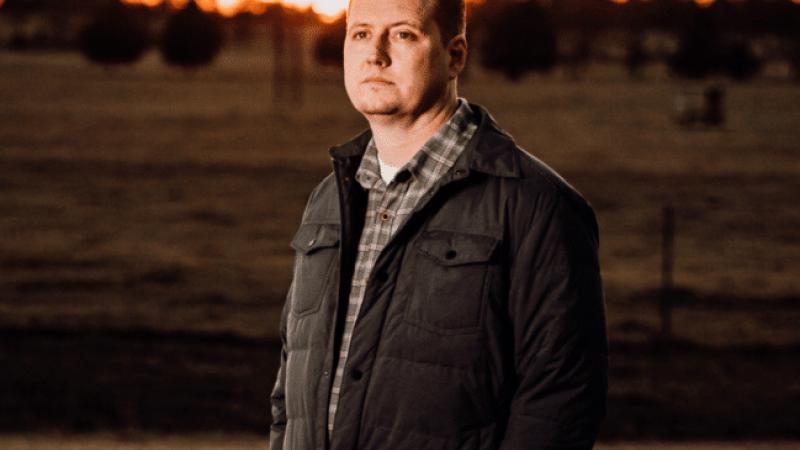
The Wall Street Journal took three weeks to quietly correct reporter Liz Essley Wythe's explosive report that sexual harassment was among "several personnel complaints" filed against Center for Biologics Evaluation and Research Director Vinay Prasad, citing "people familiar with the matter," in a profile of Prasad's allegedly unreasonable standards for drug approval.
Days after the correction, FDA Commissioner Marty Makary gave Whyte an exclusive: Prasad is returning to the University of California San Francisco at the end of April.
The Associated Press has yet to correct or defend the veracity of its March 4 report stating "normal FDA standards" preclude officials from working on any business before the agency involving a "friend," in this case Tracy Beth Hoeg, acting director of the Center for Drug Evaluation and Research, and maternal-fetal medicine specialist Adam Urato.
Former Senate pharmaceutical corruption investigator Paul Thacker immediately challenged the AP's claim, verifying that neither the Department of Health and Human Services nor the FDA has such a conflict-of-interest policy or even defines "friend."
Urato told Thacker the AP got several facts wrong, including that the FDA offered him a full-time position and that he has a "close relationship" with Hoeg, whom he's known for two years. He said they met once in Washington, D.C., when Urato testified for an antidepressant labeling change to warn pregnant women about "documented risks for fetuses," in Thacker's paraphrase.
Even if the FDA had offered him more than a part-time "advisor" position, which has yet to be finalized, Urato said he couldn't accept it because of his busy clinical practice.
Makary announced Prasad's impending return to UCSF the same day that STAT News senior writer Adam Feuerstein tacitly appeared to have unmasked Prasad as the unnamed "senior FDA official" who held a press call to unleash a "diatribe," in Feuerstein's words, on uniQure for allegedly misleading regulators in its application for a Huntington's disease drug, after the Dutch biopharmaceutical company accused the FDA of demanding an "unethical" trial.
Feuerstein gave so many "identifying details" on the anonymous official as to "make Prasad recognizable to anyone paying attention," Philadelphia cardiologist Anish Koka wrote in a lengthy X essay on Prasad as an inevitable casualty of pharma's grip on the FDA and the "access journalism" behind hit pieces on mavericks like Prasad.
While Makary said Prasad's one-year leave of absence is ending and all the policies he was implementing have been announced, Koka, a supporter of Prasad, said the timing of Feuerstein's article calls into question Makary's explanation.
Because Prasad is a "credentialed insider – tenured, published, taken seriously by the institutions that matter – who decides to say out loud what his colleagues whisper privately," Feuerstein committed a "serious breach of journalistic ethics" through "functional identification" of an anonymous source, Koka wrote. "This was not inadvertent. It was a choice."
Pharma industry reporters aren't interested in a story about a "principled FDA official holding the line against companies with failed products," Koka said. "A chaotic rogue bureaucrat destroying a promising therapy is."
In her own X essay on media coverage of Prasad as CBER director, former FDA regulatory review officer Jessica Adams said it "often felt like playing whack-a-mole with narratives," which were often "incomplete, heavily personalized, or framed through politics and personality rather than the data and regulatory reasoning behind the decisions."
The media created a "caricature" of Prasad, she wrote, and "we should not be surprised when the result looks less like policy and more like a circus."
Adams questioned why "public defenses [of Prasad] from leadership seemed to ramp up right before the announcement that he was leaving" – Makary on national TV and HHS and FDA on social media – as if they were "pushing back against something they may have sensed was already unfolding, or potentially trying to change the trajectory at the last minute."
WSJ, AP and STAT News, which is owned by the same parent company as The Boston Globe, did not respond to Just the News queries. The FDA didn't answer queries on why Makary gave an exclusive about Prasad to the reporter who laundered a false report against him.
'The irony was almost too rich'
Prasad has the distinction of enraging both MAGA influencers for his politically progressive views on regulation, especially President Trump whisperer Laura Loomer, and establishment organs such as the WSJ editorial page for his close scrutiny of trial design and methodology in drug applications, slowing the approval process and lowering share prices.
Early moves by the second Trump administration suggested the Big Pharma gravy train was ending, with stocks immediately tanking upon the disputed exit of Prasad's predecessor Peter Marks, known for sidelining his top vaccine reviewers to authorize COVID-19 boosters. Prasad deemed Marks "one of the most dangerous, pro-pharma regulators" of the century.
But the industry quickly beat back Prasad's intense scrutiny of the evidence underlying drug applications, with the FDA reauthorizing distribution of a muscular dystrophy drug after pressuring its maker Sarepta to halt it.
Prasad briefly left the administration last summer after Loomer's attack but came back, reportedly upon Makary's urging, and put an even bigger target on his back last fall by telling staff the agency was strengthening vaccine approval standards in light of 10 confirmed deaths in children from COVID vaccines, though he hasn't shared the data publicly.
"The irony was almost too rich: the same MAGA ecosystem that had spent years insisting mRNA COVID vaccines were dangerous gene-modifying experiments was now furious that a regulator was asking hard questions about an actual gene therapy linked to multiple deaths in young boys," Koka wrote in his X essay.
Moderna unleashed on Prasad last month when the FDA refused to review the drug maker's mRNA flu vaccine application due to red flags in trial design the agency had earlier raised with Moderna. The New York Times among others falsely reported the FDA had caved in agreeing to review the application, when it was, in fact, Moderna agreeing to change the trial design.
Mainstream media haven't been aghast at every FDA decision to strictly scrutinize proposed treatments, however. CNN crowed last week when the agency approved the cheap off-label autism treatment leucovorin, long used officially to treat chemotherapy side effects, for a smaller group of patients than officials last fall suggested would be covered.
300 reposts of false article, a dozen reposts of correction
WSJ's Whyte gave Prasad's critics their best opportunity yet to get rid of him permanently when she reported, almost offhandedly, in a Feb. 11 article on the Moderna mRNA flu vaccine dispute that "several personnel complaints" were made against Prasad.
They include "some that involve sexual harassment, retaliation against subordinates and verbally berating staff, people familiar with the matter said," Whyte wrote near the end of the article. She said he didn't respond to requests for comment, but HHS spokesperson Andrew Nixon's quotes in the article suggest she didn't ask him about that allegation.
Whyte summarized the story in a Feb. 11 X thread and added a new screenshot March 2 without comment: WSJ's correction that no one had filed sexual harassment allegations against Prasad, per HHS.
She deleted a post from the thread, an archived copy of which Just the News couldn't find, that apparently mentioned the false sexual harassment claim, since the post after it quoted the next part of her story, about Prasad's taxpayer-funded travel budget.
Nixon thanked WSJ for Whyte's belated correction on X but said the newspaper "should have never published unverified hearsay in the first place. Smearing officials with false allegations and then issuing a quiet correction isn’t accountability. Your readers deserve better."
Whyte's correction drew about a dozen reposts, while previous posts within Whyte's X thread drew around 300 reposts, not including from the deleted post.
The AP's report that it "has learned" the FDA's Hoeg is recruiting her "friend" Urato also cited "people familiar with the situation," who allegedly told reporter Matthew Perrone she "regularly consults with Urato and is working to bring him on as a full-time FDA employee."
Perrone used a passive construction to describe the alleged problem. "Within the agency, Hoeg’s close relationship with Urato is viewed as a clear conflict of interest that, under normal FDA standards, would result in her recusing herself from any work" on Urato's petition to put pregnancy warnings on SSRIs prescribed for depression, Perrone wrote.
Thacker, the former Senate pharmaceutical corruption investigator, also questioned Perrone's claim that Urato's research conclusions are "unproven," noting Nature Communications – sibling to the science magazine Nature – published a study last year backing Urato's conclusions, cited in Urato's petition.
The researchers found "adolescents exposed to SSRIs in utero exhibited higher anxiety and depression symptoms than unexposed adolescents and also had greater activation of the amygdala and other limbic structures when processing fearful faces." Their findings have "potential implications for the clinical use of SSRIs during human pregnancy."
Perrone in fact reported on Urato's successful FDA petition to withdraw the premature-birth drug Makena based on insufficient data in 2023. The headline called the drug "unproven."