Trump appears to be moving toward striking Iran: ‘It will be something easily won’
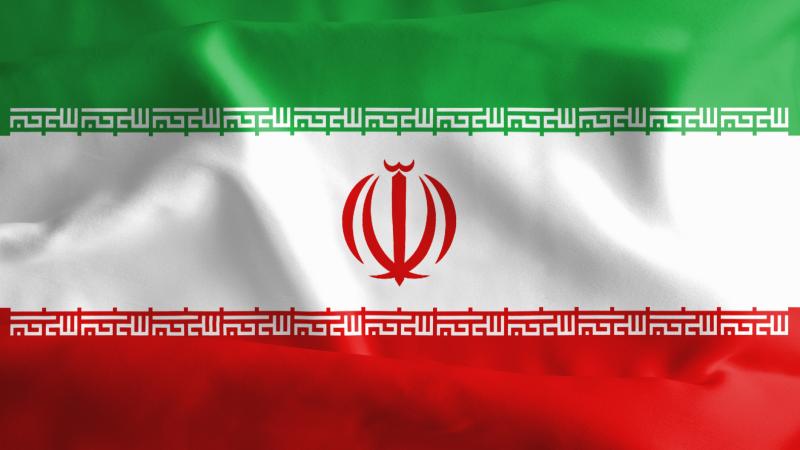
War may be on the horizon with Iran. Trump insists he wants to cut a deal, but says that if push came to shove, the U.S. would easily win any conflict.
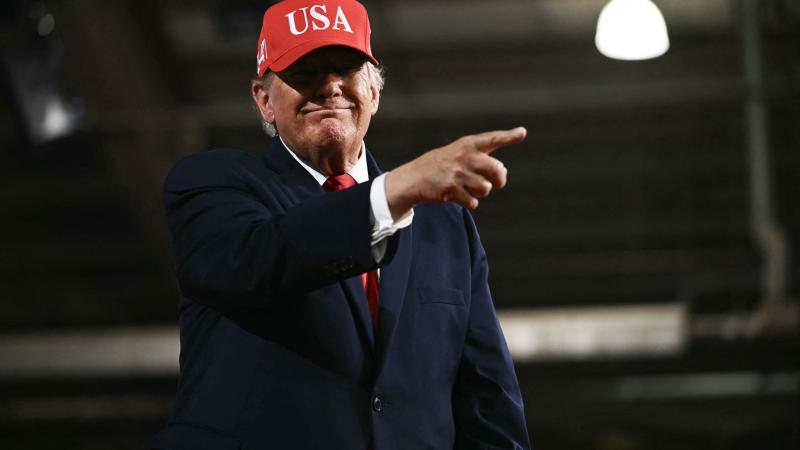
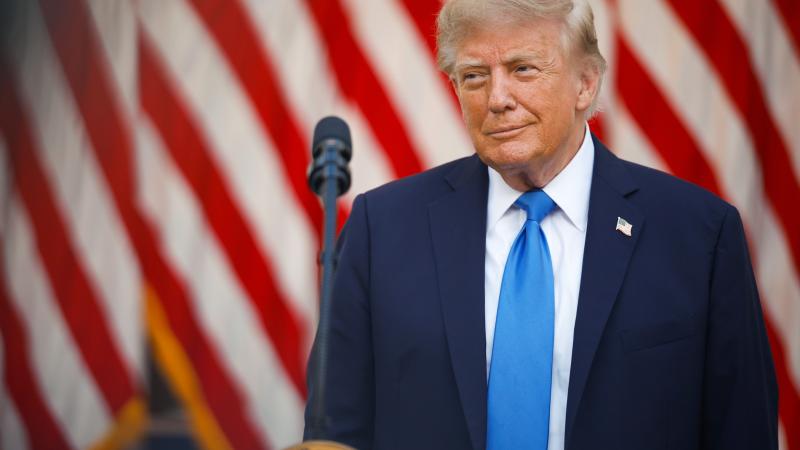
President Donald Trump appears to be moving toward striking Iran, with the U.S. military moving significant assets into the region as the president insists he would prefer to strike a deal with the Iranian regime but that, if it comes to war, his top general has told him “it will be something easily won.”
A number of outlets reported Monday that Chairman of the Joint Chiefs of Staff Gen. Dan Caine had warned about the risks of striking the Iranians, with Trump issuing a lengthy statement on Truth Social pushing back on the reports and displaying confidence that the U.S. would not struggle to defeat Iran. The dust-up came as the U.S. Navy has greatly increased its presence in the region surrounding Iran.
“Numerous stories from the 'Fake News Media' have been circulating stating that General Daniel Caine, sometimes referred to as Razin, is against us going to War with Iran. The story does not attribute this vast wealth of knowledge to anyone, and is 100% incorrect,” Trump said. “General Caine, like all of us, would like not to see War but, if a decision is made on going against Iran at a Military level, it is his opinion that it will be something easily won.”
The Wall Street Journal kicked off the week with a story titled, “Pentagon Flags Risks of a Major Operation Against Iran. The warnings have been led by Gen. Dan Caine.”
The Washington Post also reported that “Trump’s top general foresees acute risks in an attack on Iran” and that Caine “has cautioned that a lack of munitions and support from allies could mean greater danger for U.S. troops.” Axios similarly reported that “Trump's top general warns of Iran strike risks” and that Caine “has been advising President Trump and top officials that a military campaign against Iran could carry significant risks, in particular the possibility of becoming entangled in a prolonged conflict.”
Caine is a great fighter and "knows how to win": Trump
Trump said Monday that “Razin Caine is a Great Fighter, and represents the Most Powerful Military anywhere in the World. He has not spoken of not doing Iran, or even the fake limited strikes that I have been reading about. He only knows one thing, how to WIN and, if he is told to do so, he will be leading the pack.”
“Everything that has been written about a potential War with Iran has been written incorrectly, and purposefully so,” Trump added. “I am the one that makes the decision, I would rather have a Deal than not but, if we don’t make a Deal, it will be a very bad day for that Country and, very sadly, its people, because they are great and wonderful, and something like this should never have happened to them.”
Fred Fleitz, a former chief of staff to the National Security Council, said on the Just the News, No Noise TV show on Monday that “I think there is nervousness in some areas of the Iranian government. They think that there will be a devastating American attack, and they realize that President Trump is sincere.”
Fleitz: "Iran has no legitimate interest in a deal"
“He really would like to make a deal with the regime. He does not want to use military force,” Fleitz said of Trump. “But to date, there has been no interest whatsoever by the Iranian government, no legitimate interest in a deal. They're trying to drag out the talks [...] They have played previous administrations with endless talks. This did not work with President Trump last June. It's not going to work now. Lest the Iranians make significant concessions, I think there is going to be a major military strike.”
Trump had said Thursday at the first meeting of the Board of Peace that he would likely be making a decision vis-à-vis Iran soon.
"Now we may have to take it a step further — or we may not,” the president said. “Maybe we are going to make a deal. You are going to be finding out over the next probably ten days.”
Trump added in a press gaggle on Air Force One last week that “ten, fifteen days, pretty much the maximum” is what Iran had to cut an acceptable deal with the United States.
“It can't wait. It can't wait too long,” Fleitz told Just the News on Monday. “Our aircraft carriers have been at sea too long. I believe the President will wait until after the State of the Union. I think he's going to explain to the American people what he's planning on doing, and then the clock starts ticking.”
The signs are there that the U.S. is preparing for a possible significant conflict with Iran.
The U.S. Embassy in Lebanon said Monday that “the Department of State updated its Travel Advisory for Lebanon on February 23, 2026, to reflect that the Department ordered non-emergency U.S. government personnel and the family members of government personnel to leave Lebanon due to safety risks.”
The Navy's presence in the region has grown to at least sixteen ships, the Associated Press reported Monday, which it said “will dwarf” the eleven-ship fleet that was anchored in the Caribbean Sea during the operation against since-arrested Venezuelan leader Nicolás Maduro.
An armada of considerable strength
“Numerous additional U.S. fighter jets and support aircraft also have touched down in the Middle East and bases in Europe,” the outlet said. “More than 100 fighter jets, including F-35s, F-22s, F-15s and F-16s, left bases in the U.S. and Europe and were spotted heading toward the Middle East by the Military Air Tracking Alliance [...] The team says it’s also tracked more than 100 fuel tankers and over 200 cargo planes heading into the region and bases in Europe in mid-February.”
The Financial Times reported over the weekend that “the U.S. has significantly increased the number of fighter aircraft at bases in Jordan and Saudi Arabia this month, as it assembles tremendous air power in the Middle East for a potential weeks-long military campaign against Iran.” According to The New York Times, the armada includes the Navy’s most advanced aircraft carrier, the U.S.S. Gerald R. Ford, and three of its accompanying destroyers. On Friday, they crossed the Strait of Gibraltar, according to flight and ship-tracking data reviewed by The New York Times.
The Center for Strategic and International Studies (CSIS) had assessed on Friday that “the naval ‘armada’ in the Middle East and eastern Mediterranean—with two carriers and 14 surface warships—is the largest in the region since five carrier battle groups assembled at the outset of Operation Iraqi Freedom in 2003.”
“The force is capable of punitive strikes on Iran and the protection of U.S. allies and partners in the region,” CSIS added. “However, it lacks Marines, special operations forces for raids or ground operations, and the logistics for an extended air campaign. It is also far smaller than what the United States used in 1991 and 2003 against Iraq for major combat operations and regime change.”
Operation Midnight Hammer just a preview
Caine and Defense Secretary Pete Hegseth gave a press conference last June, the day after “Operation Midnight Hammer” and CENTCOM’s successful strikes against Iranian nuclear sites at Fordow, Natanz, and Isfahan.
Hegseth called it an “incredible and overwhelming success” and said that “we devastated the Iranian nuclear program” and that “Iran’s nuclear ambitions have been obliterated.” Hegseth said that “many presidents have dreamed of delivering the final blow to Iran’s nuclear program, and none could, until President Trump.”
Caine said that “initial battle damage assessments indicate that all three sites sustained extremely severe damage and destruction.”
Hegseth said that “this [was] a plan that took months and weeks of positioning and preparation so that we could be ready when the POTUS called" and that "it took a great deal of precision, it involved a great deal of misdirection, and the highest level of opsec. [Operations Security]"
Caine said that B-2 bombers launched west from the U.S. toward the Pacific in an effort to “maintain tactical surprise” as a “decoy” and a “deception effort.”
The chairman said that the main strike package of seven B-2 Spirit bombers, each with two crew members, flew east from Missouri, and that it was an 18-hour flight to Iran with multiple midair refuelings. Caine said it was the largest B-2 operational strike in U.S. history and was the second longest B-2 mission ever flown (only exceeded by those flown just after 9/11).
If the U.S. decides to hit Iran again in the coming days, it remains to be seen whether the Iranians will be as overwhelmed by U.S. military superiority as they were the last go around.
“In all likelihood, there'll be a major attack against Iran that will devastate the Revolutionary Guard, maybe the besieged militia that's being used to attack the Iranian people, probably arms depots and other things that are being used to execute Iranians,” Fleitz told Just the News on Monday. He added: “We have military capabilities the Iranians do not know about that I think will be quite devastating.”

Top Stories



Trending
Just the News Spotlight
Just News, No Noise