Related Articles


Missouri AG says effort to bar the counting of illegal immigrants in the U.S. Census could ultimately land at the U.S. Supreme Court.
President Donald Trump and his allies are launching a double-barreled U.S. census strategy that could eliminate a big electoral and federal funding mechanism for blue states: illegal immigrants.
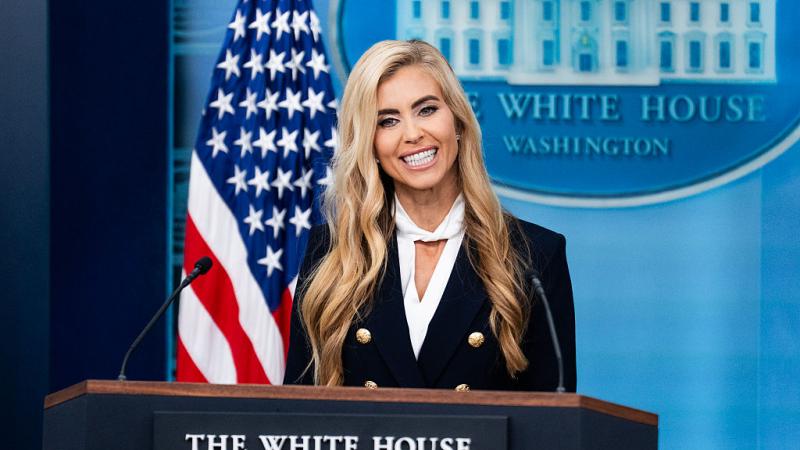
Missouri Attorney General Katherine Hanaway said her office is asking the courts to bar the federal government from counting immigrants living in the country illegally when determining congressional representation and federal funding, a move she argued could shift political power among the states for decades.
In an interview on the Just the News Not Noise TV program, Hanaway noted that Missouri filed suit challenging the current census policy, which counts all persons residing in the United States for purposes of apportionment.
“We are confident that the Census Bureau is going to start to plan for a census in 2030 where we don't count illegal immigrants,” Hanaway said. “But we're going to get a new president in 2028 and we just can't be assured that he'll do the right thing. So if we have a court order, and I'm guessing this is going to go all the way to the US Supreme Court, we get that court order, then it'll be permanent."
The lawsuit revives a debate that has intensified during the Trump administration. President Donald Trump sought to exclude immigrants in the country illegally from apportionment calculations following the 2020 census, a policy later reversed under former President Joe Biden.
In August 2025, Trump said he ordered a new U.S. Census without illegal immigrants counted. Hanaway argues that the U.S. Constitution was intended to count citizens and lawful permanent residents. “We believe that the Founding Fathers and the court decisions interpreting those provisions since then, intended it to be people who were legally permanently in the United States,” she said. “It certainly was never intended to include illegal immigrants.”
She argued that excluding those individuals could alter the balance of power in Congress.
“We just, from our lawsuit alone, project that somewhere between 11 and 14 congressional seats will move from places like New York and California to places like Missouri, Tennessee and Georgia,” Hanaway said. “It will have an impact on who controls Congress and who wins the presidency.”
The attorney general acknowledged the legal path could be lengthy and ultimately land at the U.S. Supreme Court. Missouri is seeking relief that could potentially affect representation before the 2030 census, though she conceded that would be “difficult.”
On the census challenge, Hanaway described the issue as a generational one.
“This is a case that really could last for a couple of generations,” she said. "And when you combine that with Louisiana, it can make all the difference in who's running this country."
Louisiana and other states sued in January 2025 over the Census Bureau's "Residence Rule." The lawsuit is focused on excluding noncitizens from apportionment counts.
The Supreme Court is also hearing a separate redistricting case, Louisiana v. Callais.
In addition to the census case, Hanaway highlighted Missouri’s ongoing effort to collect a multi-billion-dollar judgment against China tied to the COVID-19 pandemic as an example of the state's winning record in court. The lawsuit, originally filed by her predecessor, resulted in a $23 billion judgment that the state is attempting to enforce.
“We have a $23 billion judgment that we're seeking to enforce by seizing assets belonging to the Chinese,” she said, adding that state officials have been in contact with federal authorities to ensure coordination with broader U.S. trade policy.
Hannaway also pointed to a recent decision by the Missouri Supreme Court upholding a state law banning gender-transition procedures for minors.
“We won that case, and so hopefully, no child will ever be subjected to that kind of mistreatment again,” she said.