Iran conflict marks latest major test for already fragile US-European trans-Atlantic alliance
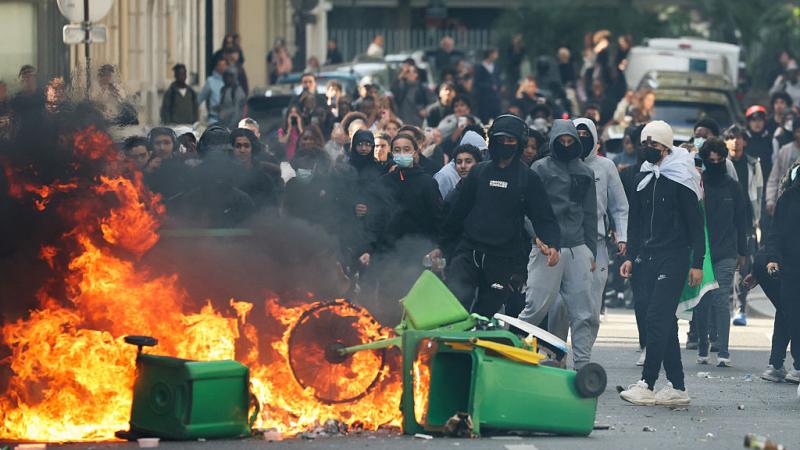
European leaders are more divided over how to react to the U.S. and Israeli strikes on Iran than they have been since the Iraq War in 2003
Europe has historically responded to U.S. military action abroad with an initial level of public disagreement, followed by solid support behind the scenes.
But when it comes to the U.S. and Israel’s conflict with Iran, leaders in Berlin, London, Paris, Rome and other capitals are struggling over what stance to take.
The result is not just the lack of a cohesive response to developments in Iran, but also uncertainty over the future of the trans-Atlantic relationship.
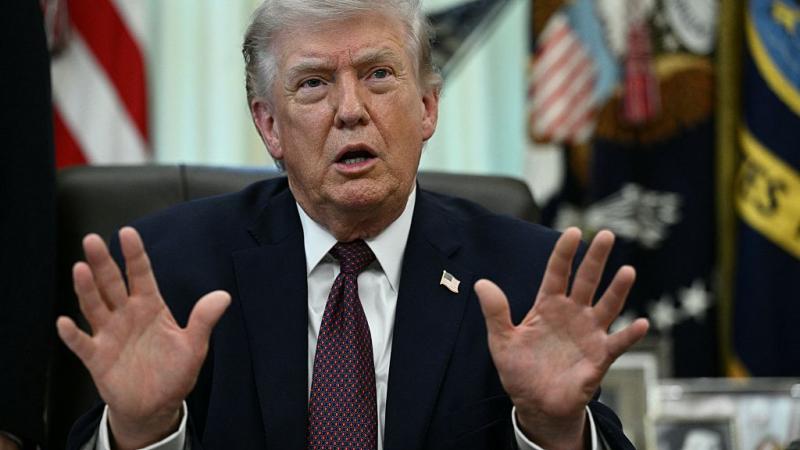
To be sure, the relationship was already fragile before the air attacks began Feb. 28 on Iran – considering President Donald Trump, since starting his second term roughly 14 months ago, had already slapped tariffs on European nations, pressed them to spend more on defense and dangled the idea of taking control of Greenland, an autonomous territory of the Kingdom of Denmark.
But the conflict with Iran is doing something the other disputes have not: forcing European governments to decide whether they will back the U.S. in a direct military confrontation in the Middle East. Now, with the conflict in its second week, those fault lines are beginning to show.
Europe hasn’t been as divided over a U.S. military operation since the start of the Iraq War in 2003, when the U.K. and Italy supported the invasion and Germany and France opposed it.
Now, German Chancellor Friedrich Merz has broadly aligned his country with the U.S., though he has expressed concerns about economic destabilization and the risk that the conflict could widen. Merz traveled to Washington just days into the crisis (a trip scheduled weeks earlier). There, he underscored Berlin’s effort to stay closely aligned with the United States.
“The mullah regime [in Iran] is a regime of terror that is responsible for a decades-long oppression of the Iranian people,” Merz said.
“This marks a turning point into an uncertain future,” the chancellor added later.
Italy's far-right prime minister, Giorgia Meloni, has reportedly said her country would respect existing agreements on the use of bases as well as providing naval and air support to defend neutral Gulf states from Iranian attacks.
Yet she has expressed concerns about the conflict creating a new wave of refugees and has called for all sides to return to negotiation. The attacks began shortly after U.S. diplomats failed to reach an agreement with Iran over its pursuit of a nuclear weapon.
The U.K. is traditionally the U.S.’s strongest ally in Europe, and Keir Starmer, the country’s beleaguered prime minister, has tried to strike a careful balance.
Starmer said he would allow the U.S. military to use British bases for “defensive” operations that would protect Gulf states from Iranian attacks. But he has stopped short of endorsing the U.S.- and Israeli-led action as he seeks to avoid playing the role that then-Prime Minister Tony Blair played in following the U.S. lead in the war against Iraq.
The prime minister has called Iran’s counter-attacks “reckless." But he also said, “We all remember the mistakes of Iraq, and we have learned those lessons.”
Under French President Emmanuel Macron, a Trump critic, France has taken the most ideological stance among the major European powers, reviving his call for Europe to develop “strategic autonomy” when it comes to security. Macron has called for a halt to the bombardment and a reopening of negotiations.
“This war has serious consequences for peace and international security,” Macron said. He was also quick to point out that France was “neither warned nor involved” in the strikes.
“No one can think that the questions of Iran’s nuclear program, ballistic activity, and regional destabilization can be settled by strikes alone,” the French leader said.
Spain has refused to aid Trump but has sent its most advanced warship to the eastern Mediterranean, signaling its commitment to European defense cooperation. And it joined Italy, France and the Netherlands in deploying naval and air assets to Cyprus, a member of the European Union, after an Iranian-made drone last week struck a British base in the country, according to NBC News.
And while Europe's posture looked markedly different than that in other major conflicts, Fawaz Gerges, a professor of international relations at the London School of Economics, argues that it, in fact, bears a resemblance to previous ones.
“We should not be deceived into believing that the European governments do not really support the United States in Iran,” NBC News also reports. “We should not really focus on the rhetoric of European leaders. We should focus on their actions and their deployment of naval and air power to support to provide other direct or indirect support for the American-Israeli war in Iran.”
The Facts Inside Our Reporter's Notebook
Top Stories

Trending
Just the News Spotlight
Just News, No Noise