Related Articles
Cuba first received significant support from the Soviet Union shortly after the 1959 revolution, and the island depended on that support for decades until the dissolution of the USSR in 1991. That began a financial spiral for the dictatorship, and now, with the island’s oil supply essentially cut off, there are signs that the regime is starting to feel the heat, including protests and concessions to the United States.
President Donald Trump is executing the playbook he developed for Venezuela to pressure the communist Cuban regime to capitulate, thereby removing the last major bastion of foreign adversary influence in the Western Hemisphere.
And after essentially cutting off the island’s oil supply, there are signs that the regime is starting to feel the heat.
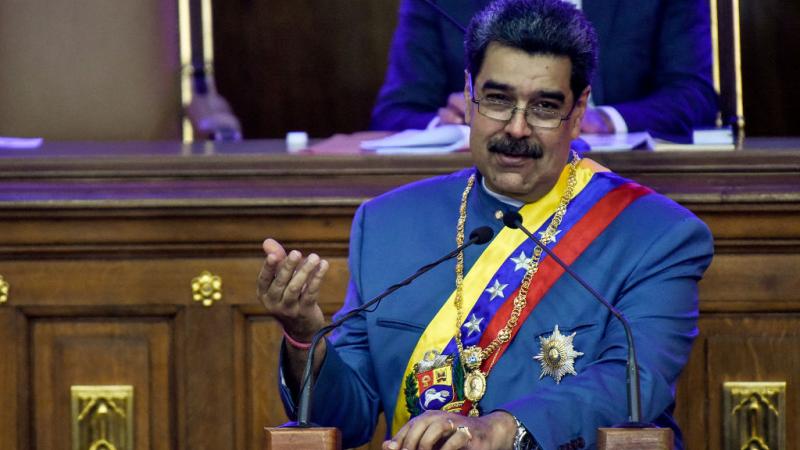
In the aftermath of the U.S. operation to apprehend Venezuelan dictator Nicolás Maduro earlier this year, the Trump administration has ramped up its pressure on Cuba, a close partner of Maduro and, since its communist revolution in 1959 led by Cuban revolutionary leader Fidel Castro, a consistent Soviet thorn in the side of the United States in its own backyard.
Just weeks after the Venezuela action, President Trump issued an executive order that laid out in sweeping detail the “threats to the United States by the government of Cuba.” The order also directed the U.S. government to implement new tariff barriers aimed at halting the sale of oil to Cuba, cutting off its energy supply.
The Trump administration has focused on the communist regime’s alignment with hostile countries, transnational terrorist groups, and “malign actors adverse to the United States,” principally Russia, China, Iran, and the terror groups Hamas and Lebanese Hezbollah.
The executive order echoes closely the justification the Trump administration laid out for its policy towards Venezuela last year. Maduro’s regime in Caracas spent years cozying up to China, Russia, and Iran, which in turn, helped to prop up the country afflicted by economic crisis. Venezuela benefited by receiving military equipment and reportedly provided access to Iranian proxy groups connected to the Middle Eastern drug trade.
But, after decapitating the Maduro regime by detaining its leader, the Trump administration pressured his successors to cut ties with their former sponsors and collaborate more closely with the United States. The Trump administration is currently working with the country’s new president, Delcy Rodriguez, to open Venezuela’s vast oil reserves to American investment.
President Trump appears to see the opportunity for a similar outcome in Cuba, whose communist government is currently facing instability and an energy crisis at home. Cuba relied heavily on oil exports from Maduro’s regime to power its grid and, in exchange, used its intelligence service to protect the dictator in Caracas.
“I think Cuba sees the end,” Trump said, speaking to reporters at the White House on Monday. The island power grid failed on Monday, leading to a nationwide blackout. The power was cut off at the same time that the country has been wracked by protests against deteriorating living conditions. The latest round of demonstrations included what one Cuba expert called an "unusual" act of defiance by protesters: burning down a local communist party headquarters.
“All my life I’ve been hearing about the United States and Cuba. When will the United States do it? I do believe I’ll have the honor of taking Cuba,” President Trump said.
“Whether I free it, take it — I think I can do anything I want with it, you want to know the truth. They’re a very weakened nation right now,” he added, after he was asked what he meant by “taking Cuba.”
Secretary of State Marco Rubio, who is a descendant of Cuban immigrants, has a long career opposing the communist regime in Havana as a lawmaker in Florida and in the U.S. Senate.
Rubio has said that the Trump administration’s economic pressure on Cuba is aimed at sparking “political change” on the island in order to make the government more amenable to cooperating with the United States. The time has come for such change, he says, because without subsidies from its sponsors abroad, the Cuban economy cannot properly function.
"The bottom line is their economy doesn't work. It's a nonfunctional economy," Rubio told reporters at the White House earlier this week. "It's an economy that has survived. That thing they have has survived on subsidies from the Soviet Union and now from Venezuela. They don't get subsidies anymore. So they're in a lot of trouble. The people in charge of them don't know how to fix it. So they have to get new people in charge,” the secretary continued.
While it is unclear what end-state the Trump administration is seeking in Cuba, Rubio reportedly has engaged in back-channel diplomacy with Raul Guillermo Rodriguez Castro, the grandson and caretaker of Cuba's aging de facto dictator, Raul Castro.
"I think within the next several months we will have a new relationship with Cuba, led by Marco Rubio and the grandson of Raul Castro, because Marco Rubio and Raul Castro's grandson...they're in frequent conversation with each other about what a new Cuba would look like, post-communist," KT McFarland, a longtime Republican national security figure and Deputy National Security Advisor during Trump's first term, told Just the News.
Rubio, however, has recently challenged media stories that suggest any compromise that would leave Cuba's current leaders in charge of how a regime transition would take place. For example, Rubio challenged a recent New York Times story alleging the U.S. is demanding current Cuban President Miguel Díaz-Canel step down but has no preference about how the regime governs itself afterward. "The reason so many in US media keep putting out fake stories like this one is because they continue to rely on charlatans & liars claiming to be in the know as their sources," Rubio posted to X on his personal account.
There are emerging signs that the Cuban regime is beginning to buckle under the U.S. pressure.
Earlier this month, Cuban President Miguel Díaz-Canel announced that the government had entered into negotiations with the United States in a bid to ultimately normalize relations after President Trump’s executive order and suggestions the U.S. could carry out a "friendly takeover" of the island nation.
This week, a senior Cuban official announced in an interview with CBS News that the government was planning to allow Cuban nationals that live abroad, including inside the United States, to invest in companies on the island.
The move, Cuba’s Deputy Prime Minister Oscar Pérez-Oliva Fraga said, was to show that Cuba is “open to having a fluid commercial relationship with U.S. companies,” a major shift for Cuba’s state-run economy that has for decades heavily restricted private businesses.
In another major concession to the United States, Cuban authorities said that they would welcome a team of FBI investigators probing an incursion by 10 Cuban exiles into Cuban waters last month that sparked a gun battle that left half of the individuals dead.
In his second term, President Trump and his administration have made the Western Hemisphere a central focus of their foreign and defense policies. By deploying U.S. troops to the Southern Border, jet fighters to Puerto Rico, military strikes on suspected drug trafficking boats, and the operation to capture Maduro, the president has aimed to revive the historic “Monroe Doctrine” that guided U.S. policy towards its hemisphere.
The administration, in its National Security Strategy, described its policy towards the Western Hemisphere as “The Trump Corollary to the Monroe Doctrine” and intends to “deny non-Hemispheric competitors the ability to position forces or other threatening capabilities, or to own or control strategically vital assets, in our Hemisphere.”
Cuba, since its 1959 revolution, has been a vector of foreign influence for such non-hemispheric competitors of the United States. In the beginning, the Soviet Union, the United States’ Cold War rival, backed the government of Fidel Castro.
The Soviet Union’s 1962 plan to deploy nuclear missiles to the island, which lies only about 90 miles from the southern coast of Florida, sparked the Cuban missile crisis – nearly precipitating nuclear war or an invasion of the newly communist country.
After the Soviet Union collapsed at the end of the Cold War, its successor state of Russia and China, a fellow communist country, took on the role of Cuba’s patrons. Both countries are reportedly operating spy bases on the island in return for debt relief and economic investments. In 2014, after Russia annexed Ukraine’s Crimean Peninsula, President Vladimir Putin negotiated with the Cuban regime to reopen an electronic listening post on the island. Known as the Lourdes base near Havana, it sits only 150 miles off the U.S. coast.
Last year, Republicans in Congress raised concerns about the growing influence of China in Cuba, including efforts to construct apparent signals intelligence facilities across the country. Lawmakers said that these facilities have the potential to monitor U.S. military operations, commercial shipping, and U.S. communications.
“Cuba’s proximity to the southern United States and the Caribbean makes it a prime location for collecting signals intelligence (SIGINT) on the region,” says the Center for Strategic and International Studies.
In a December 2024 report, the center analyzed four possible sites suspected of housing Chinese signals intelligence operations using satellite imagery and publicly available information.